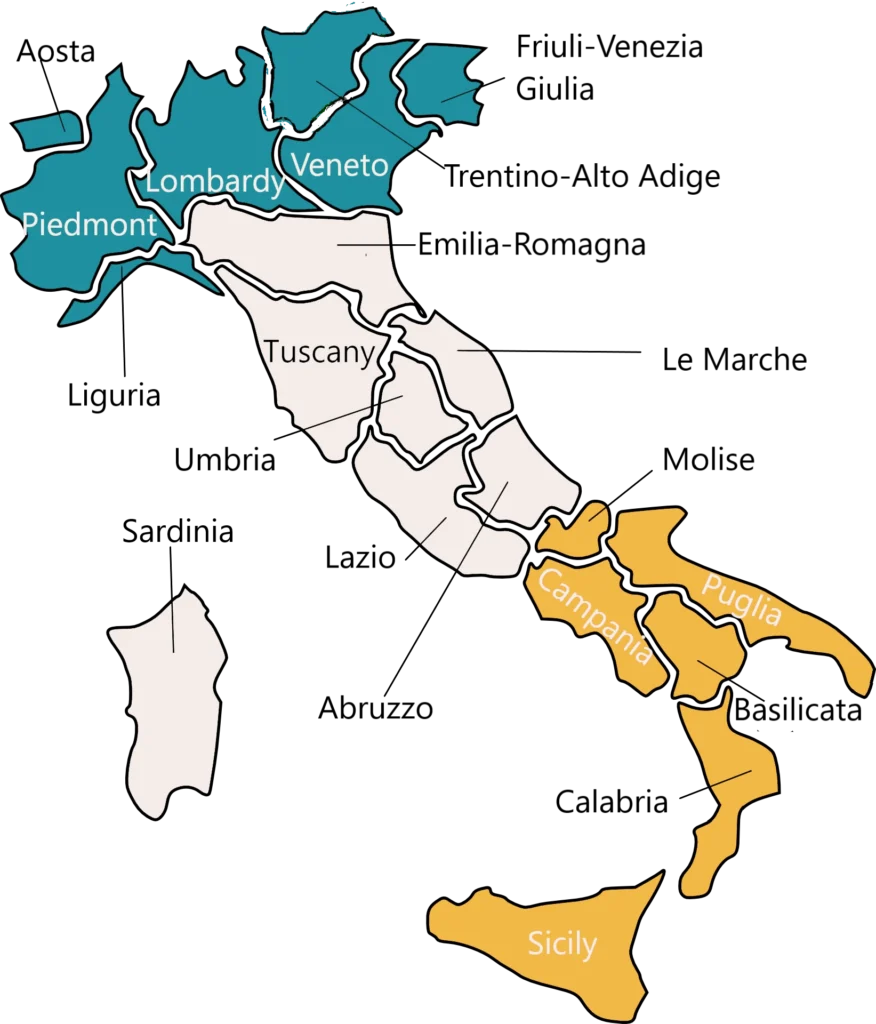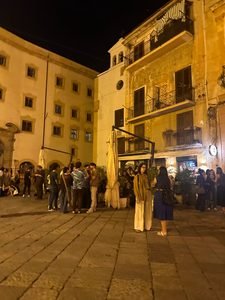
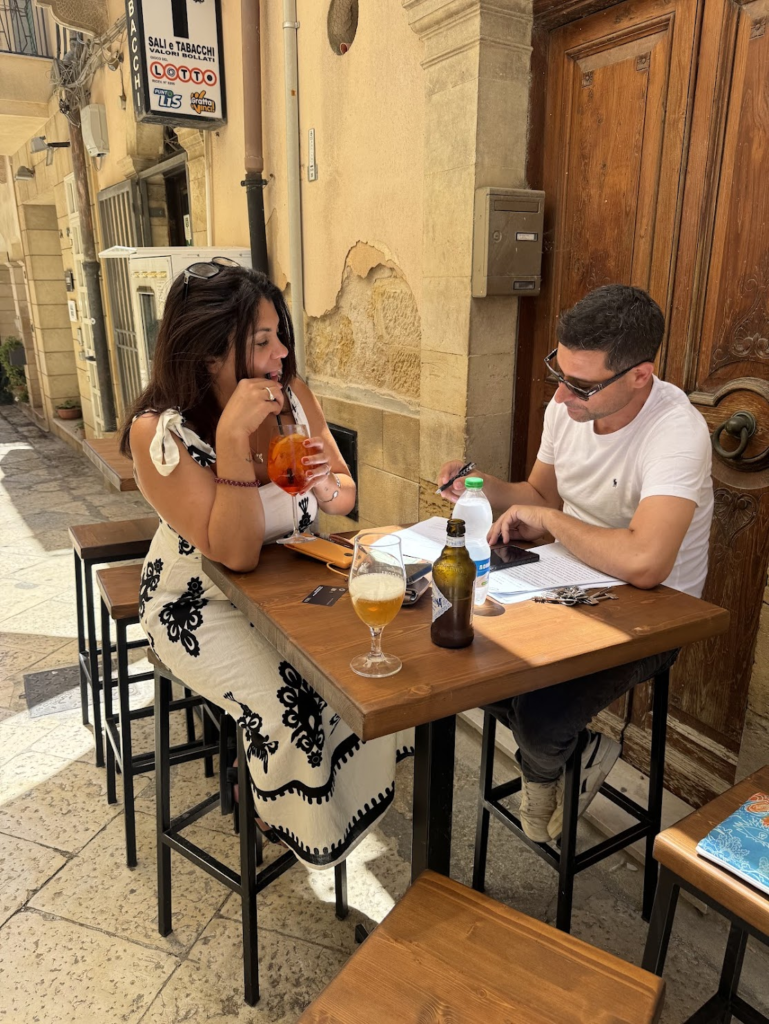
I signed the pre-agreement on my house in Salemi, Sicily, sitting outside at Tazze Pazze — the local bar where everyone knows your name—with a spritz in one hand and a pen in the other. It was early July. I had rerouted our Albania vacation to get there. And the house I was buying sight unseen, just two weeks before, had just become very real.
This is the full story of how I found my house in Sicily, what the process actually looked like, what it cost, and how I accidentally ended up buying two properties instead of one at the notary’s office. If you’re thinking about buying property in Sicily — whether through a One Euro Home program, an abandoned property listing, or just because you’ve fallen in love with the island the way I did — I hope this saves you some surprises.
How It Started: A 20th Anniversary Trip and a Live in Italy Project
Two years ago, my husband and I visited Sicily for our twentieth anniversary. We also filmed a project for a town with a One Euro Home program near Messina for Live in Italy magazine. That trip did something to us. It made us see the real possibility of owning a home in Italy — not just dreaming about it — and it helped us get clear on exactly what we wanted and what we didn’t.
A year and a half ago, I started getting serious. Sicily felt right for a lot of reasons. I was born on an island in Brazil, so island life made sense to me instinctively. The climate, the culture, the food, the pace — and honestly, the price point — all fit what I was looking for. I just needed to figure out where in Sicily.
My Five-Step Process for Finding a Home in Sicily
Before I get to the cat house — yes, that’s what it was called, and I’ll explain — here is the framework I used to narrow down where to buy. I’ve since turned this into a quiz you can take to find towns in Sicily that match your own criteria, but the underlying process is this:
Step 1: Write Your List of Non-Negotiables
Before you look at a single property, write down the things you absolutely cannot compromise on. Mine were: less than one hour from a major airport; less than forty minutes from the beach; a hospital within reasonable distance; a town with at least seven thousand inhabitants (small enough to be charming, large enough to have real infrastructure); and ideally located in a zone that qualifies for Italy’s 7% flat tax for foreign retirees. A creative or expat community was also on the list—I wanted somewhere with life in the air, not just beautiful ruins. Salemi checked every single box.
Step 2: Set Your Budget — and Understand the Cash Reality
You can technically get a mortgage in Italy as a non-resident, but it is complicated, the process is slow, and a bank can approve you and then deny you later in the process. You also need at least fifty percent of the funds available regardless. For practical purposes, buying property in Sicily — especially in smaller towns and rural areas — is a cash purchase. Know what you can spend before you fall in love with anything. It changes what you look at.
Step 3: Join the Facebook Groups
This step sounds informal, but it is genuinely useful. Search for expat groups in the towns you’re considering, as well as general tourism and local groups—things like “Visit Ragusa” or “Living in Agrigento.” You’ll see what real life looks like in these places, what locals are talking about, and what frustrates the people who actually live there. Properties also get posted in these groups, sometimes before they appear anywhere else.
Sometimes these groups also have WhatsApp groups and use the search bar inside these groups to search for specific things that are important to you.
Step 4: Search Idealista and Immobiliare.it
These are Italy’s two main property listing platforms. Search both—listings don’t always overlap—and start saving properties in your shortlisted towns so you can compare prices, understand what’s available in your budget, and build a list of properties to visit on your scouting trip.
Step 5: Do a Physical Scouting Trip
There is no substitute for being there. You can watch every video on YouTube and join every Facebook group, but you need to walk the streets, feel the town, sit in the piazza, eat the food, and look at properties in person before you make any offer. I’ll tell you more about what I discovered when I finally made it to Salemi — but the scouting trip is not optional. Check out Stay Live Salemi.
Download the Workbook
Why Salemi?
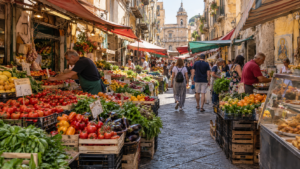
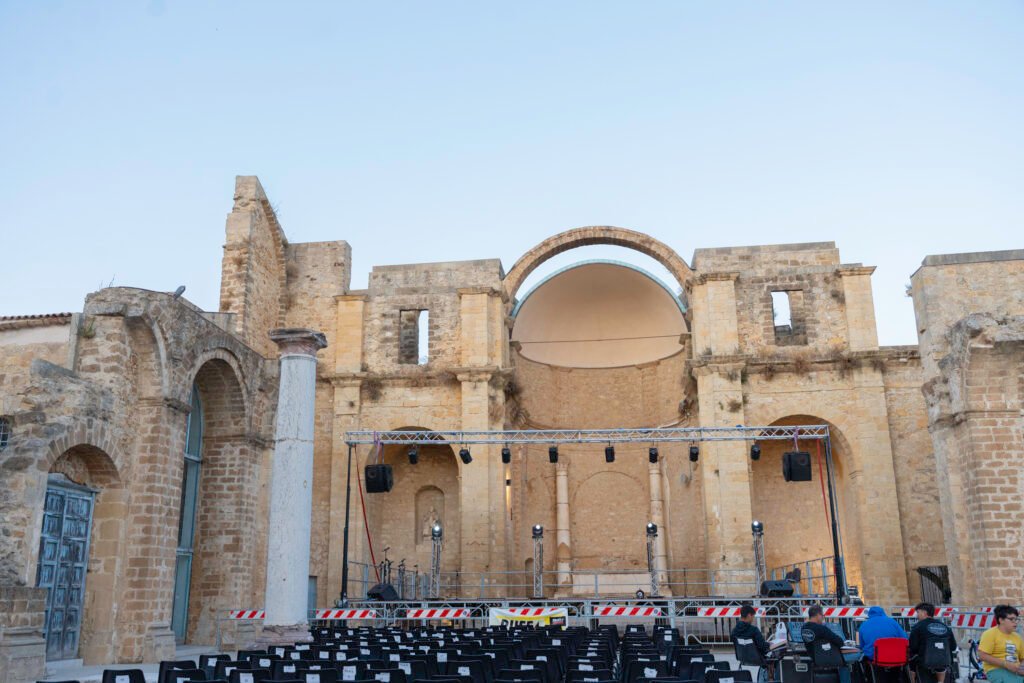
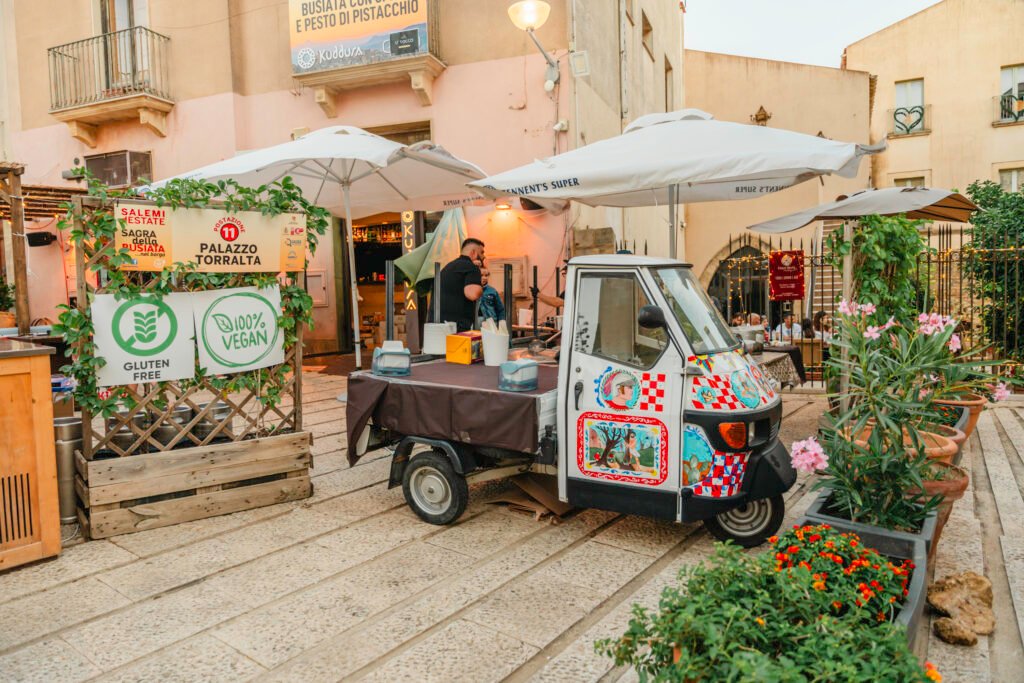
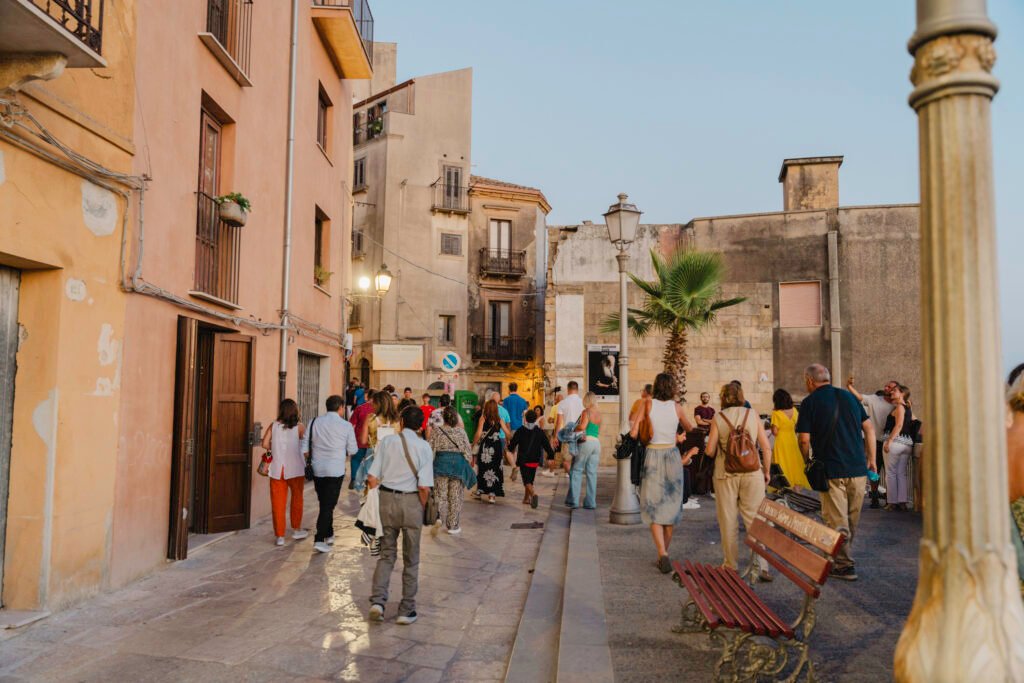
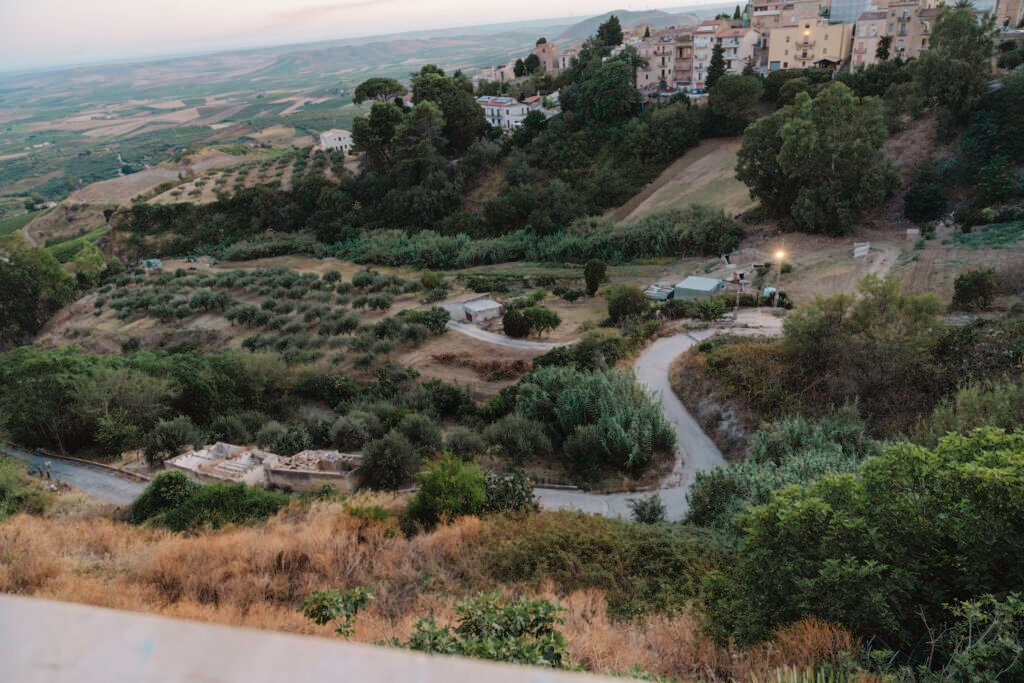
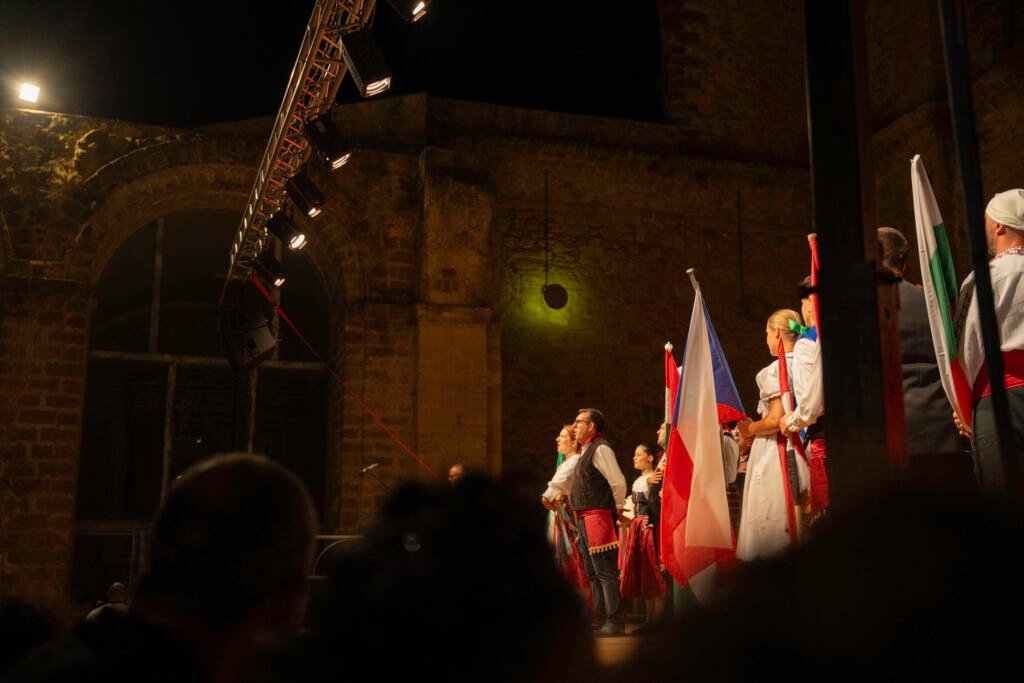
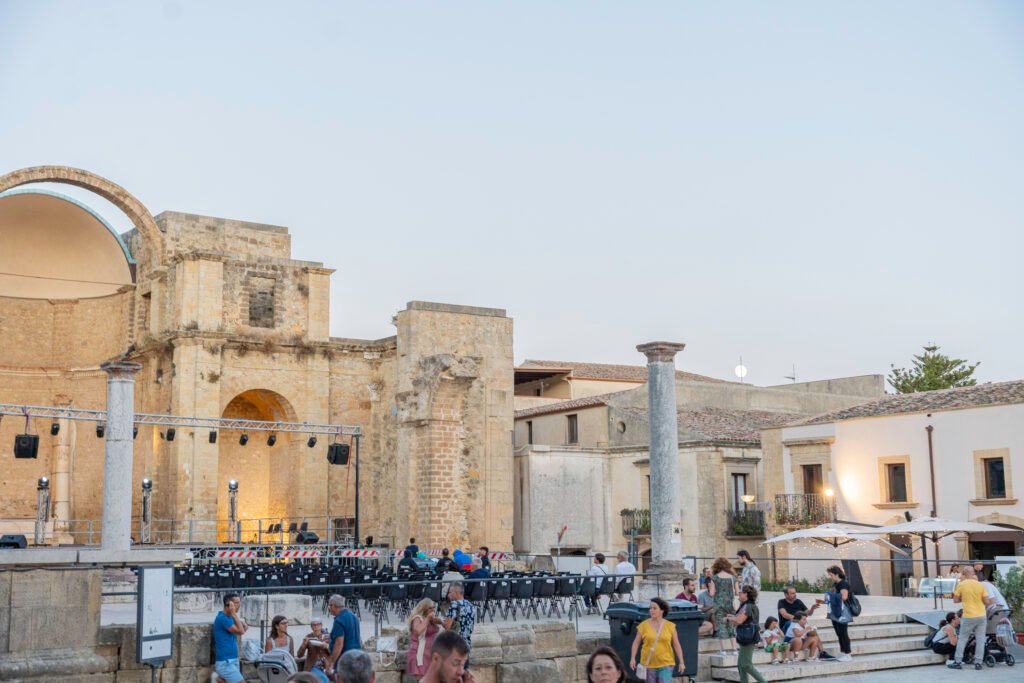
I discovered Salemi through Amanda in Italy — she posts houses for sale in the town on TikTok and YouTube and gives each property a nickname so they’re easier to remember. I started watching her videos and something about Salemi caught my attention beyond just the prices. There was a creative energy in the air. The Ceramics International School brings international artists regularly. The town is listed among Italy’s Borghi più belli — the most beautiful villages in Italy. The castle. The history. The winding stone streets.
But it also hit my non-negotiables practically. Salemi is less than an hour from Palermo airport, less than forty minutes from the coast, has a hospital, has well over seven thousand inhabitants, and sits in a qualifying zone for Italy’s 7% pensioner tax regime. And it has an active One Euro Home program. The combination of creative community and practical logistics was unusual—most towns that are cheap and charming are also extremely remote or underserved. Salemi felt different.
The Cat House: How I Found My Home
It was June 2025. I was either in Albania or about to leave for a 12-day trip to Albania with my husband when I watched Amanda’s video about a property she’d nicknamed the cat house. I watched it once and said out loud, without thinking: ” This is my house.
I had already filled out a form with Fabrizio Imternicola Amanda’s realtor, months earlier—I was planning a scouting trip for September 2025 and had been on his radar as a potential buyer. So when I saw the cat house and knew I wanted it, I reached out immediately — to Amanda directly and to Fabrizio. Amanda told me I couldn’t formally bid without a codice fiscale. More on that in a moment. Fabrizio confirmed that there were five other people interested and that the price had increased from €15,000 to €22,000.
I added €500 to win the bid. The house was mine — in principle. But I needed to come see it in person before making anything official.
📋 What Is a Codice Fiscale?
The codice fiscale is Italy’s tax identification number — equivalent to a Social Security number in the US. You need it for almost everything in Italy: opening a bank account, signing a lease, buying property, and sometimes even for purchases at certain stores. To make a formal offer on a property in Italy, you need one. You used to be able to get a codice fiscale at an Italian consulate in the US, but rules have changed and this is no longer straightforward. The most reliable option is to have someone apply for it on your behalf in Italy using a power of attorney, or to get it in person once you arrive. I had Fabrizio track down someone who could handle it for me before I arrived — it cost €100 and a lot of begging. There are services that can do this for you; sign up for my newsletter for specifics on who I recommend.
The Albania Detour: Buying a House Sight Unseen (Almost)
Here is where the story gets a little chaotic in the best possible way. We were in Albania—twelve days planned—and I kept thinking: there are five people who were interested in this house, some of whom are physically in Sicily right now. If I don’t go see it, I’m going to lose it to someone who did.
So we rerouted. Instead of flying home from Albania, we flew to Sicily. We landed in early July and drove to Salemi.
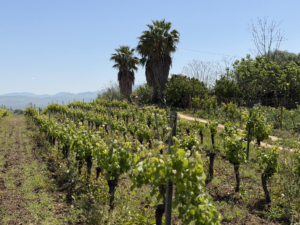
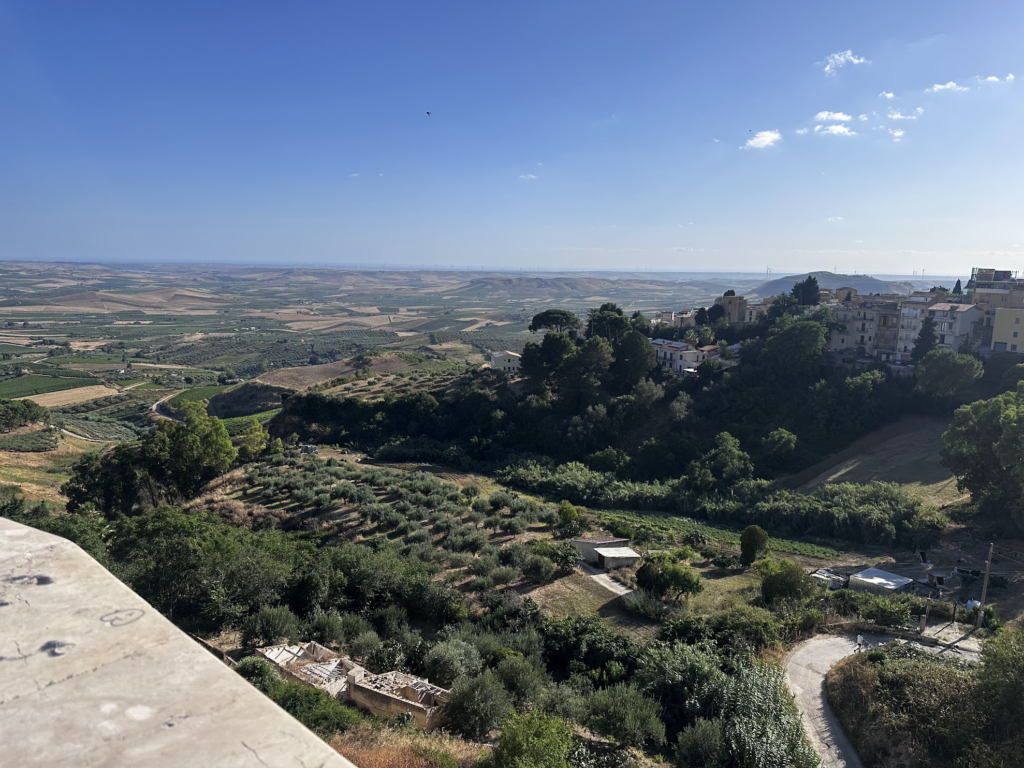
The town was exactly what I had hoped. My husband liked it immediately. There were young people, things happening, and a real energy. We liked the vibe in a way that surprised even us, given that we had built it up for months of YouTube videos and research. Then we saw the house. It was a significant renovation project—not for the faint of heart, and I won’t pretend otherwise — but the structure was right, the views were phenomenal, and the price was exactly what it should be for what it was.
So I sat outside at Tazì Pazì, the bar in Salemi that functions basically like the Cheers of the town—everyone genuinely does know your name there—ordered a spritz, and signed the pre-agreement. I paid 25% down to secure the property.
The Seven-Month Wait (and Then Two More)
After the pre-agreement, I was told there would be a delay before closing. The house was registered as two separate units in the Italian cadastral system — essentially the property registry that records how buildings are officially divided — and the seller needed to complete a fusione catastale (cadastral fusion) to merge them into one unit before we could close. The contract gave seven months for this.
I also spent those months applying for Italy’s Digital Nomad Visa, which added another two months to the timeline. I finally arrived back in Sicily on March 10, 2026.
And then it took another three weeks to close.
Closing Day: How I Accidentally Bought Two Houses
This is the part of the story I tell people when they ask what buying property in Italy is really like.
The notary—the “notaio”—is the central figure in any Italian property purchase. They’re not just a lawyer; they’re a public official who verifies the legal validity of the transaction, reads the full act aloud (and I mean full — it is a long process that feels more like a courtroom than a real estate closing), and ensures everything is recorded correctly with the state. When our notary reviewed the documents, she discovered that one of the two units in the property had the seller’s wife’s name on it — not just his. This meant the cadastral fusion couldn’t proceed as planned, because the ownership wasn’t clean.
Cue a scramble. The realtor, the seller, his wife, and I all drove forty minutes together to the notary’s office in Mazara del Vallo to try to sort it out. I’ll note: you’re technically supposed to have a certified translator present at the notary reading (around €300), but I understand about seventy percent Italian and Fabrizio speaks English, so we proceeded without one.
As the notary read the act, I realized she was describing two separate properties. The fusion had not gone through. And the deposit I had paid — intended as a down payment on one house — was being recorded as the purchase price for one of the two units.
The seller looked defeated. I looked at Fabrizio. And I closed on two properties on April 1, 2026.
April Fools’ Day. I am not making this up.

Prima Casa: Why Two Properties Became a Problem
In Italy, if you’re buying a property as your primary residence, you qualify for what’s called prima casa — a significant tax benefit that reduces the purchase tax from 9% to 2%. Because I had applied for and received my Digital Nomad Visa and intend to make Italy my primary residency, I qualified for this. You typically have twelve to eighteen months from closing to establish and prove primary residency to maintain the benefit.
The complication: prima casa applies to one property, not two. Owning two properties changes the tax calculation and creates legal complications. This needed to be fixed.
The Fix: €500 and a Geometra
A geometra in Italy is a licensed surveyor and drafter — they handle the technical side of property documentation, renovations, and cadastral filings. I hired an architect with geometra qualifications who was able to complete the fusione catastale that the original process hadn’t managed to do. Cost: €500. Time to complete: manageable. Result: I now own one unit, not two. I cannot overstate my relief.
The lesson here is to budget for a geometra not just for the fusion fix but for the property inspection before you buy. I paid €200 for an inspection, which I’d recommend to everyone — but if I were doing it again, I’d pay more for a thorough geometra-led inspection that produces a full documented assessment of what renovations are needed. That documentation becomes your renovation project roadmap and protects you legally as you move forward.
The Full Cost Breakdown
Here is every euro I spent to get from seeing the cat house video to owning the property:
| Cost | Amount | Notes |
|---|---|---|
| Purchase price | €22,500 | €22,000 asking + €500 to win the bid |
| Pre-agreement deposit (25%) | ~€5,625 | Paid on signing in Salemi, credited toward final price |
| Notary fee + taxes (prima casa rate) | €3,200 | Includes all government taxes at the 2% prima casa rate |
| Agency fee | €1,600 | Realtor commission |
| Property inspection | €200 | Basic inspection — budget more for full geometra assessment |
| Codice fiscale | €100 | Obtained via power of attorney before arrival |
| Cadastral fusion fix (geometra) | €500 | To merge two units back into one after the closing surprise |
| Total all-in | ~€28,100 | Excluding renovation costs |
Note on the notary fee: in Italy, the property can be assigned a higher official value than the actual sale price for cadastral purposes, which affects how taxes are calculated. This can mean your closing documents reflect a higher valuation than what you paid. It was a little confusing to navigate but is standard practice — your notary will explain it.
🏠 Free Download: My Buying a Home in Italy Checklist
Everything I wish I’d had before I started — the codice fiscale, the geometra, the compromesso, the prima casa questions, the costs nobody tells you about. Sign up below and I’ll send it straight to your inbox.
Plus, you’ll get access to my newsletter, where I share the unfiltered story: the real costs, the bureaucracy, the ugly crying, and the things I can’t post publicly.
→ Get the Free Italy Home Buying Checklist GERE https://fusetravels.myflodesk.com/q9wq8ishb5 HEh
What’s Next: Bella Bossa Studio Loft
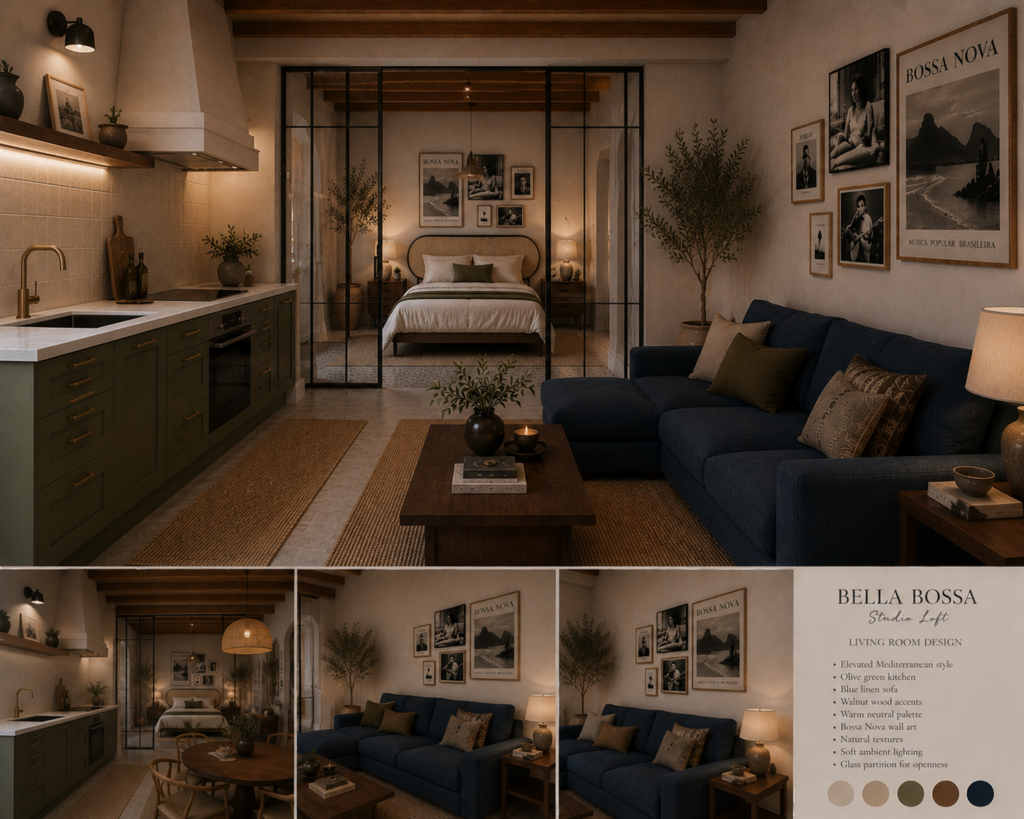
The property is a multi-unit building, which means it has short-term rental potential beyond just being my personal base in Sicily. The first unit to be renovated is a studio loft I’ve named Bella Bossa — it will be ready by the end of July 2026. I’m going back to Salemi next month to check on the renovation progress, continue the immigration paperwork process with the local municipal office, and get the full geometra project assessment done for the rest of the property so I know exactly what the remaining renovation will cost and look like.
I don’t have final numbers on the total renovation cost yet — that’s coming with the official geometra project. But the studio loft coming online this summer is the first real milestone, and I’ll be sharing every detail of it on Instagram and in my newsletter, which is where I really get into the details: the costs, the bureaucracy, the moments of ugly crying in a piazza, and the things I can’t always share publicly. Both are linked below.
Key Italian Property Terms to Know
Codice fiscale — Italy’s tax identification number. You need this before you can make a formal offer on any property. Apply via power of attorney through a service in Italy, or in person if you’re already there.
Proposta / compromesso — The preliminary offer and pre-agreement. This is when you pay a deposit (typically 10–25%) and both parties are legally committed to the sale. If the buyer backs out, they forfeit the deposit. If the seller backs out, they owe the buyer double the deposit.
Notaio — The notary public, who is a state-appointed official (not just a private lawyer) responsible for verifying and recording the final sale. The notary reads the entire deed aloud at closing. Budget €2,000–4,000+ depending on property value and taxes.
Geometra — A licensed surveyor and drafter who handles technical property documentation, cadastral filings, and renovation project management. Hire one for the inspection before you buy, and again for any renovation work.
Fusione catastale — The process of merging two or more cadastral units into one in the official property registry. This is what my seller was supposed to complete before closing. Make sure it’s done before you get to the notary.
Prima casa — Primary residence tax benefit. If you buy a property as your primary home in Italy, purchase tax drops from 9% to 2%. You must establish residency within 18 months of closing to maintain the benefit. Having a visa that establishes residency intention helps.
IMU / TARI — Annual property taxes. IMU is the municipal property tax; TARI is the waste collection tax. As a property owner in Italy, you’ll pay these annually even if you’re not a resident. Budget a few hundred euros per year for a small property in a town like Salemi.
Would I Do It Again?
Absolutely. Without question. The process was more complicated than I expected — the seven-month wait, the notary surprise, the accidental two-property situation, and the scramble to find someone to fix the fusion—but none of it was insurmountable, and the result is that I own a beautiful piece of a hilltop Sicilian town that I genuinely love, with renovation in progress and a clear vision for what it’s going to be.
We are on a journey to become slow-living investors, both in life and in real estate. Follow along the journey on the gram.
If you’re thinking about doing something similar, the five-step framework I laid out above is where to start. Get your non-negotiables list done first. Set your budget with the cash-purchase reality in mind. Join the Facebook groups. Search Idealista and Immobiliare.it. And then go. Get on a plane and walk the streets of the towns you think you might love. That trip to Salemi changed everything for me.
I also have a quiz that will help you match your non-negotiables to specific towns in Sicily — you can find it linked below. And if you want the unfiltered version of all of this — the costs, the crying, the piazza moments, the things I can’t post publicly — sign up for my newsletter. That’s where the real story lives.
🏠 Free Download: My Buying a Home in Italy Checklist
Everything I wish I’d had before I started — the codice fiscale, the geometra, the compromesso, the prima casa questions, the costs nobody tells you about. Sign up below and I’ll send it straight to your inbox.
Plus, you’ll get access to my newsletter, where I share the unfiltered story: the real costs, the bureaucracy, the ugly crying, and the things I can’t post publicly.
→ Get the Free Italy Home Buying Checklisthttps://fusetravels.myflodesk.com/q9wq8ishb5