Traveling in Sicily without a rental car is entirely possible — but the single most important decision you make is where you base yourself. Choose the wrong town, and you will spend your trip waiting for infrequent buses or paying for taxis to cover distances a car would handle in minutes. Choose the right one and your car-free trip feels easy, relaxed, and genuinely rewarding. This guide covers the best bases in Sicily for travelers without a car, ranked by how much of the island you can access from each one.
The key principle for car-free travel in Sicily is staying in walkable historic centers with good onward connections. The towns that work best are those where your hotel is in or immediately adjacent to the main sights, where the train station or bus terminal is a short walk away, and where the surrounding area offers enough to fill your time without requiring a vehicle to get anywhere interesting.
So lets chat best places to stay in Sicily without a car.
Palermo: Best Overall Car-Free Base
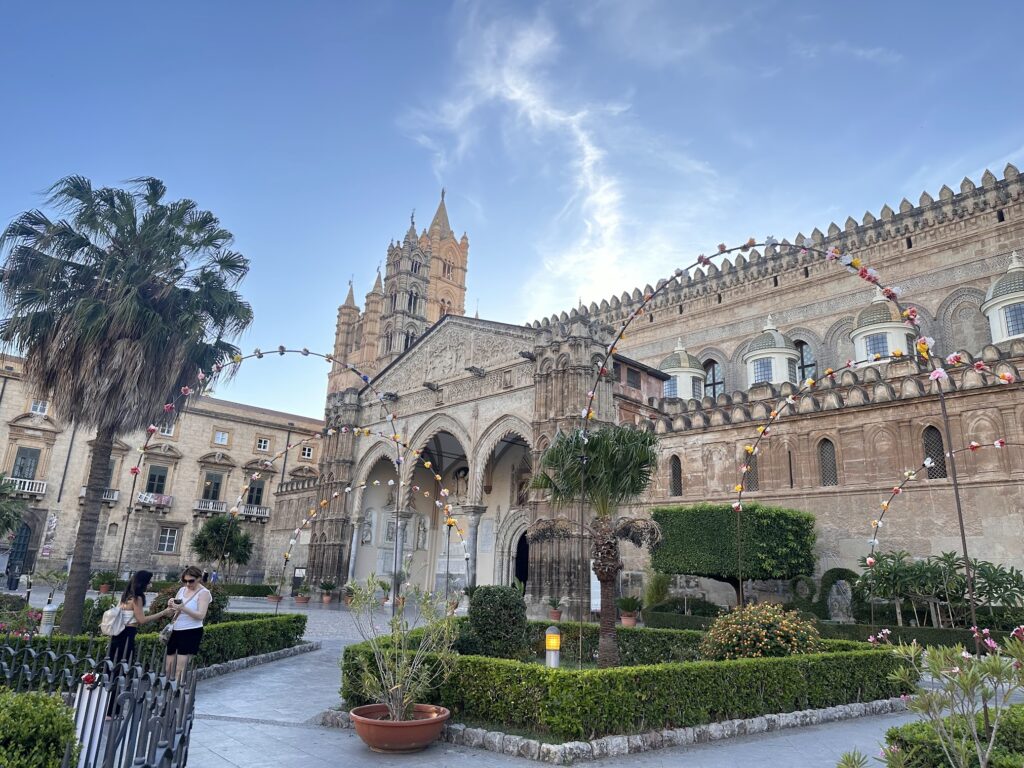
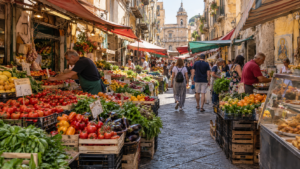
Palermo is the strongest car-free base in Sicily by a significant margin. The historic center — centered around the Quattro Canti, the Ballarò and Capo street markets, the Palatine Chapel, the Kalsa neighborhood, and the waterfront — is dense, walkable, and genuinely one of the most interesting urban environments in southern Italy. You could spend four or five days in Palermo without covering the same ground twice.
From Palermo, you can reach Cefalù by train in about 1 hour, Trapani by train or bus in under 2 hours, Agrigento by train in about 2 hours, and Monreale—the hilltop town with one of the greatest Norman cathedrals in the world — by local bus in 30 minutes. The city’s own bus network (AMAT) is extensive enough that even outlying neighborhoods are reachable without a taxi.
Where to stay: The best car-free neighborhoods in Palermo are the Kalsa (near the Oratorio di San Lorenzo and the waterfront, quiet and atmospheric), the area around Via Maqueda and the Quattro Canti (central, walkable to everything), and the Vucciria district near the market. Avoid staying in the modern outer suburbs — you want to be inside the historic center. Parking in central Palermo is genuinely difficult, so hotels in the old town are actually better designed for guests arriving without cars than for drivers. Check out Where to Stay in Palermo and Is Palermo Safe.
Taormina: Best Car-Free Town in Sicily
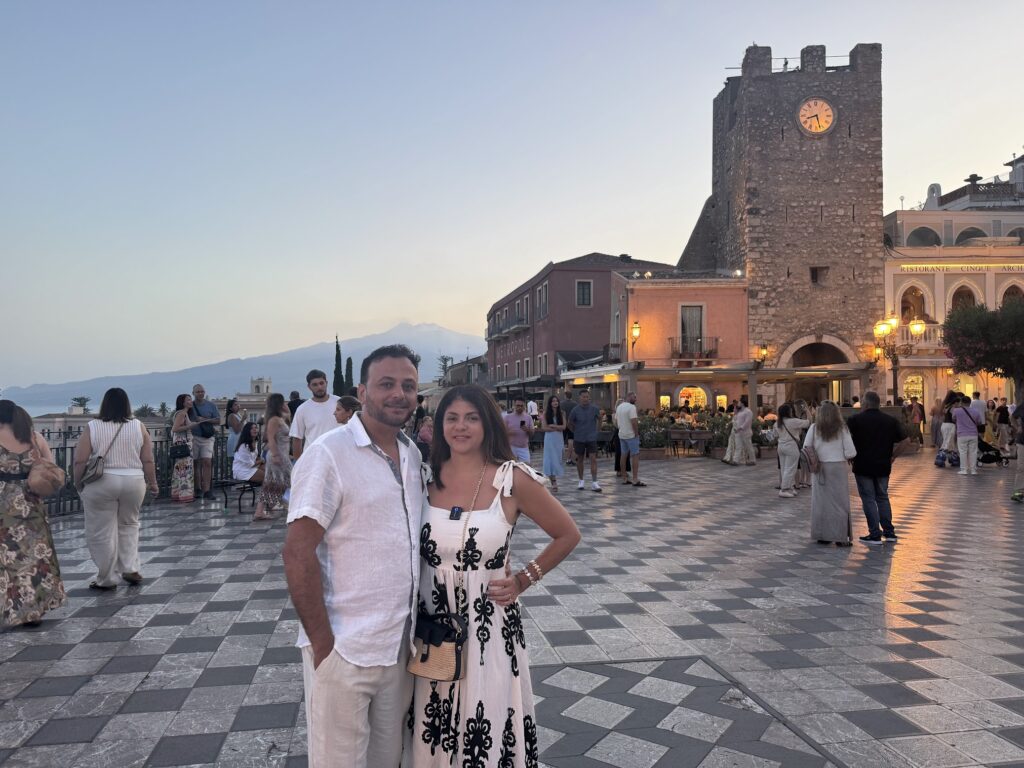
Taormina is paradoxically the easiest Sicilian town to visit without a car — and one of the hardest to visit with one. The old town on its clifftop terrace is essentially car-free by design: most of the center is pedestrianized, the main street (Corso Umberto) runs the full length of the historic center and connects all the key sights, and parking is such a problem that many visitors who drive to Taormina end up wishing they had not.
You arrive at Taormina-Giardini station — in Giardini Naxos, the beach town below — and take the AST bus up the hill to Taormina’s Porta Messina in about 15 minutes. From there, everything is on foot: the Greek-Roman theater with its extraordinary views to the coast and Etna, the public gardens, the Corso Umberto boutiques and restaurants, and the Piazza IX Aprile terrace. The cable car down to Isola Bella beach (and back up) means you do not need a car for beach days either.
Day trips from Taormina without a car include the Circumetnea railway around the base of Etna from Catania (take the train to Catania, then the narrow-gauge Circumetnea), and organized shuttle excursions to the Etna crater available from tour operators in Taormina’s center. Catania is 45 minutes away by train — a good base for exploring the city and its market. For a full guide, see our article on day trips from Taormina without a car.
Syracuse & Ortigia: Best Car-Free Island Base
Ortigia — the historic island at the heart of Syracuse — is one of the most beautiful and walkable places in Sicily. The island is small enough to cover entirely on foot: the Piazza del Duomo (a converted Greek temple), the Fonte Aretusa fountain, the waterfront fish market, the Baroque streets, and the excellent restaurants and wine bars are all within easy walking distance of any accommodation on the island.
The mainland archaeological park of Neapolis — containing the Greek theater, the Roman amphitheater, and the Ear of Dionysius — is about 2.5km from Ortigia, an easy taxi or local bus ride. The train station is on the mainland, about a 15-minute walk from the Ortigia bridge; trains run to Catania (about 1h 20min) and north along the coast. The beaches of the Syracuse province — particularly Fontane Bianche and the nature reserve at Vendicari/Calamosche — require a car or taxi to reach, but the city itself and its ancient sites are fully accessible without one.
Syracuse is also a practical base for the Baroque southeast: Noto (30 minutes by bus or train), Modica (about 1 hour by bus), and Ragusa Ibla (about 1h 15min) are all reachable by public transport from Syracuse, though schedules require planning. For a fuller guide to the area, see our article on where to stay in Ortigia.
Cefalù: Best Car-Free Base on the Northern Coast
Cefalù works extremely well for car-free travelers. The old town is compact, the Norman Cathedral and the beach are within a few minutes’ walk of any accommodation in the historic center, and the train station connects directly to Palermo (1 hour) and eastward to Messina and Taormina. The town’s main beach — one of the best on Sicily’s northern coast — is steps from the old town, which means your accommodation and your beach are in the same place.
The main limitation of Cefalù without a car is that it works best as a single-base destination rather than a hub for exploration. The hilltop towns of the Madonie mountains inland are technically reachable by local bus, but are very infrequent and time-consuming. As a place to spend two or three nights, beach, old town, cathedral, day trip to Palermo by train—Cefalù is excellent and car-free. As a base for exploring northern Sicily broadly, you will feel the limitations. For accommodation guidance, see our guide to where to stay in Cefalù.
Catania: Best Urban Base for the East
Catania is underrated as a car-free base. The Baroque city center — the Via Etnea, the Piazza del Duomo, the fish market of La Pescheria, and the excellent street food of the Fera o’ Luni market — is walkable and genuinely interesting. The city has a real local character that tourist-heavy Taormina lacks, and the restaurant and nightlife scene is among the best in Sicily.
Catania’s Fontanarossa airport is directly connected to the city center by bus and taxi, making it the most practical arrival point for the eastern part of the island. From Catania, you can reach Syracuse by train in about 1h 20min, Taormina-Giardini in about 45 minutes by train, and the lower flanks of Etna by the Circumetnea railway. Organized excursions to the Etna crater are available from agencies in Catania’s center. The beaches near Catania—particularly the black sand beaches of the Riviera dei Ciclopi north of the city—are reachable by local bus.
Trapani: Best Car-Free Base for Western Sicily
Trapani’s old town — on a narrow peninsula pointing west into the sea — is one of Sicily’s most pleasant car-free environments: flat, walkable, and full of excellent seafood restaurants and Baroque churches. The port is the departure point for ferries to the Egadi Islands (Favignana, Levanzo, Marettimo) — excellent day trips that require no car, just a ferry ticket. The salt pans immediately south of Trapani, along the road toward Marsala, are within walking distance of the edge of town or reachable by local transport.
The main limitation is that, without a car, Trapani means missing much of what makes western Sicily special: the beaches of San Vito Lo Capo (no practical car-free access), the ruins of Selinunte, and the interior wine country. But if Trapani and the Egadi Islands are your focus—and they are genuinely enough for a 3–4 day base — the car-free experience is excellent. The train connects Trapani to Palermo in about 1h 45min.
Car-Free Bases in Sicily: Quick Comparison
| Base | Car-free rating | Train connections | Best for | Main limitation |
|---|---|---|---|---|
| Palermo | ⭐⭐⭐⭐⭐ | Cefalù, Trapani, Agrigento, Messina | History, markets, food, day trips | Beaches require car or taxi |
| Taormina | ⭐⭐⭐⭐⭐ | Catania (45min), Messina, Syracuse | Clifftop town, theater, Etna excursions | Limited day trip range |
| Syracuse/Ortigia | ⭐⭐⭐⭐ | Catania, Noto (limited) | Baroque island, archaeology, southeast | Best beaches need car/taxi |
| Cefalù | ⭐⭐⭐⭐ | Palermo (1hr), Messina, Taormina | Beach + old town in one place | Madonie interior not accessible |
| Catania | ⭐⭐⭐⭐ | Taormina, Syracuse, Messina | Urban base, Etna, eastern coast | Etna summit needs car or tour |
| Trapani | ⭐⭐⭐ | Palermo (1h 45min) | Egadi Islands ferries, salt pans | Western coast beaches inaccessible |
Tips for Staying Car-Free in Sicily
Book accommodation in the historic center. The difference between a hotel inside the old town and one a 20-minute walk out is significant when you are on foot all day. Pay the extra for a central location — the walking you avoid at the beginning and end of each day adds up over a week.
Budget for taxis to fill the gaps. Even the best car-free bases in Sicily will have moments where a taxi makes sense — getting to a beach, reaching an archaeological site, or returning from a late dinner somewhere that requires a night walk through unfamiliar streets. Sicilian taxis are inexpensive by European standards; budgeting €10–15 per day for occasional taxis makes a car-free trip much more comfortable.
Use organized excursions for the sights that need a car. Tour operators in every Sicilian city run organized day trips to the Valley of the Temples, Etna, the Baroque southeast, and other car-dependent destinations. These are generally good value, particularly for solo travelers and couples for whom renting a car just for one day feels excessive. The tradeoff is following someone else’s schedule rather than your own.
Consider a hybrid approach. Some travelers do Sicily car-free for the city portions of their trip and rent a car for a 2–3-day stretch specifically for beach and rural-town days. This works well: base in Palermo for the first few days, car-free, pick up a car for a loop through western Sicily (San Vito Lo Capo, Zingaro, Erice, Marsala, Agrigento), then return it and continue car-free on the eastern coast. You get the best of both approaches.
For more on planning your car-free trip, see our guides to getting around Sicily without a car and do you need a car in Sicily for a full breakdown of the transportation options.