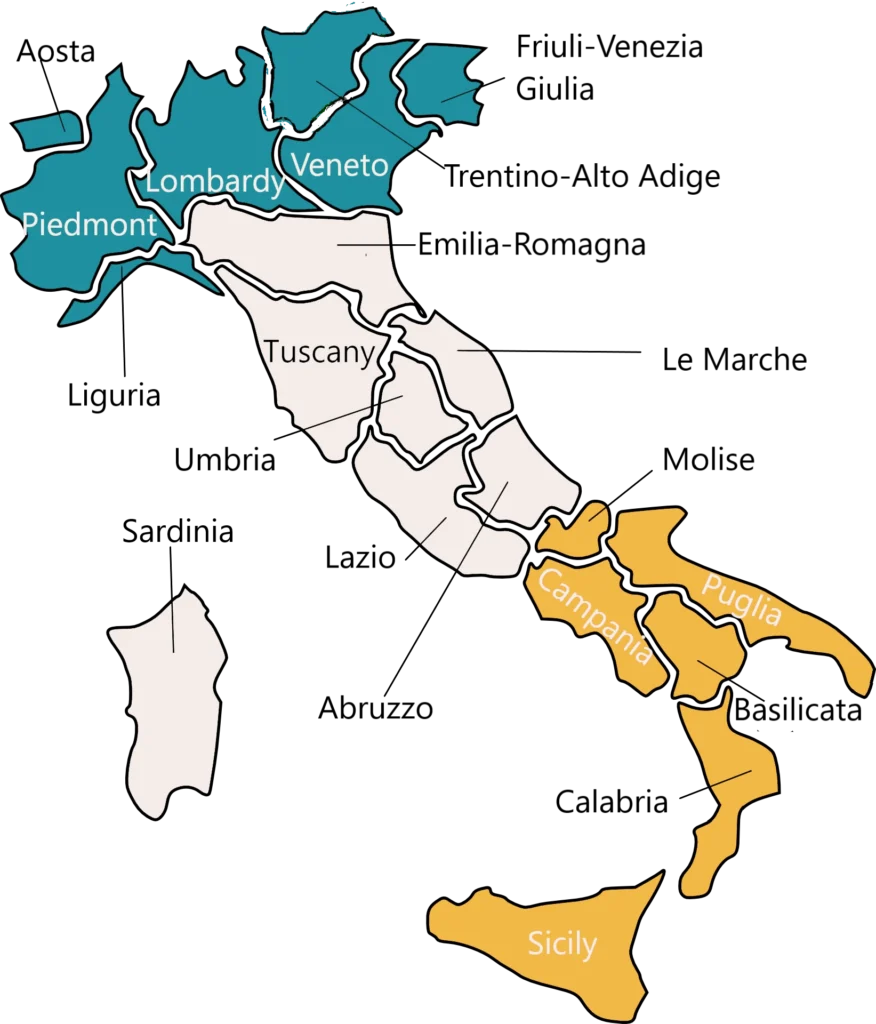
Palermo is one of the most layered cities in southern Europe — 3,000 years of Greek, Phoenician, Arab, Norman, Spanish, and Bourbon occupation compressed into a dense, chaotic, beautiful city that most visitors only scratch the surface of.
The standard Palermo itinerary — Palatine Chapel, a walk through Ballarò, dinner — is fine, but it misses most of what makes the city genuinely distinctive. The mummified bodies in the Capuchin catacombs. The Arab-Norman palaces hidden in quiet courtyards. The most extraordinary baroque stucco work in Europe in an oratory that almost nobody visits. And the Vucciria neighborhood, which transforms completely after 9pm into one of the best open-air drinking scenes in Sicily.
This guide covers unique things to do in Palermo experiences that are actually unique — the ones you cannot replicate anywhere else on the island.
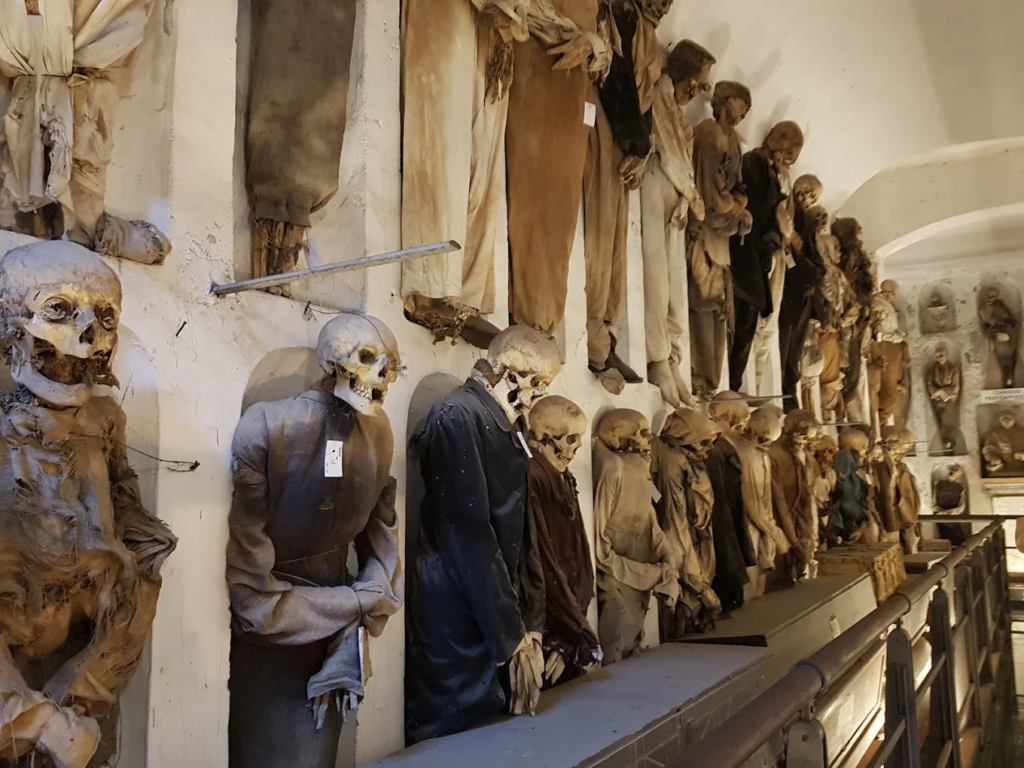
The Capuchin Catacombs: 8,000 Mummified Bodies
The Catacombe dei Cappuccini at Piazza Cappuccini — about a 20-minute walk west of the old town center, or a short taxi ride — is one of the most extraordinary and genuinely disturbing sights in all of Italy. From the 16th century onward, Palermo’s upper classes paid to have their bodies interred here after death and preserved through a desiccation process developed by the Capuchin monks. The result is a network of underground corridors lined with approximately 8,000 mummified bodies dressed in the clothes of their era, arranged by category: priests in their vestments, professionals in their finest suits, soldiers in uniform, women in their wedding dresses, children in their Sunday best.
The catacombs continued to receive bodies until 1920, and the range of preservation across 400 years gives the corridors a layered, almost theatrical quality — the oldest bodies reduced to skeletal figures in rotting cloth, the more recent ones retaining hair, facial features, and clothing in extraordinary detail. Goethe and Guy de Maupassant both wrote about visiting and being unsettled by the experience; it has lost none of that quality.
The most visited individual within the catacombs is Rosalia Lombardo, a two-year-old girl who died in 1920 and was preserved so perfectly through an embalming technique developed by Alfredo Salafia that she appears to be asleep — earning the nickname “the most beautiful mummy in the world.” She rests in a sealed glass coffin in a small side chapel at the end of the complex. Modern analysis has confirmed that her eyes open slightly due to the angle of light, an illusion that has startled visitors for a century.
The catacombs are open daily from 9am–1pm and 3–5:30pm (hours vary seasonally — check locally before visiting). Admission is around €3. Photography is permitted without flash. The corridor of children is particularly affecting; visitors who are sensitive to mortality or who are bringing young children should consider whether to include this stop.
The Arab-Norman Trail: Eight UNESCO Buildings
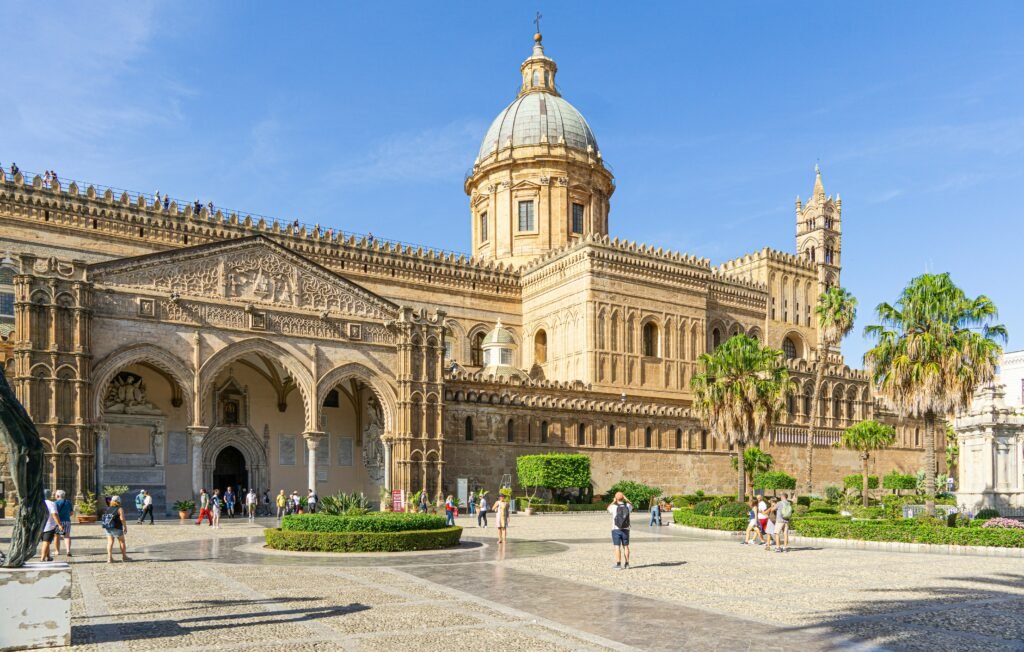
In 2015, UNESCO designated eight buildings in Palermo and its surroundings as a serial World Heritage Site under the title “Arab-Norman Palermo and the Cathedral Churches of Cefalù and Monreale.” The inscription recognized what makes Palermo architecturally unique: the extraordinary fusion of Byzantine, Arab, and Norman visual languages that the Norman kings produced in the 12th century, when Palermo was one of the most sophisticated courts in Europe and Roger II ruled over a kingdom where Arab administrators, Greek scholars, and Norman knights all worked side by side.
The Cappella Palatina (Palatine Chapel) inside Palazzo dei Normanni is the centerpiece: a small chapel entirely covered floor to ceiling in gold Byzantine mosaics, with an Arab honeycomb ceiling of extraordinary intricacy, Norman arches, and marble floors — all completed in the 1140s. It is genuinely one of the finest rooms in Europe and worth the admission to Palazzo dei Normanni on its own. Book tickets in advance in high season; the queue without a reservation can be significant.
San Giovanni degli Eremiti — a short walk from Palazzo dei Normanni — is visually among the most distinctive buildings in Sicily: five red domes rising above whitewashed walls, the exterior silhouette immediately recognizable on every Palermo postcard. The interior is stripped but the attached Arab garden cloister is exceptional — a quiet 12th-century garden of palms and citrus with pointed arches and a small fountain. This is one of the least crowded of the main Arab-Norman sites and one of the most rewarding.
La Martorana (Santa Maria dell’Ammiraglio) on Piazza Bellini has Byzantine mosaics as old as any in Sicily, installed for Roger II’s admiral George of Antioch in the 1140s. The mosaics of Christ Pantocrator and the Apostles in the nave dome are extraordinary; go in the morning when the light comes through the windows directly onto them. Next door, San Cataldo — three red domes on a plain exterior — is Norman-era and worth seeing from the outside even if the interior is closed.
The Palazzo della Zisa (about 1km from the old town, accessible by taxi) is the most overlooked major Norman site in Palermo: the former summer palace of the Norman kings, with the finest muqarnas ceiling in Sicily in its main hall — a spectacular honeycomb of carved plaster that creates the same effect as the Alhambra in Granada. It is now a museum of Arab-Norman decorative arts and almost entirely free of crowds. Monreale Cathedral, 8km outside Palermo by bus or taxi, has the greatest medieval mosaic cycle in the western world — 6,340 square meters of 12th-century gold mosaics covering the entire interior. It requires a separate half-day excursion but is the best single sight in the Palermo area.
Check out Palermo with Kids.
The Three Markets & Palermo Street Food
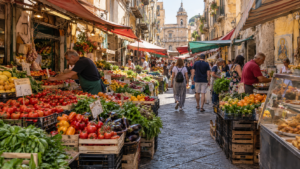
Palermo has three historic street markets that have operated continuously for centuries, and together they define the food culture of the city more than any restaurant. All three are at their best on weekday mornings; Sunday is the quietest day.
Ballarò — running from Piazza del Carmine along Via Ballarò into the heart of the old city — is the oldest, largest, and most authentic. It operates on a roughly kilometer-long circuit through the streets of the Albergheria neighborhood, and it sells everything from fresh fish to Moroccan spices to counterfeit goods to fresh vegetables. It is loud, crowded, and entirely Palermitan — more of a living neighborhood institution than a tourist attraction, even if visitors are welcome and expected.
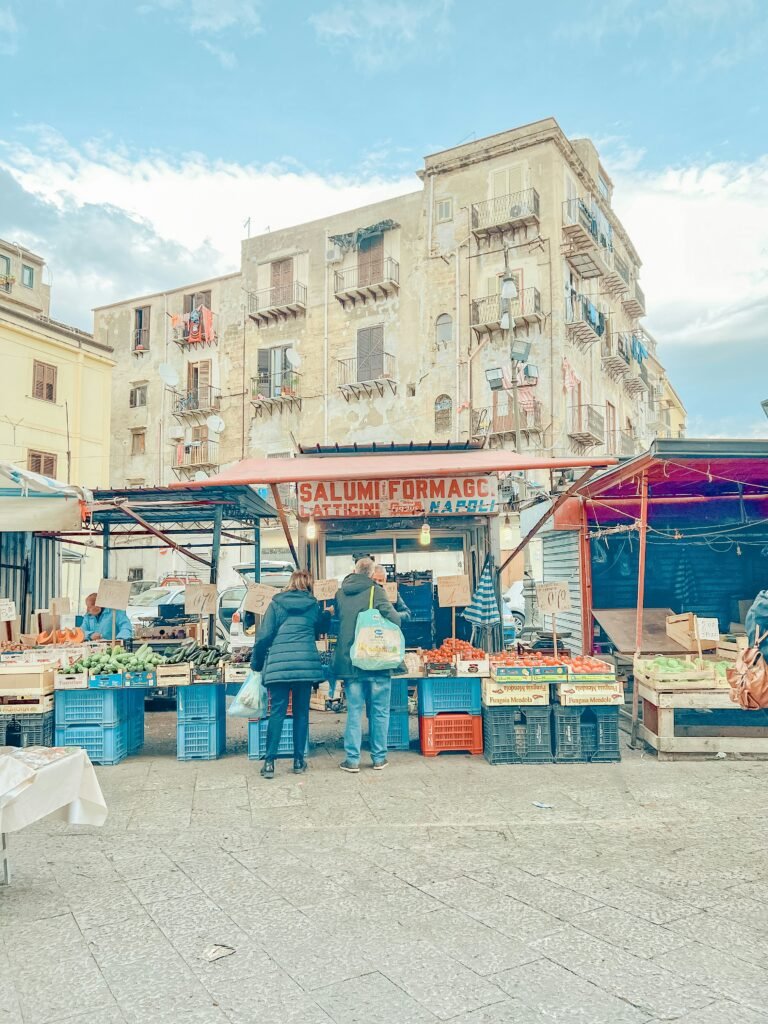
Capo (along Via Porta Carini and Via Sant’Agostino, near the Norman palace) is Ballarò’s quieter, more residential cousin — preferred by many locals for its excellent range of preserved meats, cheeses, olives, and dried goods. Less visual drama than Ballarò but better quality produce stalls and a more relaxed atmosphere. Vucciria (Piazza Caracciolo, near the port) is the historically most famous Palermo market — celebrated in paintings and literature — but has contracted significantly from its medieval extent. The morning fruit and fish operation is interesting but modest; the Vucciria’s real life now happens at night (see below).
What to eat in Palermo’s markets and streets: pani ca meusa is the defining Palermitan street food — a soft sesame roll stuffed with boiled and fried veal spleen and lung, topped with a squeeze of lemon and (if you order it “maritata,” meaning “married”) a shaving of aged caciocavallo cheese. It is an acquired taste for most American palates but genuinely historic — a food that has been sold in Palermo’s markets since the Middle Ages. The most famous purveyor is a cart at the edge of Ballarò; the original Antica Focacceria San Francesco on Piazza San Francesco also serves it in a restaurant setting if you want to try it seated.
Stigghiola — sheep or goat intestines wrapped around spring onions, skewered, and grilled over charcoal — is sold by vendors with small grills in the markets and street corners in the evening. It smells incredible as it cooks and tastes better than the description suggests. Sfincione (Palermitan thick pizza, closer to focaccia, with tomato sauce, onions, anchovies, and caciocavallo) is sold from street vendors and bakeries throughout the old city. Panelle — fried chickpea flour fritters — are eaten plain or stuffed into rolls as a light lunch. And the Palermitan arancina (note: in Palermo the word is feminine — arancina, not arancino, a distinction locals will correct you on) is round and filled with meat ragù or ham and butter, distinct from the cone-shaped Catania version.
Oratorio di San Lorenzo: Europe’s Greatest Stucco Interior
On Via dell’Immacolatella in the Kalsa district, the Oratorio di San Lorenzo contains what is arguably the finest baroque stucco work in Europe — and almost nobody visits it. Giacomo Serpotta (1656–1732), the Palermitan sculptor who defined the art of decorative stucco in Sicily, worked on this oratory between 1699 and 1710, covering every surface with allegorical figures, putti, garlands, battle scenes, and portraits in brilliant white lime stucco. The figures are so finely detailed — individual facial expressions, fabric folds, tiny narrative scenes within the larger compositions — that visitors who know to look for it typically spend 30–40 minutes in a space that takes 5 minutes to walk through.
The altarpiece position in the oratory is conspicuously empty. A Caravaggio painting — the Nativity with St. Francis and St. Lawrence, installed here in 1600 and considered one of his masterworks — was stolen from this spot in October 1969 in one of the most audacious art thefts in history. The painting has never been recovered and is consistently listed among the world’s most wanted stolen artworks. The empty frame amplifies the oratory’s atmosphere in a way that no replacement could.
The nearby Oratorio di San Domenico (Via dei Bambinai) has an earlier Serpotta stucco cycle from 1710, considered by some scholars to be even finer. A combined ticket covers both oratories; check current opening hours locally as they vary by season and are often closed on weekend mornings.
The Kalsa: Palermo’s Oldest Neighborhood
The Kalsa — from the Arabic al-Khalisa, meaning “the Chosen” or “the Pure” — was the Arab-founded administrative quarter of medieval Palermo and today remains the most historically layered neighborhood in the city. Bombed heavily by Allied forces in 1943 and only partially rebuilt, the Kalsa has preserved a combination of medieval streets, bombed-out ruins left as open-air monuments, baroque churches, and neighborhood piazzas that feels different from anywhere else in the old city.
Piazza Magione — the largest open square in the Kalsa — is anchored by the Romanesque church of La Magione (a Norman Crusader church from the 1150s) and surrounded by the kind of low-key neighborhood life that is increasingly rare in Sicilian tourist towns: local bars, a small food market in the morning, families on benches in the evening. Giardino Garibaldi near Piazza Marina is a public garden with Morton Bay fig trees so old and enormous that their aerial roots have taken over the entire garden floor, creating a root landscape that looks more like something from a tropical film set than a public park in a Sicilian city.
The Orto Botanico (Botanical Garden) at the edge of the Kalsa, founded in 1789, is one of the finest in Italy — large greenhouses from the 18th and 19th centuries, an extraordinary collection of tropical and subtropical specimens, and usually quiet enough to feel like a genuine escape from the city. It is attached to the University of Palermo and operates as an active research institution as well as a public garden.
Aperitivo & The Vucciria After Dark
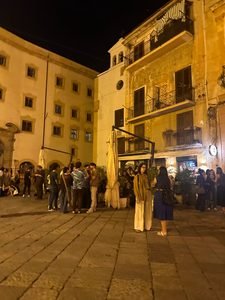
Palermo has one of the best and least-known nightlife scenes in Sicily, and the centerpiece of it is a neighborhood transformation that happens nightly in the Vucciria. From about 9pm onward, the alleys around Piazza Caracciolo and the surrounding lanes — Via Maccheronai and the network of narrow medieval streets running off it — fill with young Palermitans and a smaller number of visitors who have heard about it. Bars set up folding tables in the street. Beer is sold from windows and bar counters directly to people standing in the alley. Music spills from multiple venues. The combination of medieval stone streets, warm Sicilian evenings, and genuine local energy makes the Vucciria at night one of the most atmospheric places to spend an evening in Sicily.
The key distinction from tourist nightlife: the Vucciria after dark is not a tourist venue — it is where Palermitans in their 20s and 30s actually go. Prices are accordingly low. The crowd is local. The atmosphere is informal. It is at its best from about 10pm to midnight on Thursday, Friday, and Saturday nights.
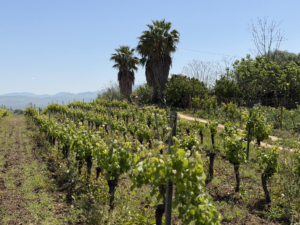
For a more relaxed aperitivo earlier in the evening: the wine bars and restaurants around Piazza Bellini and the nearby streets of the Albergheria neighborhood have good selections of Sicilian wines by the glass and better food. The area around Piazza Ballarò — the Ballarò market square — also has bars that are busy from 7pm onward with a local crowd, outdoor tables, and cheap drinks. The Kalsa neighborhood fills with Palermitans on their evening passeggiata from about 7pm, particularly around Piazza Magione, followed by dinner at the small trattorie in the neighborhood lanes.
Practical Tips for Palermo
Getting around: The old town is large but walkable — allow 20–25 minutes to walk from Palazzo dei Normanni to the Kalsa. Taxis are inexpensive and recommended for the Capuchin Catacombs, Palazzo della Zisa, and any trip after midnight. City buses (AMAT) cover most outer neighborhoods.
Booking: Reserve Palatine Chapel tickets in advance online in high season (May through September) — the queue without a reservation can run over an hour. The catacombs and most other sights do not require advance booking.
Timing the markets: Arrive at Ballarò or Capo by 9–10am for peak activity. Most market stalls close by 1–2pm; street food vendors operate through the afternoon and evening.
Eating schedule: Palermitan restaurants fill after 8:30pm and many do not open for dinner until 8pm. Lunch in the market areas runs from about noon to 2:30pm. If you sit down for dinner at 7pm you will have the place to yourself.
For help planning your time in the city, see our guide to the best car-free bases in Sicily — Palermo is one of the strongest. For getting between Palermo and the rest of the island, see our overview of whether you need a car in Sicily. Also is Palermo Safe?