Sorrento is the smartest based on the Bay of Naples, and most visitors who choose it over Positano or Amalfi realize within a day why that decision was right. The town sits on a limestone cliff above two small harbors, its historic center is flat and walkable, and its location is almost perfectly central for day trips: 35 minutes by train to Pompeii, 40 minutes to Naples, 25 minutes by fast ferry to Capri, and direct ferry service to Positano, Amalfi, and the other Amalfi Coast towns. We have visited Sorrento twice now, once in early November and the second at the end of November.
I spent my birthday there 2 years ago, and it was delightful. The big Christmas tree at the piazza with sing-alongs, and the town was buzzing for the holidays. It also had many local events.
Sorrento itself—the lemon groves, the Baroque churches, the marina restaurants, the ceramics workshops—is worth three or four days on its own. Choosing where to stay within the town makes a significant difference to what kind of trip you have.
This guide covers the main areas where to stay in Sorrento, the neighborhoods around the town that offer quieter alternatives, and how to choose the right base depending on whether your priority is atmosphere, access, price, or a combination of all three.
Why Sorrento Instead of Positano or Amalfi?
Before covering the neighborhoods, it is worth addressing the most common question that American travelers ask when planning a Bay of Naples trip: Should I stay in Sorrento, Positano, or one of the towns on the Amalfi Coast? The honest answer is that Sorrento wins on logistics, Positano wins on aesthetics, and your budget usually decides between them.
Sorrento is connected to Naples and Pompeii by the Circumvesuviana railway, a commuter train that runs every 30 minutes, meaning you can be at Pompeii in 35 minutes and Naples in 65 minutes without a car, a driver, or a ferry. Positano and Amalfi have no train connection at all; to reach Pompeii or Naples, you need either a car on the notoriously congested SS163 coastal road, an expensive taxi, or a ferry followed by a train. For most American travelers doing a Naples/Pompeii/Capri/Amalfi combination, Sorrento’s connectivity is the decisive factor.
Accommodation in Sorrento is also significantly more affordable than in Positano, which has become one of the most expensive small towns in Italy. Sorrento has a wide range of price points from budget B&Bs in the historic center to grand clifftop hotels at the luxury end. Positano’s options at the lower end of the price range are limited and often require a steep walk up from the waterfront.
Centro Storico: Best for Atmosphere and Access
The historic center of Sorrento — the compact grid of streets centered on Piazza Tasso — is where most visitors stay and, for most trip types, where most visitors should stay. The piazza itself is the social heart of the town: cafe tables spilling out under the trees, the main bus stops for Amalfi Coast routes, and a constant flow of locals and visitors that gives Sorrento its characteristic mix of real-town atmosphere and tourist infrastructure.
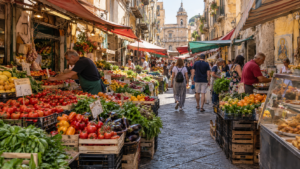
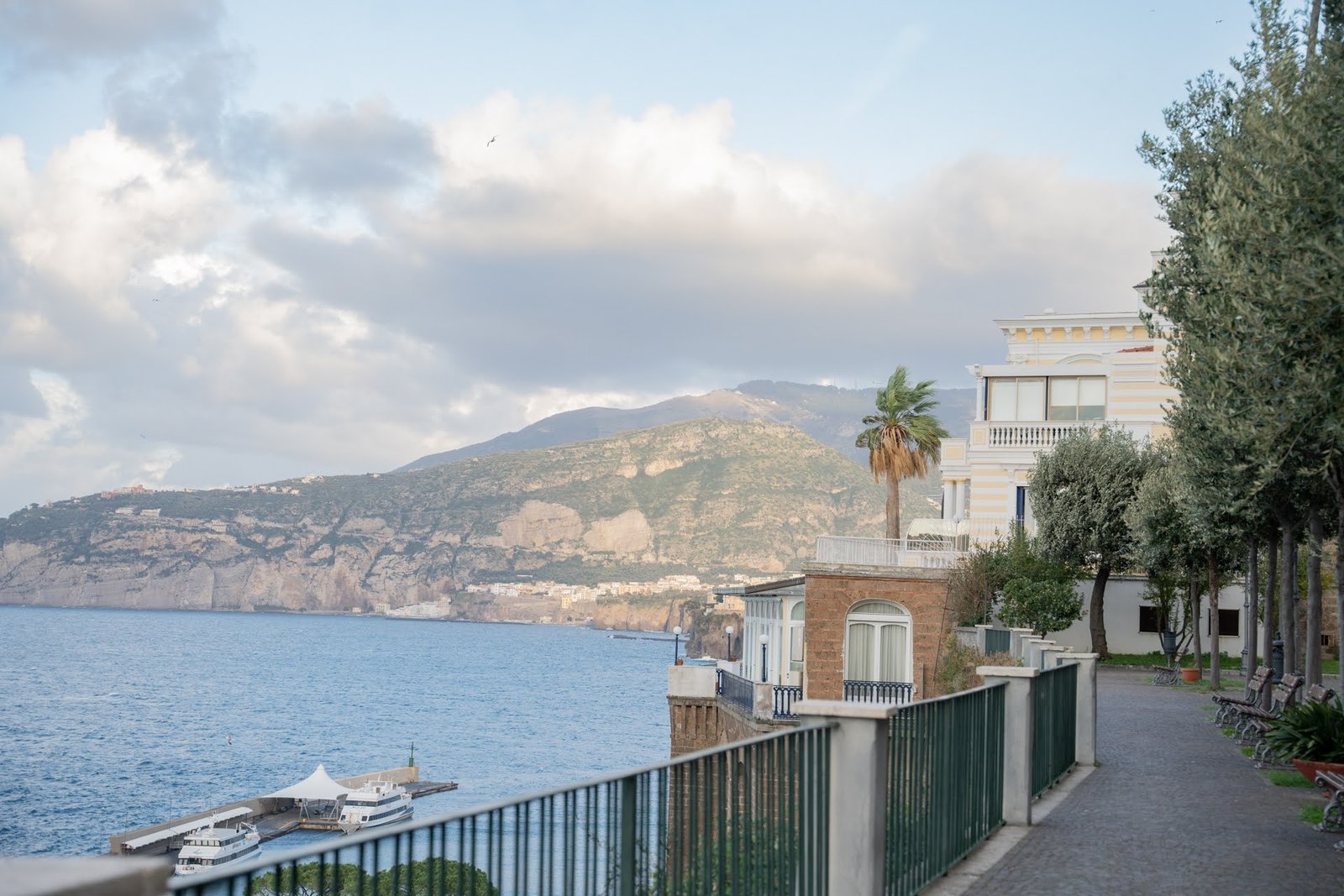
From Piazza Tasso, everything is within walking distance: the narrow lanes of Via San Cesareo and Via degli Aranci (lined with limoncello producers, ceramics shops, food markets, and trattorias); the Cathedral of Sorrento with its marble facade and decorated choir stalls, and the Villa Comunale — the clifftop municipal garden with the best views in the center, looking out over the Bay of Naples toward Vesuvius and the islands. The lift from the Villa Comunale gardens down to Marina Piccola — the main boat harbor, where ferries to Capri, Naples, and the Amalfi Coast depart — takes about 3 minutes and runs throughout the day.
Accommodation in the centro storico ranges from budget guesthouses in the lanes behind the cathedral to some of the most storied grand hotels in southern Italy. The Grand Hotel Excelsior Vittoria, perched on the cliff edge with gardens above the marina, has been hosting guests since 1834; Caruso and Sophia Loren both stayed here. At the more accessible end, the old town has dozens of well-run B&Bs and boutique hotels in converted palazzi that offer genuine character at mid-range prices.
Marina Grande: The Fishermen’s Village Below the Cliff
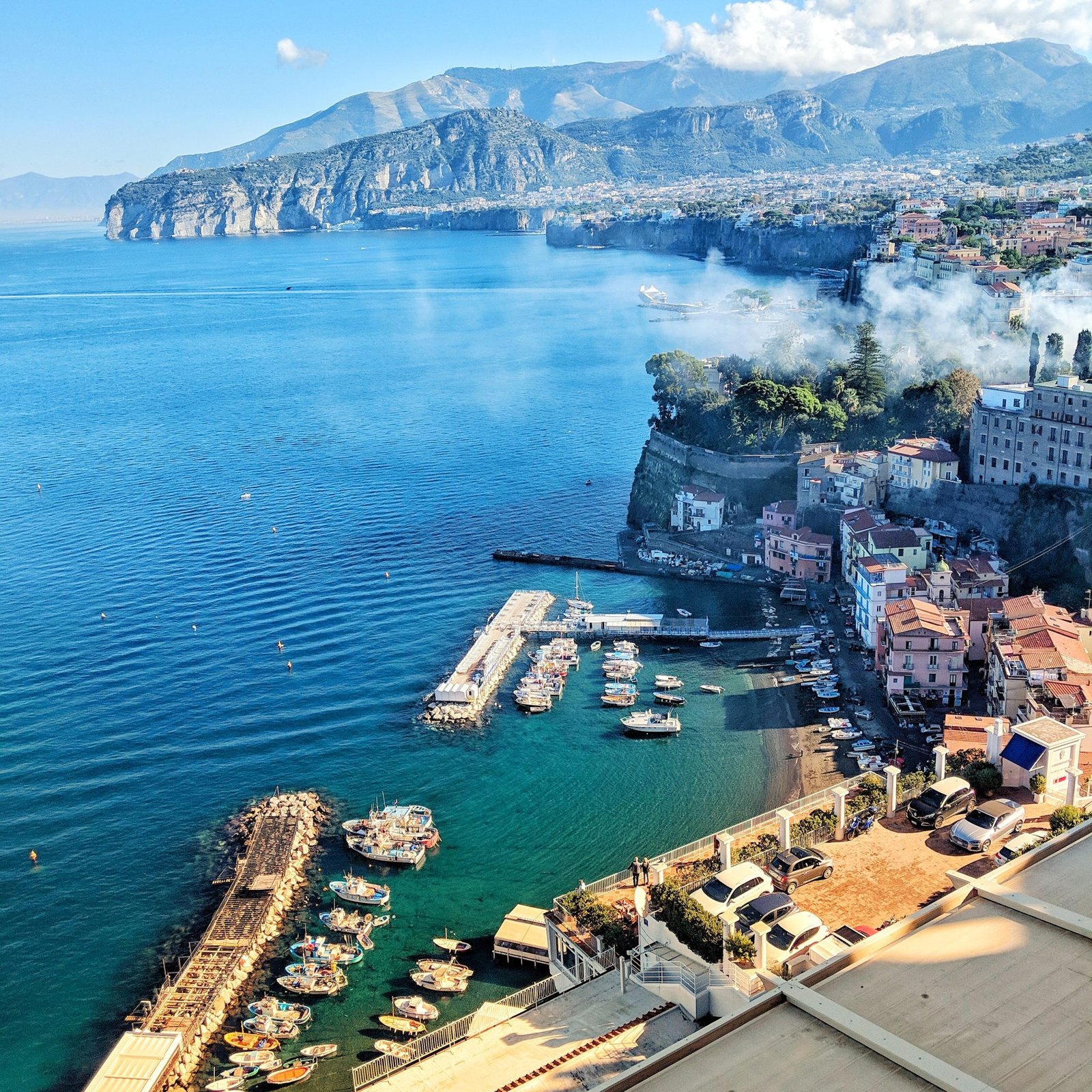
Most visitors to Sorrento never find Marina Grande — the older fishing village that sits at sea level on the northwest side of the cliff, reached by a steep lane and staircase from the old town or by a small road from the edge of the center. It is a different Sorrento entirely: actual fishing boats pulled up on the beach, family-run trattorias that have been operating for generations, elderly fishermen repairing nets, no gift shops, and a handful of small beach clubs with sun loungers on the narrow shingle beach.
Marina Grande is not a neighborhood for basing yourself — it has almost no accommodation of note, and the climb back up to the old town after dinner is steep enough to be inconvenient after a few glasses of local wine. But it is the best destination in Sorrento for a long lunch of grilled fish at a waterfront table, a morning swim before the beach clubs on Marina Piccola fill up, and a genuine sense of what Sorrento was before tourism transformed it. The family restaurants at the waterfront have been serving the same dishes for decades and represent the best value fresh seafood eating in the town.
Sant’Agnello: The Quieter Alternative Next Door
Sant’Agnello is the next town along the peninsula from Sorrento — literally adjoining Sorrento to the north, with no clear boundary between the two centers. It has its own Circumvesuviana stop (one stop before Sorrento on the line from Naples), its own cluster of hotels on the clifftop, and a significantly quieter atmosphere than central Sorrento. The lanes of Sant’Agnello village are genuine small-town southern Italy, with local bars, a daily market, and the kind of residential calm that Sorrento’s centro storico cannot offer in high season.
Sant’Agnello is worth considering if you are staying a week or more, traveling with a family that needs more space and a pool without paying Sorrento centro prices, or if you want to walk to Sorrento’s old town and marina (about 20 minutes on foot) but retreat to somewhere less crowded in the evenings. Several of the better-value hotels on the Sorrentine Peninsula are in Sant’Agnello — clifftop properties with sea views, pools, and gardens at prices that would be significantly higher for an equivalent property in Sorrento proper.
Where to Stay in Sorrento: Quick Comparison
| Area | Best for | Price range | Main trade-off |
|---|---|---|---|
| Centro Storico | First-timers, atmosphere, ferry/train access, car-free travelers | Mid to luxury | Noisy in high season; parking difficult |
| Marina Grande | Lunch and seafood — not a base | N/A (very limited accommodation) | Steep climb back to town |
| Sant’Agnello | Families, longer stays, better value, quieter evenings | Budget to mid | 20-min walk to Sorrento center and marina |
Day Trips from Sorrento
Sorrento’s location is the main reason most visitors come, and the day trip options are genuinely among the best in Italy. Pompeii is the easiest: the Circumvesuviana train from Sorrento station stops directly at Pompeii Scavi (the excavation entrance) in about 35 minutes, running every 30 minutes. Plan a full day — the site is vast and most visitors underestimate how long it takes to cover properly. The Villa dei Misteri and the Forum are the non-negotiable stops; allow 3–4 hours minimum. Herculaneum (slightly smaller but better preserved than Pompeii) is 20 minutes back toward Naples on the same train line — an excellent half-day option that is less crowded than Pompeii.
Capri is 25–45 minutes by ferry from Sorrento’s Marina Piccola, with multiple daily departures in season. The island is undeniably beautiful and undeniably crowded in July and August — go early in the morning (the 8am ferry) to have the Blue Grotto approach and the Anacapri areas before the day-tripper surge. Naples is 65 minutes by Circumvesuviana — an excellent full-day trip covering the Museo Archeologico Nazionale (the world’s best classical antiquity collection, housing most of the finest Pompeii and Herculaneum finds), the historic center’s street food, and the Spaccanapoli lane. Naples is less immediately tourist-polished than Sorrento but considerably more interesting for a full day.

The Amalfi Coast is accessible by SITA bus from Sorrento (the bus along the SS163 to Positano, Praiano, Amalfi, and Ravello runs several times daily — budget 45 minutes to Positano, 1h 45min to Amalfi) or by ferry from Marina Piccola to Positano and Amalfi. The ferry is significantly more pleasant than the bus in terms of the experience, but the bus is more flexible for getting back at your own pace. The coastal road has genuinely spectacular views but can be stressful by car in high season — using bus or ferry and leaving the driving to someone else is the better approach.
Getting Around Sorrento and the Region
The Circumvesuviana railway connects Sorrento to Pompeii, Herculaneum, and Naples on a line that runs roughly every 30 minutes. It is the most useful piece of infrastructure for the American traveler in this region — efficient, inexpensive, and completely car-free. Buy tickets at Sorrento station or at the EAV ticket window before boarding; the line is officially operated by EAV (Ente Autonomo Volturno).
Ferries from Marina Piccola serve Capri, Naples, Positano, Amalfi, and (in season) Ischia. Alilauro and NLG are the main operators. Book tickets for the Capri fast ferry in advance in July and August — they do sell out, particularly on morning departures. SITA buses run the coastal road to Amalfi Coast towns from Piazza Tasso — buy tickets at the tabacchi (tobacco shops) on the square before boarding, and be prepared for crowding on peak summer days.
A rental car in Sorrento is useful mainly for excursions into the hills of the Sorrentine Peninsula — the lemon and olive groves, the quieter villages of the interior, and the southern coast around Sant’Agata sui Due Golfi (which looks back at the Bay of Naples on one side and the Gulf of Salerno and Amalfi Coast on the other). For the standard Pompeii/Capri/Amalfi day trips, a car adds complexity and parking stress without adding flexibility. Most hotels in the centro storico have limited or no parking.
How Long to Stay in Sorrento
Three nights cover Sorrento itself (the centro storico, Marina Grande lunch, the Villa Comunale views) plus one full day at Pompeii and one at Capri. Four or five nights allows an Amalfi Coast day (Positano plus Amalfi town), a Naples day, and a slower pace overall — time for a morning lemon grove tour, an afternoon cooking class, and dinner without rushing. Most American travelers combining Sorrento with Rome or the rest of Italy allocate 3–4 nights, which works well for the major highlights without feeling hurried.

Best Time to Visit Sorrento
May, June, and September are the best months. The sea is warm enough for swimming by mid-May, the ferry and bus services are running full schedules, and crowds and prices are below the July–August peak. October is excellent for a quieter visit — the light on the bay is extraordinary in autumn, the tourist infrastructure is still largely open, and hotel prices drop significantly from their summer highs. July and August are peak season: Sorrento is hot, crowded, and expensive, but all services run at full capacity, and the nightlife in the centro storico is at its most animated. Book accommodation well in advance if visiting during these months — the better properties in the centro storico sell out months in advance.
Check out Sorrento in November and Best Hotels in Sorrento.
November through March is the low season: many smaller hotels and restaurants close, ferry services to Capri and Amalfi are reduced to limited schedules, and some of the Amalfi Coast towns feel nearly deserted. Sorrento itself stays more open than the Amalfi towns through winter, but it is a different experience from the peak-season town.