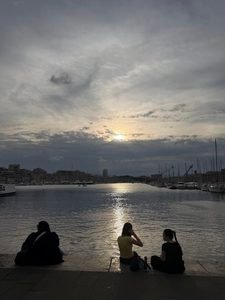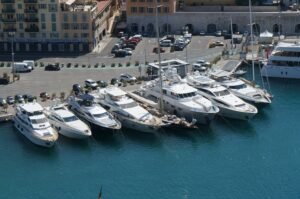
Where you stay in Marseille matters more than in most French cities. Neighborhoods are distinct, distances add up, and some areas that look central on a map feel very different on the ground. Get it right, and you’ll have a great base. Get it wrong, and you’ll spend more time commuting and less time enjoying one of Europe’s most underrated cities.
We stayed in the Prado area near Castellane at the end of September and found it to be a solid budget option with a calm, residential feel. But the options range widely, from boutique hotels tucked into Le Panier’s medieval lanes to clifftop design properties on the Corniche. This guide covers all of it.
A Quick Map of the City
Marseille’s neighborhoods wrap around a natural harbor, with the Vieux-Port at the center. The 1st and 2nd arrondissements are the historic core; Le Panier sits on the hill above the port to the north. South of the port, the Corniche Kennedy runs along dramatic coastal cliffs through the 7th arrondissement. Further south, the 8th arrondissement has the Prado beaches, a popular local area most tourists skip. The northern arrondissements (13th, 14th, 15th) are rougher and not worth staying in.
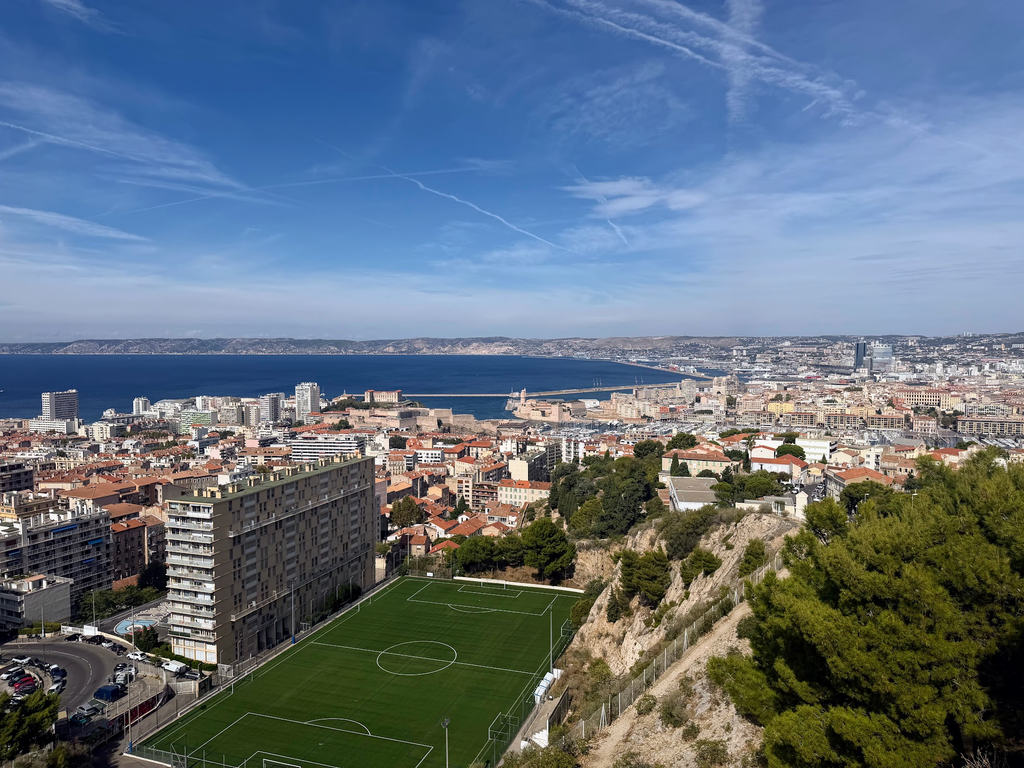
The Old Port (Vieux-Port): Best for First-Timers and Central Access
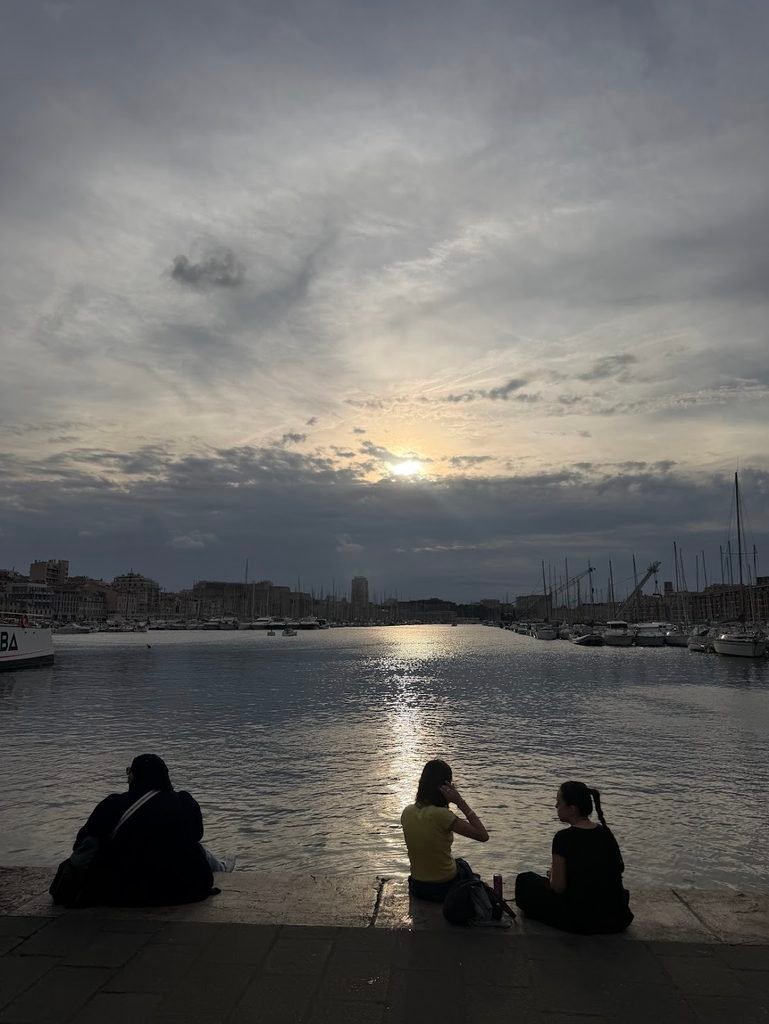
The Vieux-Port is where Marseille makes its best first impression: a wide working harbor with fishing boats, surrounded by restaurants, bars, and the constant low hum of a city that actually uses its waterfront. If you want to walk out your door and immediately be in the middle of everything, the 1st and 2nd arrondissements are your answer.
Who it’s best for: First-time visitors to Marseille, people who want to walk to everything, short stays, and couples who want restaurant options on the doorstep.
The trade-off: It’s the most touristy part of the city, and prices reflect it. In summer, waterfront restaurants are expensive for the quality. For a more authentic Marseille, walk 15 minutes to Cours Julien or the Noailles market. I don’t recommend the Noailles area; it felt a bit unsafe. Read the Is Marseille Safe article.
What to budget: Mid-range hotels run 100 to 180 euros per night in high season. Boutique options in Le Panier can run higher but offer more character.
Le Panier: Best for Atmosphere and Charm
Le Panier is Marseille’s oldest neighborhood, a tangle of narrow streets, pastel buildings, street art, and independent shops climbing the hill north of the Vieux-Port. Historically the city’s working-class immigrant quarter, it’s been steadily gentrifying over the past decade without losing its texture.
Staying in Le Panier puts you inside one of the most atmospheric urban neighborhoods in southern France. Most streets are too narrow for traffic, which keeps them quiet at night despite their proximity to the port. The views from the hill overlooking the harbor are excellent.
Who it’s best for: Travelers who want character over convenience, anyone who finds the standard tourist hotel strip soul-destroying, photphotographers, andple who like to wander.
The trade-off: You’re on a hill, which means stairs. Lugging a large suitcase up cobblestones is not fun. The neighborhood is also quieter at night than the port area, with fewer late-night food options on your doorstep.
What to budget: Small boutique hotels and B&Bs run 90 to 150 euros in high season.

Cours Julien and the 6th Arrondissement: Best for a Local Feel
Cours Julien is where Marseille gets genuinely interesting. The square and surrounding neighborhood serve as the city’s bohemian center: independent record shops, great natural wine bars, some of France’s best street art on the surrounding streets, and outdoor café terraces that stay busy until midnight. It doesn’t look like a tourist area because it largely isn’t one, which is exactly the point.
The 6th arrondissement around Cours Julien and Castellane is a residential area with excellent transit connections. The Castellane metro stop is one of the city’s main hubs, making it easy to get anywhere without a car.
Who it’s best for: Return visitors who’ve done the port, food- and drink-focused travelers, younger visitors, anyone who finds the tourist circuit boring.
The trade-off: It’s a 15- to 20-minute walk from the Vieux-Port. The metro also closes early on weeknights (around 9:30pm), so late evenings require the free night bus or a taxi.
What to budget: Hotels run 75 to 130 euros per night. Apartments are significantly cheaper than the tourist-heavy port area.
| Hotel | Best for | Why stay here |
|---|---|---|
| Maison Juste | A design-led stay close to Cours Julien | An intimate property in the 6th arrondissement, a short walk from Cours Julien. Contemporary rooms, a shared lounge, and a quiet garden appeal to travelers who prefer a more independent stay over a conventional hotel experience. justejuste+2 |
| Mama Shelter Marseille | A lively atmosphere and on-site dining | Located on Rue de la Loubière in the 6th arrondissement, Mama Shelter pairs colorful, contemporary rooms with a popular restaurant and cocktail bar. A good fit for travelers who want a social hotel with its own evening atmosphere. tripadvisor |
| Hôtel C2 | A luxury boutique escape | Set in a restored 19th-century mansion in the 6th arrondissement, this five-star boutique hotel combines period architecture with contemporary design. A planted patio and spa add to its appeal for a special-occasion stay. yonder-society |
| Hôtel & Suites Maison Montgrand – Vieux Port | Courtyard charm and flexible accommodation | This centrally located property on Rue Montgrand offers both hotel rooms and apartments. Its spacious interior garden, restaurant, and bar make it an attractive base for exploring the Cours Julien area and the Old Port. hotel-maison-montgrand+1 |
| Grand Juste | An alternative around Notre-Dame-du-Mont | Maison Juste’s sister property offers 50 rooms in the Notre-Dame-du-Mont area. It’s worth considering for travellers looking to stay around this neighbourhood, particularly when Maison Juste is unavailable. justejuste |
The Corniche Kennedy and the 7th Arrondissement: Best for Views and Quiet
The Corniche Kennedy is one of the great urban coastal roads in France, cut into cliffs above the Mediterranean with views out to the Fréougan archipelago and the Château d’If. The 7th arrondissement neighborhoods behind it (Endoume and Roucas-Blanc) are where many of Marseille’s wealthier locals actually live.
Staying here means quieter streets, better air, coastal walks out your door, and a genuinely Marseillais residential feel.
Who it’s best for: Couples looking for a romantic, quieter base; anyone who wants a coastal morning walk as a daily option; travelers who rent a car; people spending a longer time in the city.
The trade-off: Not walkable to the main sights without a bus or taxi. Fewer restaurant options compared to the port or Cours Julien. Some of the most appealing properties here are villa rentals rather than hotels.
What to budget: Hotels run 120 to 220 euros in high season. Villa and apartment rentals offer better value for longer stays.
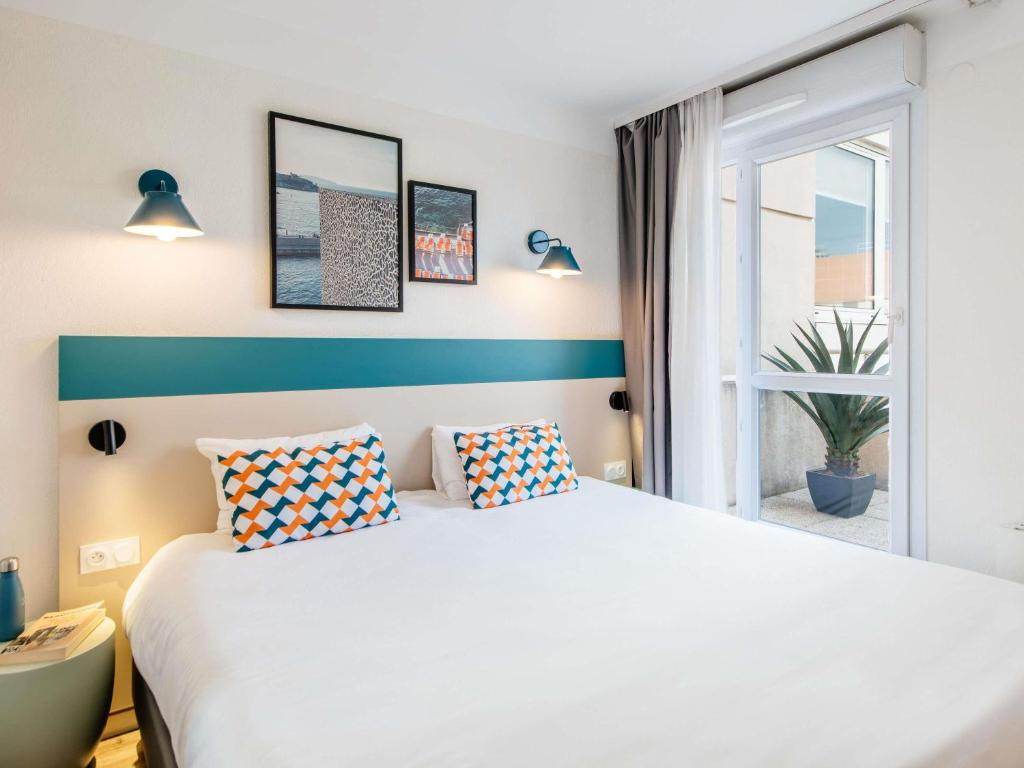
The Prado and the 8th Arrondissement: Best for Budget and Beach Access
This is where we stayed, and it worked well. The Prado area south of the center is where Marseille’s locals actually go to the beach: a long esplanade backed by palm trees and a wide coastal boulevard. It lacks the dramatic scenery of the Corniche, but it’s spacious, family-friendly, and genuinely pleasant.
The 8th arrondissement, more broadly, is a middle-class residential area with good supermarkets, local cafes, and none of the tourist markup of the port. Castellane station connects the whole area to the metro network.
Who it’s best for: Budget-conscious travelers who don’t want to sacrifice a safe, comfortable neighborhood; families; anyone who wants beach access without paying Old Port prices, people who want a more local experience.
The trade-off: Prado Beach isn’t the most beautiful in the region (the Calanques are better but require a day trip). You’re 20 to 30 minutes from the Vieux-Port by transit.
What to budget: This is the best-value area in Marseille for comfortable accommodation. Hotels run 65 to 110 euros per night in high season.
Near Gare Saint-Charles: Best for Transit Convenience
If you’re using Marseille as a base with day trips or onward connections to other cities, staying near the main train station makes logistics easy. It’s well-connected to both the city center and the airport shuttle.
That said, the station’s immediate surroundings are functional rather than attractive. It’s not the most pleasant Marseille experience, but it gets the job done for a short stay.
| Hotel | Best for | Location and why I’d consider it |
|---|---|---|
| Alex Hotel & Spa | Best overall / boutique stay | At 13–15 Place des Marseillaises, roughly 0.1 mile from the station. It has a terrace, and Booking.com places it about a 15-minute walk from the Old Port—useful if you want station convenience without spending your whole stay around the station. |
| ibis Marseille Centre Gare Saint-Charles | Early trains / quick overnight | On the station’s Esplanade Saint-Charles. A practical choice when minimizing the transfer matters most; it also has a bar and terrace. Be sure to book this specific ibis, rather than the similarly named ibis Styles. |
| Toyoko Inn Marseille Saint Charles | Value-focused stay | About a five-minute walk from the station, with a garden and free Wi-Fi. Hotels.com currently lists it at 8.4/10 from more than 1,600 reviews, making it worth comparing against the ibis for your dates. |
| Massilia Hôtel | Small, straightforward hotel | Listed around 150 metres from the station and roughly 900 metres from the Old Port. A useful alternative if you prefer a smaller property rather than a large chain. booking |
| Hotel Terminus Saint Charles | Basic station stopover | Opposite the station at 1 Place des Marseillaises. Its main advantage is proximity; its Tripadvisor rating is lower than Alex’s, so I’d compare the savings before choosing it. |
Who it’s best for: Business travelers, transit-focused itineraries, and one-night stays before a train connection.
What to budget: Chain hotels near the station run 80 to 130 euros.
When to Visit and What It Does to Prices
Late September and early October are two of the best times to visit Marseille. Crowds thin out dramatically after the August peak, the water stays warm enough to swim, and the weather is reliably good (20 to 25°C during the day). Hotels drop noticeably from their summer highs; you’ll pay 20 to 40 percent less than in July and August for the same rooms.
Summer (July and August) brings the biggest crowds, the highest prices, and the most competition for Calanques hiking permits. Spring (April to June) is excellent with lower prices and good weather. Winter is mild by northern European standards, but some coastal amenities close.
Practical Tips Before You Book
The metro in Marseille closes early. On weeknights, it typically stops around 9:30pm; on weekends, it runs a bit later. There is a free night bus service that covers main routes and works well, but if you plan to be out late regularly, factor proximity to nightlife into your accommodation choice or budget for taxis and Ubers.
Parking in the city center is difficult and expensive. If you’re renting a car, the 7th or 8th arrondissement is much easier to deal with than the Old Port area.
Marseille gets hot in summer. Air conditioning matters more here than in Paris or Amsterdam. Confirm it’s in the room before booking if you’re visiting in July or August.
The Calanques are best reached by bus (line 21 from Castellane) or by organized day trip. You don’t need a central location to access them, which makes the Prado or Corniche areas perfectly positioned for a Calanques-focused trip.