Last updated October 23, 2026. See the October 2026 update below for the latest on France’s student protests.
Marseille has a reputation, and plenty of friends raised an eyebrow when Max and I booked a week there. We went at the end of September 2026, right as France’s student protests were starting, and it was fine. Better than fine: we ate our weight in mussels, rode the coastal bus at sunset, and never once felt unsafe.
Here’s my honest take on Marseille safety: which neighborhoods feel comfortable, what to actually watch out for, and how to handle strikes and protests if they line up with your trip.
Key Takeaways
- ✅ Marseille is generally safe for tourists who use big-city sense. Our trip was trouble-free.
- 👜 Pickpocketing is the most common problem for visitors, especially in crowds and on transit.
- 🏘️ Prado, Castellane, Endoume, and the Corniche feel comfortable day and night. Be more alert around the Canebière, Belsunce, and Saint-Charles station after dark.
- 🚌 Strikes are common in France. They can stop buses and metros with little warning, so keep a taxi app ready.
- 🛡️ Buy travel insurance when you book, not after unrest makes the news.
- 📰 October 2026 update: student protests turned violent in central Marseille on Oct. 17. More protest days are planned, so avoid the city center on those dates.
Is Marseille Safe to Visit?
Yes. Marseille is safe to visit for most travelers, and the risks you’ll realistically face are the same as in any big Mediterranean port city: pickpockets, the odd scam, and transit strikes. Its rough reputation comes mostly from drug-related violence in housing estates far from where visitors spend their time.
Here’s how I’d size up the risks:
- Most days: Your biggest risks are pickpockets and sore legs from the hills.
- Strike days: Buses and metros can stop with little warning. It’s a hassle, not a danger.
- Protest days: Marches and road closures in the center. Occasionally they end in clashes. Stay out of the march zones, and the rest of the city is usually calm.
The U.S. State Department rates France at Level 2, “Exercise increased caution,” because of terrorism and civil unrest. That’s the same level as much of Western Europe, including Italy, Spain, and Germany.
The Reality of Marseille’s Safety Reputation
Marseille is France’s second-largest and most diverse city, and it has real crime in certain parts of the city, mostly concentrated in northern neighborhoods tourists have no reason to visit. The drug trade there is a genuine problem. But tourist areas? The Old Port, the Corniche, the Calanques, and the beaches? These places are as safe as most major European cities: exercise normal awareness, and you’re fine.
Pickpocketing exists, as it does in any French city. Petty theft happens around busy transit hubs. But the dramatic violent crime that the reputation suggests? Tourists visiting normal tourist areas essentially never encounter it. Go to Marseille. The reputation has not kept up with the city.
Where We Stayed: The Prado Area
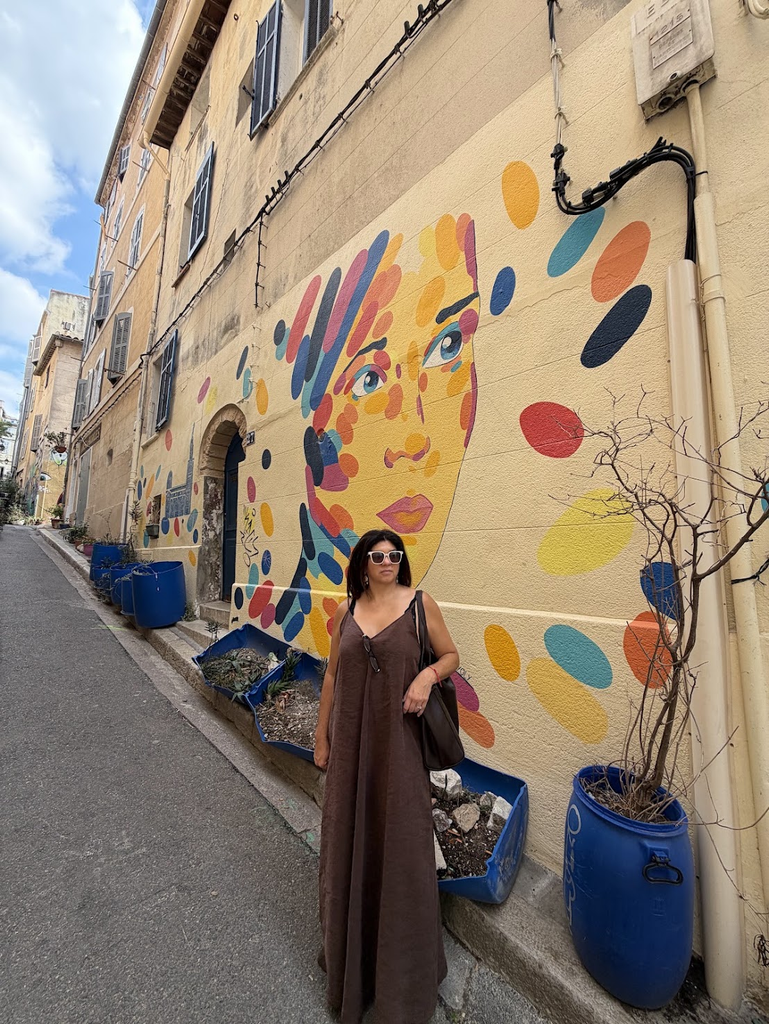
We stayed near the Prado seafront and Castellane, a bit further from the historic center but with the budget benefits that come with it. The neighborhood felt genuinely residential and calm. The streets around Castellane station are busy in the way any major transit hub is, with locals going about their day, market stalls, and the typical organized chaos of a French city. At no point did it feel threatening.
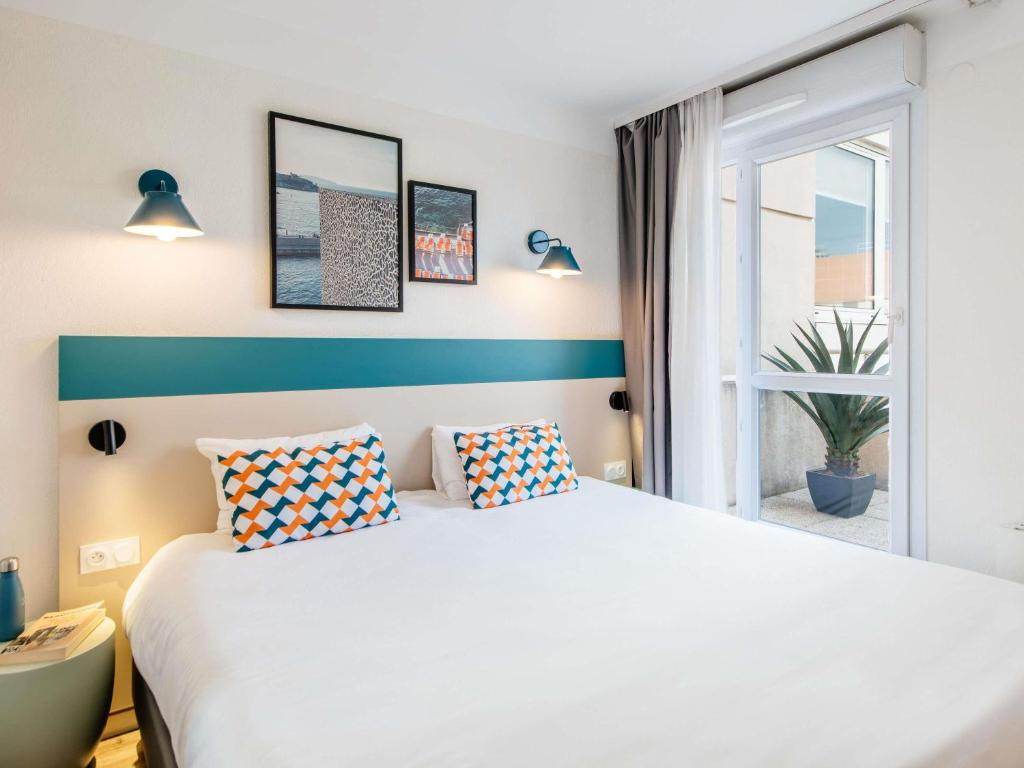
We stayed at the Adagio Aparthotel, which is a budget stay with a kitchenette. I loved how close it was to the metro and within walking distance of a few places. I also really liked the kitchen even though the room was a bit small. We also barely heard any noise, and the staff was friendly.
The Prado area itself, with its long esplanade running along the coast, is one of the most pleasant places in Marseille to spend an evening. Families out with strollers, people walking dogs, and plenty of activity late into the evening. It’s not the most central location, but it’s a solid, safe choice, especially if budget matters.
What Our Trip Was Like (Late September 2026)
We never felt unsafe in Marseille, but we did feel the student protests’ ripple effects on a few days. Most of it was inconvenience, not danger.
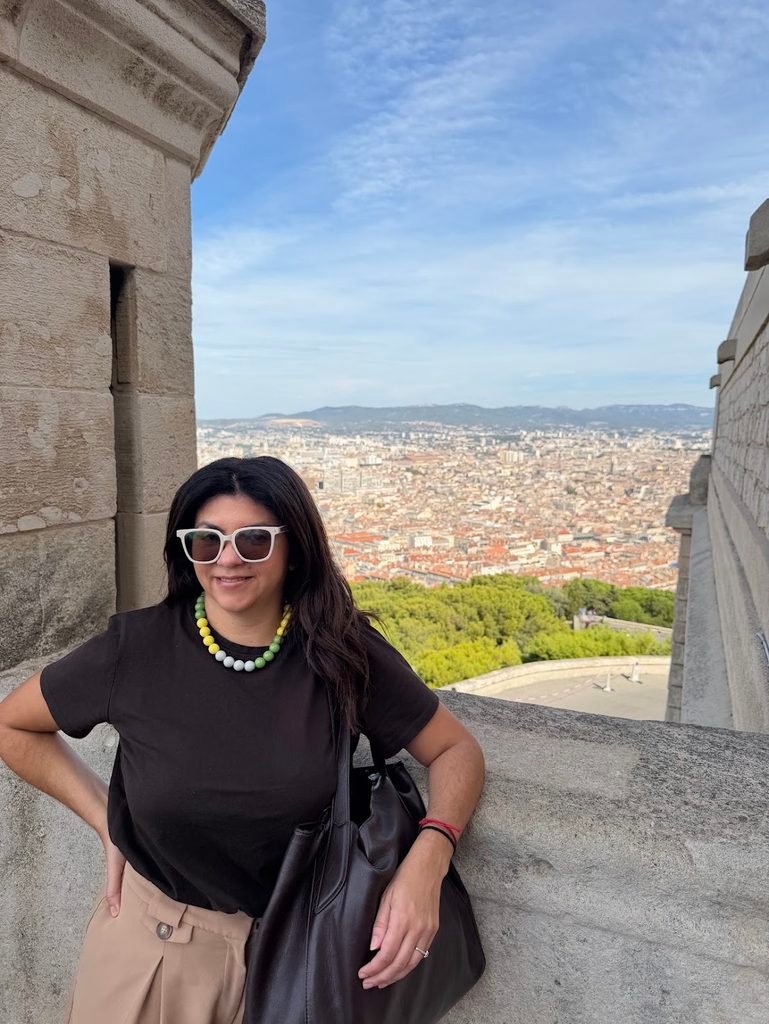
- A march rerouted our taxi. On our first full day, a strike march blocked the area around the Canebière and the Préfecture. Our driver took the back roads up to Notre-Dame de la Garde, and we didn’t see a thing.
- The city lost transit for a day. On October 1, after the violence outside schools in the northern districts, RTM pulled every bus, metro, and tram. We’d planned a rest day anyway, so it barely touched us.
- The buses stayed unreliable. The next day, service was back “under full surveillance,” but our bus 83 took about 30 minutes to show up, and Google Maps kept showing the regular timetable as if nothing had happened.
- The Noailles market felt hectic. This had nothing to do with the protests. It was crowded and chaotic in the rain, and we didn’t feel at ease, so we kept walking. Plenty of visitors love it, and in better weather you might too.
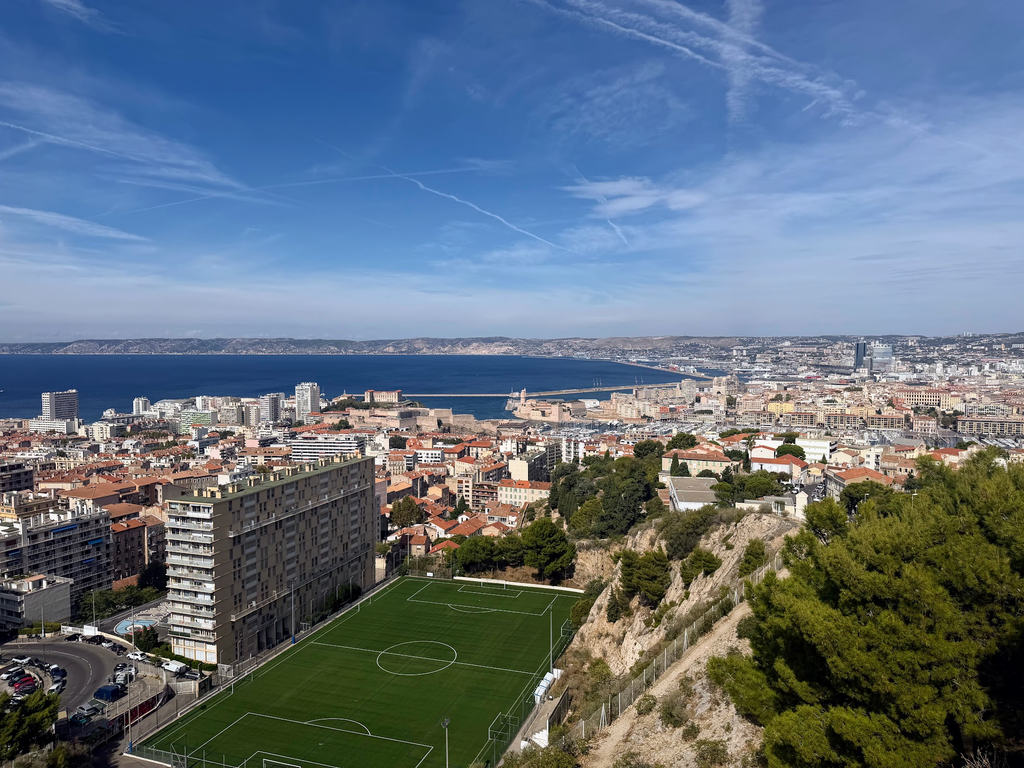
What struck me most: the Corniche, the beaches, Le Panier, Palais Longchamp, and our neighborhood near Castellane all felt completely normal. The trouble was concentrated in time and place, which is exactly what makes it possible to plan around.
We did hear a lot of sirens but didn’t actually see the protests
One sobering note: on October 17, the barricades started at the Rond-Point du Prado, a short walk from where we stayed. Two weeks earlier, it was our closest beach stop.
October 2026 Update: Student Protests and Unrest in Marseille
France’s student movement started in September over teacher shortages, overcrowded classrooms, run-down school buildings, and the stress of the Parcoursup university admissions system. It has since grown into broader protests over the cost of living.
When we visited in late September, it meant a few marches and one transit shutdown. By mid-October, it had turned much more chaotic.
Areas to avoid on protest days right now: the Canebière, rue Saint-Ferréol and the Centre Bourse area, the Vieux-Port around city hall, Saint-Charles station, and the Rond-Point du Prado. Head for the Corniche, Endoume, the Prado beaches, or a day trip instead.
| Date | What happened in Marseille | Why it matters for visitors |
|---|---|---|
| Oct. 19 | The prefecture banned all gatherings and protests citywide from noon to 8 p.m. | Authorities are willing to lock down the center quickly |
| Oct. 17 | National protest day. Barricades went up at the Rond-Point du Prado, then clashes moved to the Canebière, Saint-Charles station, and the Vieux-Port. Shops on rue Saint-Ferréol and the Canebière were looted, the Centre Bourse mall was entered, and Les Terrasses du Port mall was evacuated. Protesters briefly forced their way into the city hall lobby. | The looting hit the main shopping and tourist streets. |
| Oct. 1 | Clashes outside high schools in the northern districts. A bus was set on fire near La Floride, a driver was assaulted, and a fire truck was burned. RTM shut down the entire bus, metro, and tram network until the next morning. | We were there. The whole city lost transit for a day |
| Late Sept. | Student blockades and teacher strike marches. A march near the Canebière and the Préfecture rerouted traffic on Sept. 29. | Mostly peaceful, but disruptive |
Nationally, the Interior Ministry counted about 550,000 protesters on October 17. The BBC reported roughly 2,400 arrests and around 1,000 injured police officers that day, with smaller clashes continuing on October 18. Paris and Lille imposed limited, neighborhood-level curfews on October 19 and 20. As of October 23, I haven’t seen any curfew announced for Marseille.
What’s next?
French schools are on their autumn (Toussaint) holiday until November 2, which tends to reduce student blockades. But organizers have called more national protest days, including October 24 and November 5. Treat those dates as “stay out of the center” days and check the news the evening before.
Traveling in the next few weeks? Keep a flexible plan, base yourself outside the center, and sort out travel insurance before you go. Because these protests are already in the news, a new policy won’t cover cancellations due to them, but emergency medical coverage, 24/7 assistance, and a Cancel For Any Reason add-on still matter. Below, I explain what to look for and why I recommend Yonder Travel Insurance in the travel insurance section.
Best Neighborhoods to Stay in Marseille
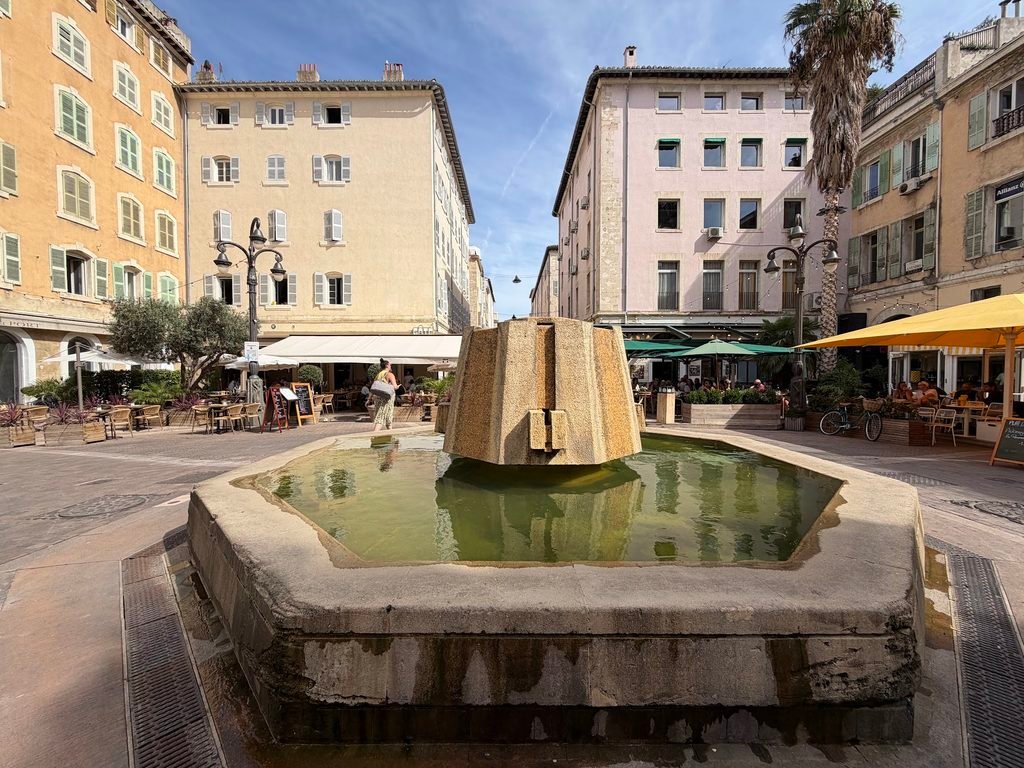
Most visitors stay in the Old Port area (Vieux-Port, 1st and 2nd arrondissements), and for good reason. It’s central, beautiful, walkable, and active at all hours. The quays are lined with restaurants and bars that run late, keeping the streets lively. Petty theft is the main risk because tourist density is high, so keep your phone in your pocket and your bag in front of you. It’s also where marches tend to end up on protest days.
Le Panier is Marseille’s oldest neighborhood, a hilltop warren of narrow streets above the port. It has steadily gentrified over the past decade and is now one of the city’s most appealing areas. During the day, it’s excellent. At night it’s quieter, and some streets can feel a little isolated. It’s fine, but good to be aware of.
Endoume and the Corniche Kennedy (7th arrondissement) is one of Marseille’s most desirable neighborhoods, with the coastal road running along the clifftops above the sea. It’s very safe, residential, and close to the main beaches. It’s a great base if you want a quieter, more local feel.
Cours Julien and the 6th arrondissement is the bohemian heart of the city, full of independent restaurants, street art, and a young local crowd. It’s a bit grittier in places but safe and a great area to eat and drink well. It feels more like the real city than the tourist zone around the port.
The Prado and the 8th arrondissement is where we stayed, near the Périer metro stop. It’s south of the center, calmer, and has good transit links despite being farther out. It felt safe at every hour we were out.
Neighborhoods In Marseille to Be Cautious About
The northern arrondissements (13th, 14th, and 15th) are where Marseille’s serious crime is concentrated, mainly gang-related drug activity in housing estates that aren’t on any tourist itinerary. There’s no reason to visit them as a tourist, and if you don’t go looking for them, you won’t find them.
The Canebière and Noailles (the main boulevard heading up from the port, in the lower 1st arrondissement) can feel chaotic and overwhelming, especially at peak times. It isn’t dangerous to pass through, but it’s busy enough that you should watch your belongings. It’s also the usual route for marches and was the center of the October 2026 looting.
We went to check out the Noailles market and to grab coffee, but there were men selling drugs, and it felt uneasy. We found it hectic in the rain and didn’t linger, so keep your bag zipped.
Belsunce (1st arrondissement, just north of Noailles) is lively and a bit raw, with lots of activity during the day. At night, stick to the lit main streets rather than wandering the side streets.
Gare Saint-Charles, the main train station, has the same dynamic as any big station in any French city: active pickpockets, people trying to sell you things, and a general need to stay aware. It’s fine during the day, but move briskly at night.
After dark, the general rule is simple: the Old Port, Cours Julien, the Corniche, and the Prado are all active and safe. Save anything north of Belsunce for the daytime.
Arriving at Night in Marseille
I arrived solo at night, took the airport shuttle into the city, and then rode the free relay bus once the metro had closed for the evening. It was completely straightforward.
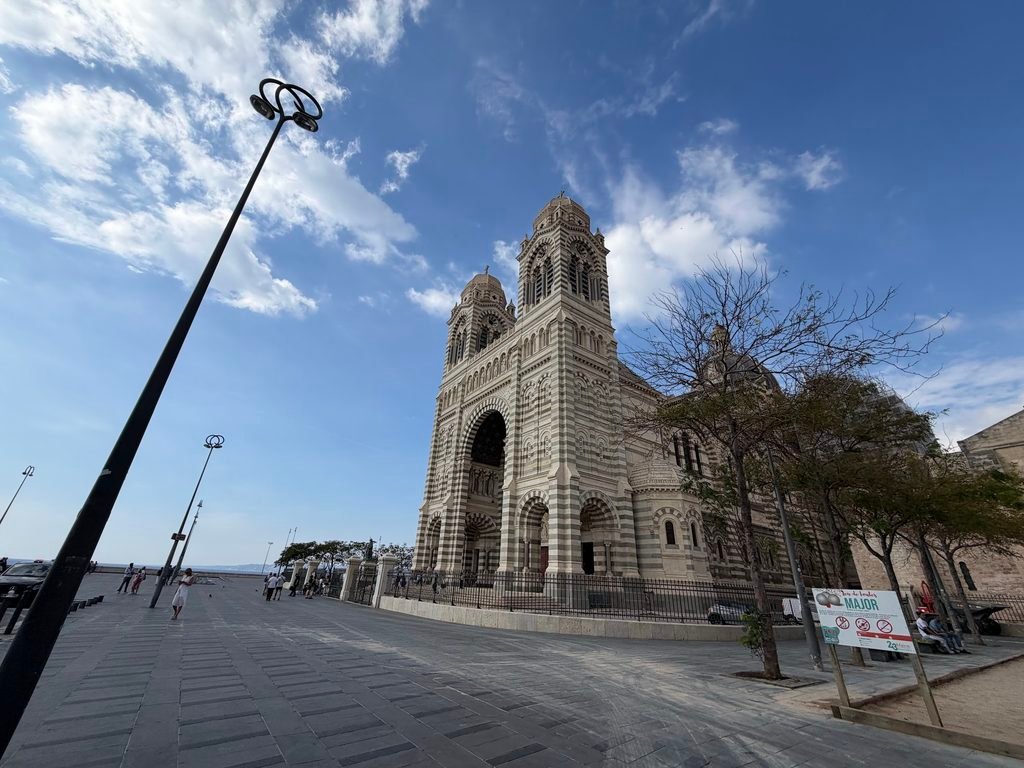
The airport shuttle (Navette Aéroport) runs late into the evening and drops you at Gare Saint-Charles, which stays well-lit and busy even late. From Monday to Wednesday, the metro currently closes at 9:30 p.m. while RTM works on automating the lines.
Free relay buses (BM1A, BM1B, and BM2) follow the metro routes every 10 minutes until 12:30 a.m., and you can ask the driver to stop anywhere along the way. From Thursday to Sunday, the metro runs until about 12:30 a.m. I had no issues getting around alone at night.
If you arrive very late, an Uber or licensed taxi from the airport straight to your accommodation is the simplest option.
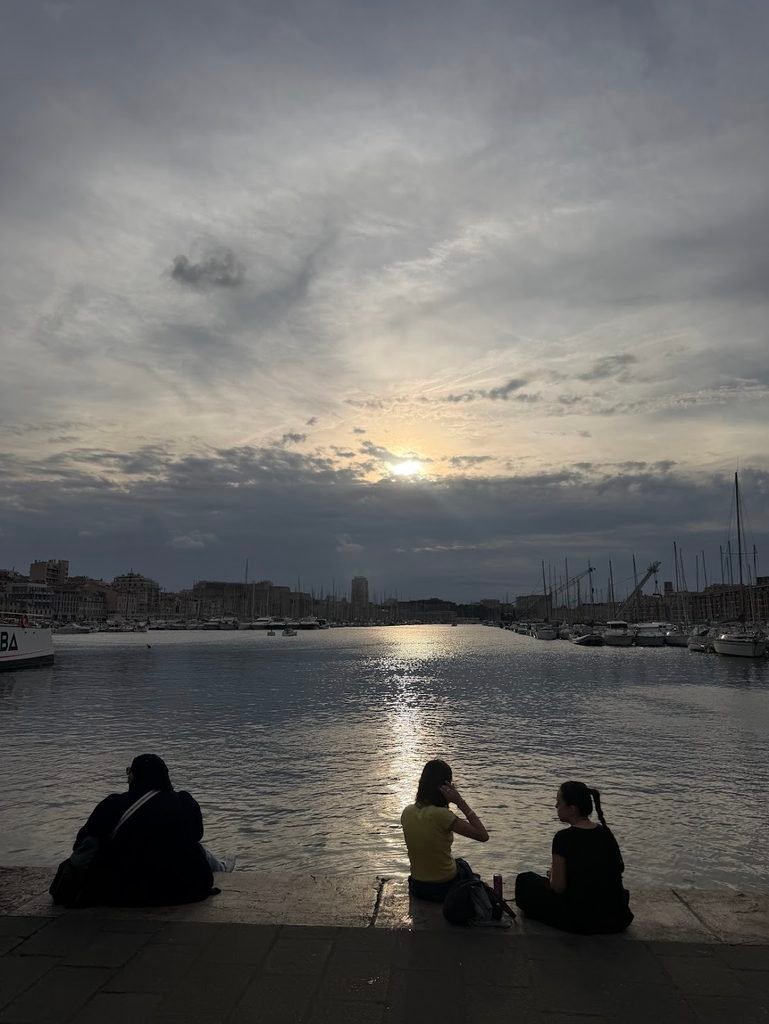
Marseille at Night
Contrary to what the reputation might suggest, Marseille is genuinely lively and pleasant at night, at least in the areas you’ll be spending time in.
The Old Port stays busy late, with restaurants and bars. On weekends, the streets between the port and Cours Julien are full of people well past midnight. Cours Julien has a relaxed bar scene that feels local rather than touristy. The Corniche at night is worth a walk; it’s not full of activity, but it’s beautiful and well-lit, and you’ll see locals jogging and walking dogs even at 10pm.
A few sensible habits for the evenings. Stick to the well-lit main streets when you walk back to your hotel after a late dinner. Keep your phone in your pocket, not in your hand, in busy areas. Don’t leave bags unattended at outdoor restaurant tables, which is the most common way things go missing. The city feels safe, but it’s a major city; normal awareness applies.
Tips for Solo Travelers in Marseille
Solo travel in Marseille is very manageable. The city is easy to navigate, the locals are generally approachable once you make an effort (a little French goes a long way), and the main tourist areas are populated enough that you’re rarely isolated.
Download the RTM app before you arrive; it’s the Marseille transit app and makes navigating the bus and metro network simple, especially at night when route options are limited. Book your airport shuttle in advance rather than figuring it out on arrival. The Vieux-Port and Cours Julien are both easy neighborhoods to explore solo because there’s always activity even if you’re on your own.
The Calanques day trip is excellent solo. The hike to Calanque de Sormiou or Sugiton is well-marked and popular enough that you’ll see other hikers throughout. Bring water, and avoid the midday heat if traveling in the summer.
For solo women specifically: Marseille is a comfortable city overall, though you may get more attention than in Paris. The Noailles and Belsunce areas can involve some street harassment during the day; elsewhere it’s comparable to any Mediterranean city. Staying in the 7th or 8th arrondissement gives you a quieter, more residential base.
What to Watch For in Marseille
Pickpocketing is the main thing. It’s most active around the Vieux-Port, the Canebière, and on crowded buses. Use front pockets and zipped bags, and keep your phone away in crowded spots. That’s really the main precaution.
Unmarked taxi touts will approach you at the airport and at Gare Saint-Charles. Ignore them and head to the official taxi rank or use Uber.
Unlike Paris, Marseille doesn’t have a notable bracelet or petition scam culture. The city is much less set up for tourist-specific scams because, historically, fewer tourists came. That’s changing as tourism grows, but it’s still a more straightforward city than Paris in that respect.
Strikes are the other thing to plan for. They’re a normal part of life in France, and they can stop buses and metros with little warning. Google Maps often shows the scheduled times rather than live bus positions, so if a bus is “due” and nowhere in sight, check the RTM app or grab a taxi. On strike and protest days, leave extra time to reach the airport or train station.
Travel Insurance for Marseille: What It Covers and What It Doesn’t
This is the part most people learn the hard way. Standard travel insurance usually doesn’t cover cancellations due to protests or civil unrest, and feeling uneasy about a destination isn’t a covered reason. Once unrest is in the news, it also becomes a “known event,” so a policy you buy afterward generally won’t cover cancellation or disruption it causes.
That’s true for the October 2026 protests right now, which is exactly why I buy insurance the day I book, not the day I get nervous.
Insurance is still worth it for any trip to France. Emergency medical coverage matters most, since your U.S. health plan may not work abroad. Some plans also pay out for travel delays and missed connections when strikes or civil disorder hold you up past a set number of hours.
A Cancel For Any Reason (CFAR) add-on reimburses part of your prepaid trip, usually 50–75%, even if you simply decide not to go, but you typically have to buy it within a few weeks of your first trip deposit. 24/7 assistance, a real person who can help you rebook or find a doctor, is worth it when your metro line suddenly shuts.
My favorite Travel Insurance is hands down Insure Yonder. They have excellent customer service, and their portal is super easy to get coverage. They also support girls in Nepal.
If you’re postponing a trip because of the current unrest, check your airline’s and hotel’s change policies first, then insure the new dates as soon as you rebook.
Why I recommend Yonder Travel Insurance. Yonder Travel Insurance is a U.S. company based in Minnesota that helps you compare plans from several insurers instead of pushing one. I like that they explain the fine print in plain English, including what is and isn’t covered for unrest, terrorism, and CFAR, and that they offer 24/7 assistance from real people. If you’re booking Marseille, or anywhere in France, compare plans with Yonder the same day you book, and ask them specifically about CFAR and civil unrest wording.
Emergency Numbers
Emergency (police, fire, ambulance): 112 (works from any phone, including no-credit mobiles; English operators available)
- Police only: 17
- Ambulance (SAMU): 15
- Fire: 18
- SOS Médecins (English-speaking house-call doctor service, can come to your hotel): 3600
- Hopital de la Timone (main hospital): +33 4 91 38 00 00
- US Consulate in Marseille: +33 4 91 54 92 00
- Non-emergency police report (needed for insurance claims after theft): Go to any commissariat de police and ask for a reclamation de vol. Bring your passport.
What To Do If Something Goes Wrong
For theft: cancel your cards immediately and file a police report before you do anything else. You need the report number to claim on travel insurance. The commissariat at the Old Port is used to handling tourist reports.
For a medical issue: dial 15 for an ambulance or 3600 for SOS Médecins if it’s not an emergency. The Timone hospital has good English-speaking staff. Also a very important reason to have travel insurance.
If your passport is stolen: contact your country’s consulate as early as possible. The US Consulate in Marseille can process emergency passports for American travelers.
The Bottom Line
Marseille is a real city with real edges and a completely overblown safety reputation. We spent five days there from late September into early October and felt safe throughout, including arriving solo at night and using the free late-night bus service after the metro closed. The city is vibrant, beautiful, wildly underrated as a destination, and very manageable for tourists who bring the same awareness they’d bring to any major European city.
Marseille is a real city with real edges and a completely overblown safety reputation. We spent five days there at the end of September into early October and felt safe throughout, including my solo late-night arrival and getting around on the free relay buses after the metro closed. The city is vibrant, beautiful, wildly underrated, and very manageable for anyone who brings the same awareness they’d bring to any major European city.
Right now is the exception. Until the looting and fires stop, I’d postpone. Once things settle, don’t let what you read online keep you away. Go.
Marseille Safety FAQ
Yes. In normal times, Marseille is as safe as most major European cities for visitors who use everyday awareness. Pickpocketing is the main risk, and serious crime is concentrated in northern neighborhoods tourists don’t visit.
As of late October 2026, I’d wait. Looting and fires hit central Marseille on October 17, and more protest days are planned. If you can’t move your trip, base yourself outside the center, avoid protest days, and keep your plans flexible.
Usually not for cancellation, and not for unrest that was already in the news when you bought the policy. Medical coverage, some travel delay benefits, and a Cancel For Any Reason add-on can still protect you, so buy coverage when you book.
There’s no reason to visit the northern arrondissements (13th to 15th). Stay alert around the Canebière, Noailles, Belsunce, and Gare Saint-Charles, especially at night, and avoid the city center entirely on protest days.