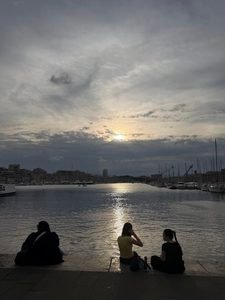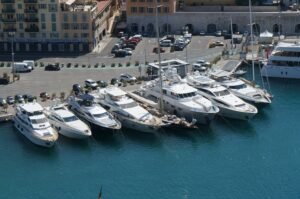
Five days in Marseille is the sweet spot for slow travel. It’s enough time to see the big sights, eat your weight in seafood, take a guilt-free rest day, and still have time for a day trip if the sun cooperates.
Max and I spent the last week of September 2026 based in the Prado neighborhood. We had warm 80°F afternoons, a few honest rain days, one transit shutdown, and the best moules-frites of my life. This is exactly what we did, what we’d swap on a sunny day, and how easy it was to get around without a car.
Check out is Marseille Safe now?
Key Takeaways
- Five days lets you see Marseille’s highlights at an easy pace, with one full rest day built in.
- Late September brought highs of 75–81°F, swimmable water, and thinner crowds, but pack for a day or two of rain.
- You don’t need a car. Two metro lines, the tram, and bus 83 along the coast cover almost everything, and you can tap a contactless card to ride.
- Staying near Castellane or Périer puts you one or two metro stops from the center and close to the beaches.
- Rainy days are good for Saint-Victor, wine tastings, and long lunches. Save Cassis or Sanary-sur-Mer for the sunniest forecast.
- Eat mussels at the Old Port, sardines in a paper cone, and anything hazelnut you can find.

Is 5 Days in Marseille Enough?
Yes. Five days is enough to see Marseille’s main sights at a slow pace and add one day trip. Three days covers the highlights in a rush. Five gives you room for a rest day, a rain day, or a spontaneous detour to Cassis.
- 2–3 days: Notre-Dame de la Garde, the Old Port (Vieux-Port), Le Panier, and one sunset on the Corniche. You’ll be moving fast.
- 5 days: All of the above, plus Palais Longchamp, Saint-Victor, a long seafood lunch, a beach afternoon, and either a rest day or a day trip.
- 7 days: Add two day trips, like Cassis and the Calanques plus Aix-en-Provence or Sanary-sur-Mer.
We planned five days and lost two and a half to rain and tired legs. That’s exactly why slow travel works here: nothing important got cut.
Marseille Weather in Late September
Late September is one of the best times to visit Marseille. Expect afternoon highs around 75–81°F, evenings in the low 60s, and seawater still around 73°F. The summer crowds are gone, and the light turns golden by 6 p.m.
Our week was a mix. Tuesday and Friday were warm and sunny, close to 81°F. Wednesday, Thursday, and Saturday brought rain, sometimes steady. Historically, only about one in six September days is rainy, so we were a little unlucky. Still, we never once needed more than a light jacket.
What to pack for Marseille in late September:
- Breathable layers: shorts or a sundress for the afternoon, plus jeans and a light jacket for the evening.
- Comfortable walking shoes with grip. The streets of Le Panier are steep, and the limestone gets slick in the rain.
- A compact umbrella and one water-resistant layer.
- A swimsuit. You might get a beach afternoon, and the water is warmest at the end of summer.
Where to Stay in Marseille for Slow Travel
For a slow trip, stay along Avenue du Prado near the Périer or Castellane metro stops. It’s calmer than the Old Port, has everyday bakeries and cafés, and puts you about 10 minutes from the center by metro and 15 minutes from the beaches by bus.
We stayed at the Adagio Access Marseille Prado Périer, an aparthotel with a small kitchen. That kitchen paid for itself on our rain day, when we cooked dinner in. The Périer stop on metro line M2 is a short walk away, and Place Castellane, with its fountain and morning cafés, is about 10 minutes on foot. There’s also a morning market along Avenue du Prado.
Other good bases:
- Vieux-Port (Old Port): The most central and the most walkable, but louder and pricier.
- Le Panier: Full of character, but steep, with lots of stairs. It’s tough if anyone in your group has tired legs.
- Endoume and Vallon des Auffes: Beautiful and sea-facing, but you’ll rely on buses or taxis.
Getting Around Marseille Without a Car
Getting around Marseille is easy and cheap. The RTM network has two metro lines (M1 and M2), three tram lines, and buses that reach the coast. You can tap a contactless bank card or phone at the reader to pay, so you don’t have to figure out a ticket machine.
What worked for us:
- Metro M2 ran straight from our stop, Périer, to Castellane, Noailles, and the train station. Its two ends are signed Gèze (north) and Sainte-Marguerite Dromel (south), so check which direction you need before going down to the platform.
- Metro M1 connects Castellane to the Vieux-Port and to Cinq Avenues–Longchamp for Palais Longchamp. Toward Longchamp, take the direction signed La Rose.
- Bus 83 is the scenic one. It runs from the Vieux-Port along the Corniche Kennedy, past Vallon des Auffes and the little beaches, to Plage du Prado and the Rond-Point du Prado metro. Sit on the right side for the sea views.
- Taxis and Uber filled the gaps, like getting up to Notre-Dame de la Garde with a tired husband in tow.
Fares and Passes
A single ride costs under €2 when you tap your card, a little more if you buy from the bus driver. Each person taps separately, and a ride is valid for about an hour, transfers included. If you’ll ride three or more times a day, a 72-hour pass (about €14) is the better deal.
Strikes and Google Maps
France has strikes, and Marseille had two during our week. On Tuesday, a march rerouted taxis around the Canebière. Then on Thursday, after protests near some high schools turned violent, RTM shut down the whole network until the next morning. Service came back Friday, but our bus 83 still took 30 minutes to show up.
One lesson: Google Maps often shows the timetable, not live bus positions. If a bus is “on time” but nowhere in sight, check RTM’s traffic page or just grab a taxi.
Airport Transfers
Marseille Provence Airport is about 16 miles from the city. During the day, the airport shuttle bus to Saint-Charles station plus the metro is the budget option. Our flight left at 6:35 a.m., before the metro starts (around 5 a.m.), so we booked an Uber for 4 a.m. Book it the night before.
5-Day Marseille Itinerary at a Glance
We arrived on a Monday evening and flew out early Sunday, which gave us five full days. One day was a full rest day, and that’s a big part of what made the week feel slow.
| Day | Weather we had | What we did | Sunny-day swap |
|---|---|---|---|
| 1 (Tue) | Sunny, 81°F | Notre-Dame de la Garde, the Old Port | Add a sunset at Vallon des Auffes |
| 2 (Wed) | Rain | Noailles, Saint-Victor, wine tasting, sardines | Sanary-sur-Mer’s Wednesday market |
| 3 (Thu) | Rain | Rest day, cooked dinner in | Cassis and a Calanques boat trip |
| 4 (Fri) | Sunny, 79°F | Palais Longchamp, Le Panier, mussels, bus 83 to the beach | Keep it; this was the best day |
| 5 (Sat) | Rain | Slow morning, packing, pizza | Aix-en-Provence or the Frioul islands |
Day 1: Notre-Dame de la Garde and the Old Port
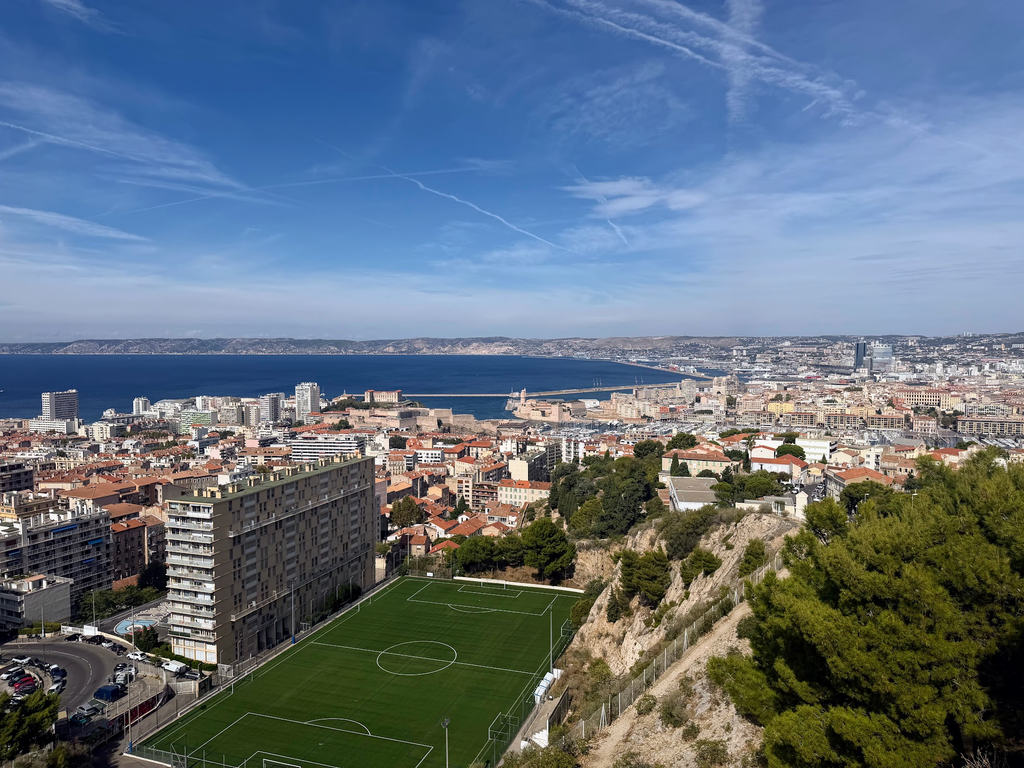
Day one is for views. Start late, climb (or ride) to Notre-Dame de la Garde for the best panorama in Marseille, then drift down to the Old Port for a drink by the water.
We slept in. Travel exhaustion is real, and on a slow trip, so is a guilt-free 10 a.m. alarm. We walked up Avenue du Prado through the morning market to Place Castellane for brunch [Fuse: add the brunch spot], then took a taxi up the hill. A strike march was blocking the center that morning, so we asked the driver to take Boulevard Vauban, the back way up.
Notre-Dame de la Garde
The basilica sits on the city’s highest hill. Entry is free, and the gold-and-marble interior is worth five quiet minutes. The real reason to go is the terrace: the Old Port, the Frioul islands, the Corniche, and the whole sprawl of the city in one sweep. Go around midday on a clear day and you can see all the way to the Calanques.
Getting down is easier than getting up. We rode the little tourist train (le petit train) back down to the Old Port for a few euros, which saved Max’s knees and gave us a bonus tour.
An Afternoon at the Old Port
The Vieux-Port is Marseille’s front porch. We found a terrace, ordered cold beers, and watched the fishing boats and the giant mirrored canopy, the Ombrière, reflect everyone walking underneath. We wandered the shaded streets around Les Arcenaulx on the south side and peeked into Les Grandes Halles du Vieux-Port, a food hall with a bit of everything.
Max wanted to walk home along the avenues instead of taking the metro, so we did. That’s the beauty of not having a schedule.
Day 2: Saint-Victor, a Wine Tasting, and Sardines (Marseille on a Rainy Day)
On a rainy day in Marseille, stay central and lean into food, wine, and churches. This was supposed to be our Sanary-sur-Mer day, but with a 70% chance of rain, we kept it close to home.
Noailles: Go With an Open Mind (and a Zipped Bag)
We took metro M2 straight to Noailles to see the Marché des Capucins, Marseille’s North African market quarter. Lots of people love its spice stalls and olive barrels. Honestly, in the rain, with crowded sidewalks, it felt hectic, and we didn’t feel at ease. We did a short loop and kept walking. Go in the morning, keep your bag zipped, and don’t feel you have to stay.
Abbaye Saint-Victor
We walked down past the Préfecture to the south side of the Old Port and the Abbaye Saint-Victor. It’s one of France’s oldest churches, with fortress-thick walls and early Christian crypts below. You can step inside for free, and it’s peaceful and dry when the weather turns.
Sardines in a Cone and a Local Wine Tasting
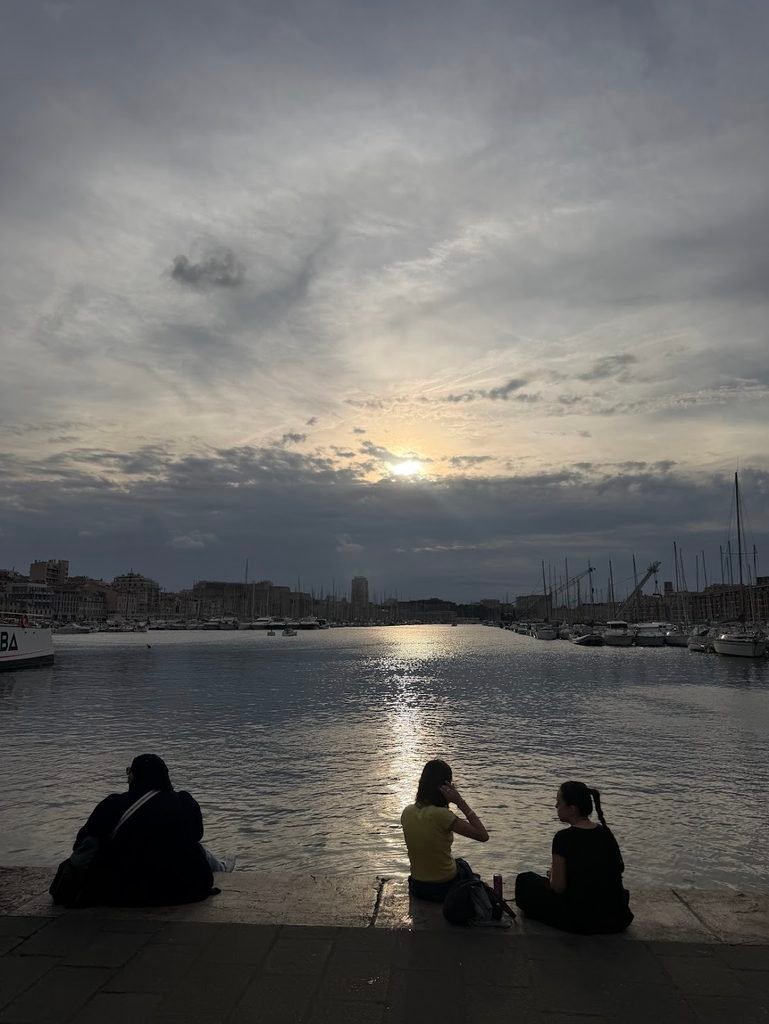
By late afternoon we were hungry, so we went to Marseille en Cornet on the Old Port for grilled sardines served in a paper cone. It’s quick, cheap, and very Marseille. Max, a meat guy, approved.
We finished at Rive Sud Vins, a wine shop near the south quay, with a tasting of Provençal wines [Fuse: add disclosure if hosted, plus your favorite bottle]. A tasting is a great rain-day plan, since you’re indoors, learning something, and slowly forgetting about the forecast.
Day 3: The Rest Day (Yes, It Counts)
Plan one full rest day into a five-day Marseille itinerary. Marseille is hilly, loud, and sprawling, and two big days in a row will catch up with you.
Thursday was gray and wet, so we didn’t fight it. We had breakfast at a café near the hotel, then spent the afternoon reading, editing photos, and planning Friday. In the evening, we shopped at a local grocery store and cooked dinner in our little aparthotel kitchen.
I used to feel guilty about days like this. Now I see them as what makes the rest of the trip work. We woke up rested on Friday, which was a good thing, because Friday turned out to be our longest and best day.
If you’re not the resting type, here’s a rainy-day list for Marseille:
- Abbaye Saint-Victor and Cathédrale La Major, both free to enter.
- Les Grandes Halles du Vieux-Port, the food hall, for a long, grazing lunch.
- A wine tasting or a cooking class.
- The Orange Vélodrome stadium tour, if you have a football fan in your group.
- The MuCEM (Museum of European and Mediterranean Civilizations). We skipped it, but its rooftop and footbridge to Fort Saint-Jean are worth a look.
Day 4: Palais Longchamp, Le Panier, Mussels, and the Corniche
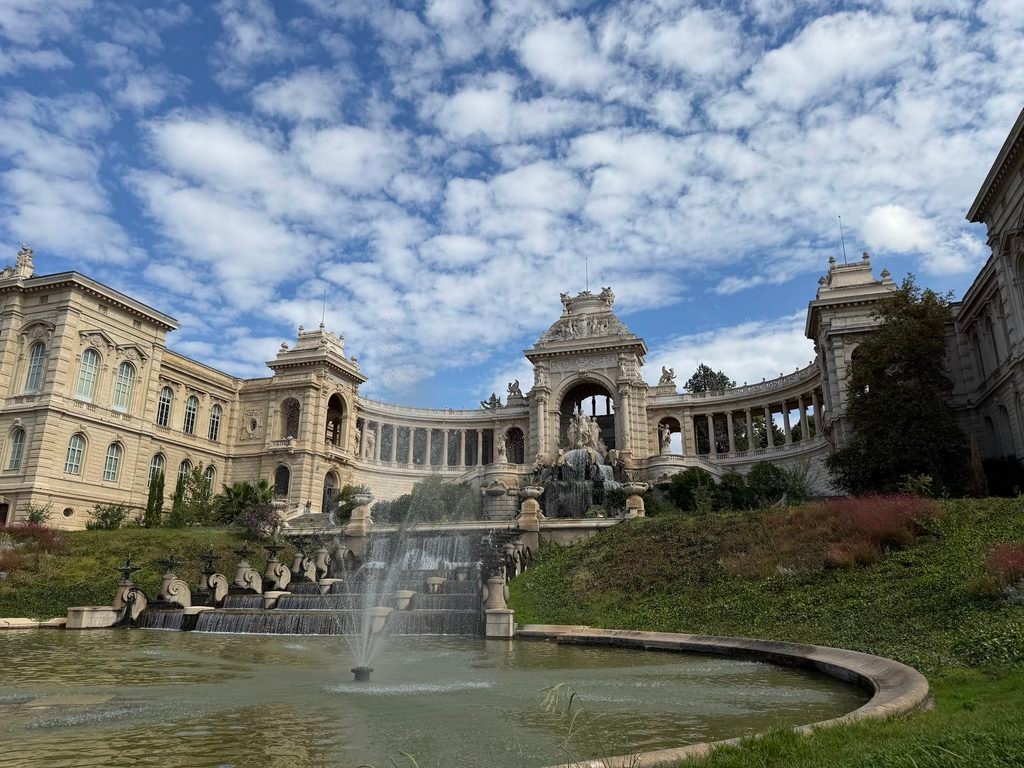
Save your sunniest day for this loop: Palais Longchamp in the morning, a walk downhill to the Old Port, mussels for lunch, Le Panier in the afternoon, and bus 83 along the coast at golden hour. We never went back to the hotel in between.
Palais Longchamp
We took metro M2 to Castellane and switched to M1 (direction La Rose) to Cinq Avenues–Longchamp. The palace isn’t really a palace. It was built in the 1860s to celebrate the canal that finally brought fresh river water to Marseille, and the giant fountain is a monument to that water. The gardens are free and almost empty on a weekday morning. We skipped the museums inside and just wandered.
From there, we walked downhill along Boulevard Longchamp to La Canebière and on to the Old Port. It’s about 30 minutes, all gently downhill, with lots of everyday Marseille to look at.
Moules-Frites at Ô Minots
We compared four Old Port spots for mussels. Ô Minots, on Quai du Port, had the best mussel reviews by far and the best value, with classic moules-frites in marinière (white wine and shallots), cream, or curry. I asked for marinière with extra garlic (avec beaucoup d’ail, s’il vous plaît). Best mussels of my life? Possibly. Best of the year, definitely.
Le Panier
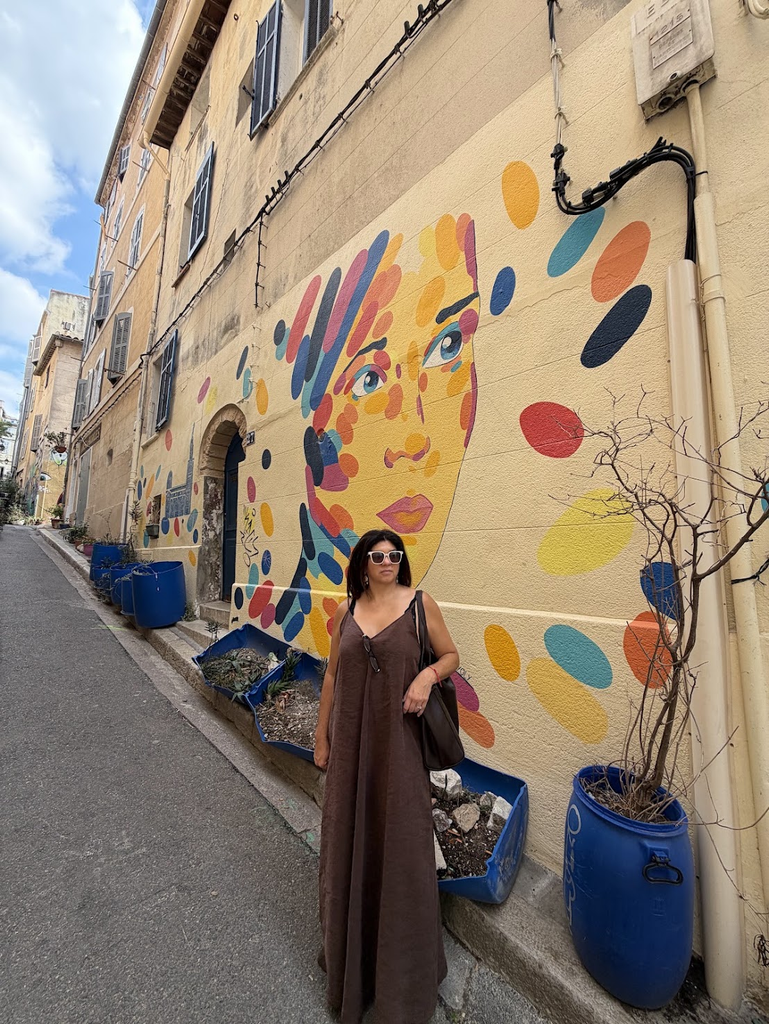
Ô Minots sits right at the foot of Le Panier, Marseille’s oldest neighborhood. Greek settlers founded the city here about 2,600 years ago. Today it’s a tangle of steep lanes, street art, laundry lines, and tiny shops. We started at Place de Lenche, wandered to Place des Moulins, and stopped by the pink-stone courtyard of La Vieille Charité, a 17th-century almshouse you can walk into for free. Then we sat at a little café for a drink, still too full of mussels to think about food.
Bus 83 Along the Corniche
A local wine shop owner told us to ride bus 83 along the coast, and he was right. The road hugs the sea past the Pharo, the Catalans beach, and Vallon des Auffes, a tiny fishing harbor I’m still sorry we didn’t hop off at.
We rode to Plage du Prado, the big beach with a replica of Michelangelo’s David. Honestly, the area around the stop underwhelmed us, so we moved along the seafront for sunset drinks at Zia Concetta on the Corniche. Sunset was around 7:15 p.m., and the sky did its thing.
Day 5: A Slow, Rainy Saturday
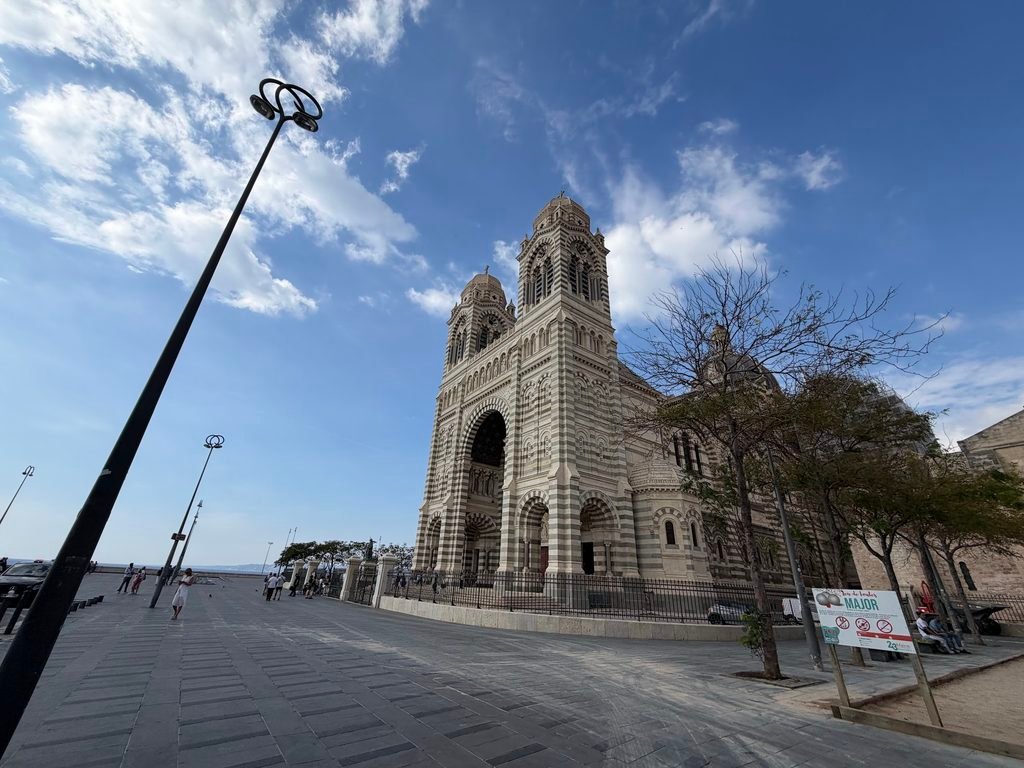
When your last day is rainy and your flight leaves at dawn, keep it close to your hotel and keep it easy. That’s what we did.
We had a long breakfast near Castellane and wandered the Prado market between showers. In the afternoon, we packed our carry-ons, checked in online, and booked the 4 a.m. Uber. For dinner, we had pizza [Fuse: add the spot], with a menu full of Italian sausage and burrata options that made both of us happy. Then it was an early night.
If Saturday had been sunny, I’d have spent it on one of the day trips below. If you only have energy for something small, take a taxi to Vallon des Auffes for a long lunch by the water. Ask the driver to drop you at the bottom of the harbor so you can skip the stairs.
Best Day Trips From Marseille (What We’d Swap In With Sun)
The easiest day trips from Marseille are Cassis, Sanary-sur-Mer, and Aix-en-Provence, all reachable by train or bus in under an hour. Save the seaside ones for your sunniest, calmest forecast, and keep Aix for a cloudy day.
| Day trip | How to get there | Time each way | Best for | Ideal weather |
|---|---|---|---|---|
| Cassis | Train from Saint-Charles, then shuttle bus or taxi to the port | About 45 min door to door | Calanques boat trips, harbor lunch | Sunny, calm sea |
| Sanary-sur-Mer | Train to Ollioules–Sanary, then a local bus or taxi | About 1 hour | Wednesday morning market, colorful fishing boats | Sunny Wednesday |
| Aix-en-Provence | Express bus 50 from the Saint-Charles bus station | About 40 min | Cafés, fountains, morning markets | Any; good backup for clouds |
| La Ciotat | Train from Saint-Charles, then a bus to the old port | About 1 hour | Quieter Cassis alternative, Calanque de Figuerolles | Sunny |
| Frioul islands and Château d’If | Ferry from the Old Port | About 30 min | Swimming coves, the Count of Monte Cristo fortress | Sunny, calm sea |
Cassis and the Calanques
This is the classic, and it was on our list until the rain came. Trains from Marseille Saint-Charles take about 25 minutes, but Cassis station sits up on a hill about 2 miles above town. Take the shuttle bus or a short taxi down to the port. From the harbor, boat tours visit three to nine calanques, the steep limestone inlets that make this coastline famous. Have lunch on the harbor and grab a glass of Cassis white wine.
Sanary-sur-Mer
Sanary is a pastel fishing town in the Var, and its Wednesday morning market along the harbor is one of the prettiest on the coast. We had it penciled in for Wednesday and canceled because of the forecast. Trains run from Saint-Charles to Ollioules–Sanary station in about 45 minutes. The station is a few miles from the harbor, so plan on a local bus or taxi for the last stretch.
Aix-en-Provence
If the forecast is gray, Aix is your answer. The express bus takes about 40 minutes, and the town is all about lingering: plane-tree-lined Cours Mirabeau, fountains on every corner, and big morning markets on Tuesday, Thursday, and Saturday.
Where to Eat in Marseille on a Mid Budget
You can eat very well in Marseille without booking a bouillabaisse feast. The best value is in simple seafood at the Old Port, casual Provençal lunches, and bakeries.
| What to eat | Where we had it (or would) | Why |
|---|---|---|
| Moules-frites | Ô Minots, Quai du Port | Classic mussels and fries, top reviews, fair price |
| Grilled sardines | Marseille en Cornet, Old Port | Fast, cheap, eaten in a paper cone |
| Panisses | Bakeries and Old Port snack stands | Fried chickpea fingers, Marseille’s answer to fries |
| Navettes | Bakeries in Le Panier | Boat-shaped orange-blossom cookies, a local souvenir |
| Anything noisette | Any pâtisserie | Hazelnut pastries, my personal weakness |
| Pizza and Italian | Zia Concetta (Corniche) and neighborhood pizzerias | Marseille has a big Italian heritage, and it shows |
A few food tips:
- Skip cheap bouillabaisse. Real bouillabaisse is an event meal at a specialist restaurant. The bargain versions near the port are mostly disappointing.
- Lunch is the deal. Many restaurants offer a formule (set lunch menu) that’s far better value than dinner.
- Kitchens close between lunch and dinner. Many stop serving around 2 or 2:30 p.m. and reopen around 7 p.m. Plan a snack in between.
- Happy hour is real. Lots of bars around the Old Port run happy hours from about 5 to 8 p.m.
Marseille Travel Tips: What I’d Do Differently
My biggest lesson: plan Marseille around the weather and your energy, not a fixed list. Here’s what I’d tell a friend.
- Check the forecast each night and swap days. Keep a sunny-day plan (Cassis, the Corniche) and a rainy-day plan (Saint-Victor, a tasting, a long lunch) ready, and trade them as the week unfolds.
- Respect the hills. Notre-Dame de la Garde and Le Panier are steep. Use taxis or the petit train to go up, and walk down.
- Stop when something looks good. I still think about Vallon des Auffes from the bus window. If a place catches your eye, get off.
- Have a taxi backup on strike days. Check RTM’s traffic info in the morning, and don’t trust Google Maps bus times blindly.
- Book the early airport ride the night before. The metro doesn’t run early enough for dawn flights.
- Learn three phrases. Bonjour when you walk in anywhere, l’addition, s’il vous plaît for the check, and c’est quoi la pizza du jour? will get you surprisingly far.
- Keep your bag zipped in busy areas. Like any big port city, Marseille has pickpockets around markets and transit hubs. We had no problems, but we stayed alert.
- Pack light. We traveled carry-on only on Ryanair. With layers and one pair of good walking shoes, we never missed a thing.
Marseille FAQ
How many days do you need in Marseille?
Five days is ideal for slow travel. It covers Notre-Dame de la Garde, the Old Port, Le Panier, Palais Longchamp, and the Corniche, with room for a rest day and one day trip. Three days work for a fast-paced first visit.
Is late September a good time to visit Marseille?
Yes. Late September usually brings highs in the mid-70s to around 80°F, sea water around 73°F, and fewer crowds than summer. Pack for a rain day or two, as we had three in five days.
Do you need a car in Marseille?
No. The metro, trams, and buses cover the city, and trains reach Cassis, Sanary-sur-Mer, and La Ciotat. A car is more hassle than help with Marseille’s traffic and parking.
How do you pay for the bus and metro in Marseille?
Tap a contactless bank card or phone on the reader when you board. Each person taps separately, and a ride covers transfers for about an hour. A 72-hour pass is worth it if you ride often.
What should you do in Marseille on a rainy day?
Visit Abbaye Saint-Victor or Cathédrale La Major, book a wine tasting, graze at Les Grandes Halles du Vieux-Port, or take the express bus to Aix-en-Provence, where cafés make the gray weather feel cozy.
Is Cassis or Sanary-sur-Mer the better day trip from Marseille?
Cassis is faster and better for Calanques boat trips. Sanary-sur-Mer is quieter and best on a Wednesday for its harbor market. Pick whichever matches your sunniest day.
Is Marseille safe for tourists?
Marseille is generally safe for visitors who use big-city sense. Watch for pickpockets around markets, the Old Port, and Saint-Charles station, and keep valuables zipped away. See our full guide: Is Marseille Safe?