Where to Stay in Corfu: The best place to stay in Corfu for first-time visitors is Corfu Town if you want restaurants, history, public transportation, and easy airport access. For beaches, consider Paleokastritsa, Agios Gordios, or Dassia. Families may prefer quieter resorts such as Acharavi or Roda, while Ipsos is better for younger travelers interested in nightlife.
Corfu sits in the Ionian Sea as one of Greece’s most visited islands, and the variety of accommodation options is part of what makes planning a trip here more complicated than it first looks. You could land in Corfu Town and never leave. You could also spend your entire trip on a beach on the west coast without once setting foot in the capital. Both approaches work, but they produce very different holidays.
The question of where to stay in Corfu ultimately depends on what you are actually looking for: culture and transport links, dramatic beaches, a family-friendly resort with reliable beach clubs, or somewhere lively enough for a social trip. This guide covers the eight most useful areas, explains which suits each one, and helps you choose based on your trip type rather than on proximity to the water alone.
Where Should First-Time Visitors Stay in Corfu?
For a first trip to Corfu, three areas consistently work well: Corfu Town, Paleokastritsa, and Dassia. Each represents a different version of the island, and the right choice depends on what matters most during your stay.
Corfu Town is the most versatile base. It puts you close to the airport, near the island’s best restaurants, and within walking distance of the Old Town, which is a UNESCO World Heritage Site. Green KTEL buses connect Corfu Town to most major areas on the island, so you are not locked into one location. If you like having options and want to explore the whole island over the course of a week, staying in the capital is the most practical choice.
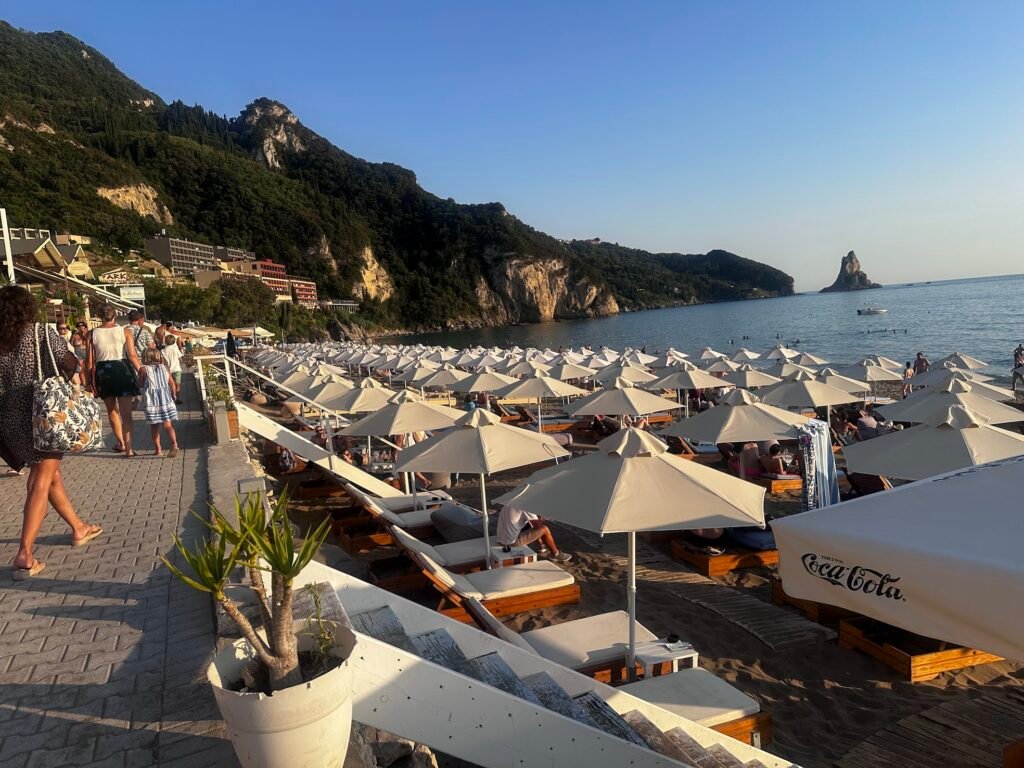
Paleokastritsa is the choice for visitors whose priority is the beach. The water here is some of the clearest on the island, spread across several coves with a mix of sand and pebbles. A car is helpful but not strictly required since buses do run from Corfu Town, though the schedule is infrequent. The area gets very busy in July and August, but the scenery makes it worth it for most first-timers.
Dassia sits on the east coast about 12 kilometers north of Corfu Town and works well as a middle ground. The beach is pebbly and shingle with calm water; the area has several solid resort hotels, and buses reach Corfu Town in around 20 minutes. It suits couples and families who want a beach base without being too far from the rest of the island.
Best Areas to Stay in Corfu at a Glance
The table below summarizes the eight main areas covered in this guide. Each section below goes into more detail on who each area suits and what to expect on the ground.
| Area | Best For | Beach Type | Car Needed? | Atmosphere |
|---|---|---|---|---|
| Corfu Town | First trips and culture | Limited city beaches | No | Historic and lively |
| Paleokastritsa | Scenery and swimming | Mixed sand and pebbles | Helpful | Busy and scenic |
| Dassia | Couples and convenience | Pebble and shingle | Not essential | Resort atmosphere |
| Ipsos | Nightlife and younger couples | Pebble | Not essential | Lively |
| Kassiopi | Harbor atmosphere | Small beaches and coves | Helpful | Social but relaxed |
| Agios Gordios | Beach vacations | Sandy | Helpful | Relaxed |
| Acharavi | Families and longer stays | Long mixed beach | Helpful | Family-friendly |
| Benitses | Couples without a car | Pebble | Not essential | Traditional and convenient |
Corfu Town
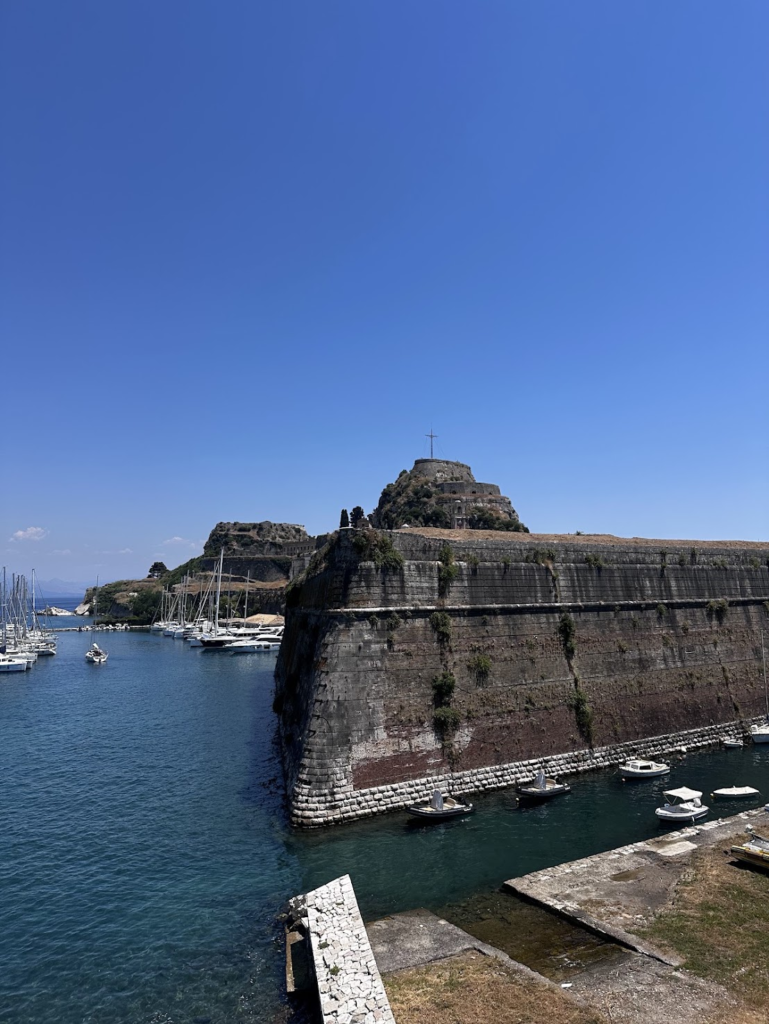
Corfu Town, also called Kerkyra, is the island’s capital and the most layered place to stay on Corfu. The Old Town is a UNESCO World Heritage Site built during Venetian rule and still largely intact. Two Venetian fortresses flank the city, the narrow lanes of the Campiello district have been standing for centuries, and the Liston promenade was modeled after the Rue de Rivoli in Paris. Cricket is still played on the Esplanade, a legacy of British colonial rule that is unusual enough to be worth seeing.
Staying in Corfu Town gives you a genuine city experience that you will not find anywhere else on the island. Restaurants range from tourist-facing spots near the waterfront to local places tucked into the backstreets. Nightlife is concentrated here, particularly around the Mandouki area and along the Liston. For evenings out, nowhere on Corfu matches the range of options available in the capital.
The practical advantages are significant. The airport is about 3 kilometers from the center. KTEL green buses connect Corfu Town to most other areas on the island, running throughout the day to Paleokastritsa, Acharavi, Kassiopi, and points south. Taxis are readily available. You do not need a rental car if you are based here.
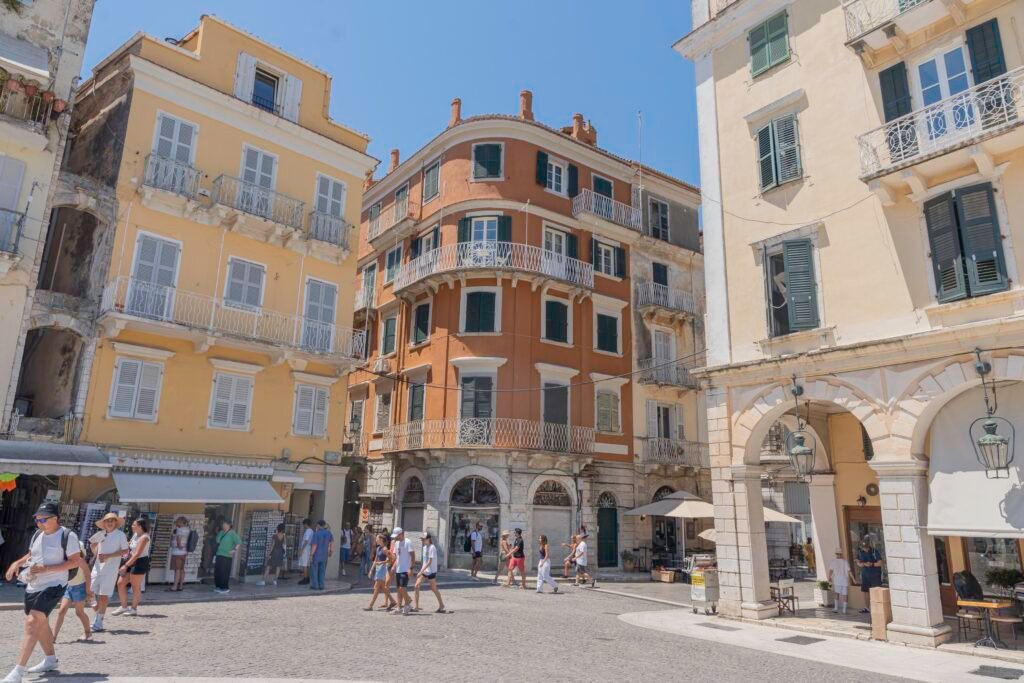
The main limitation is beach access. Corfu Town has limited beach options nearby, and the closest ones are modest compared to what you will find on the west coast or in the north. If walking out of your accommodation directly onto a good beach matters to you, Corfu Town is better used as a base for beach day trips than as a beach destination in itself.
Planning Tip: Book accommodation inside Corfu Town’s Old Town well in advance. Properties within the historic center are limited and fill out early for July and August. Staying just outside the Old Town walls costs less and is still a short walk from everything.
Paleokastritsa
Paleokastritsa is the most visually dramatic area on Corfu. Situated on the west coast about 25 kilometers from Corfu Town, it occupies a headland with several distinct coves. The water alternates between deep blue and vivid green depending on the light and time of day, and a Venetian-era monastery sits at the tip of the headland overlooking the whole bay. Boat trips to sea caves that are only accessible from the water are one of the most popular activities here.
Swimming here is excellent across multiple coves with a mix of pebbles and sand. Snorkeling around the rocks is productive, and water clarity is consistently high. In peak season, Paleokastritsa is busy. The main beach fills up early, parking becomes difficult, and the narrow road through the village slows considerably at midday. Mornings and evenings are noticeably quieter since many visitors are day-trippers from elsewhere on the island rather than overnight guests.
Staying here works best if the beach is your primary focus. A car helps reach other areas of the island. Buses to Corfu Town run a few times daily, but the schedule is limited, so if you want flexibility to explore, a rental car makes a meaningful difference.
Dassia
Dassia is a low-key resort area on the east coast, about 12 kilometers north of Corfu Town. The beach is a long stretch of pebbles and shingle facing the Albanian coast across a calm channel of water. Because the east coast is sheltered from the open sea, the water here is typically flat and gentle, which suits families with young children and anyone who prefers calm swimming conditions.
The area has a strip of tavernas, beach bars, and accommodation ranging from basic rooms to larger resort hotels. It does not have the dramatic scenery of Paleokastritsa or the nightlife of Ipsos, but it works well for a comfortable and uncomplicated beach stay. Bus connections to Corfu Town are regular and the journey takes about 20 minutes.
Dassia suits couples and families who want an easy holiday without a lot of planning. The beach is reliable, the water is calm, and Corfu Town is close enough for an evening out or a day trip further north along the coast.
Ipsos
Just north of Dassia, Ipsos has a noticeably different character. It is one of the liveliest resort areas on the island, with a strip of bars and restaurants along the beach road and a younger crowd throughout the main summer season. Water sports are a significant part of the offer here, with jet ski hire, wakeboarding, and paddleboarding available directly on the beach.
The beach is pebbly, similar to Dassia, and the sheltered east coast keeps the water calm. What Ipsos offers over its quieter neighbors is energy. If the goal is to combine beach days with evenings out, this is the area on Corfu that delivers that combination most naturally.
Bus connections to Corfu Town are good, and a car is not necessary if you plan to stay in this area. The distance to the airport is around 15 kilometers. Ipsos does not suit visitors looking for somewhere quiet or family-oriented, but for the audience it targets, it is the most straightforward choice on the island.
Kassiopi
Kassiopi is a fishing village turned resort in the northeast corner of the island, about 36 kilometers from Corfu Town. It has a small harbor, the ruins of a Byzantine castle above the village, and a selection of beaches and coves within easy walking distance. The atmosphere is social and fairly lively during summer but less intense than Ipsos, and the village retains more genuine character than a purpose-built resort area.
Kassiopi looks across a narrow strait toward the Albanian coast, and on clear days the views are striking. The harbor area has a cluster of restaurants and bars that stay active into the evening throughout the summer season. For visitors who want some social atmosphere without the full resort experience, Kassiopi is often a better fit than Ipsos.
A car is useful from Kassiopi if you want to explore the rest of the island. The distance from Corfu Town means buses are less frequent and the journey takes around an hour. For visitors planning to spend most of their time in the north of the island, Kassiopi works well as a base with day trips toward Acharavi, Sidari, and the Canal d’Amour.
Agios Gordios
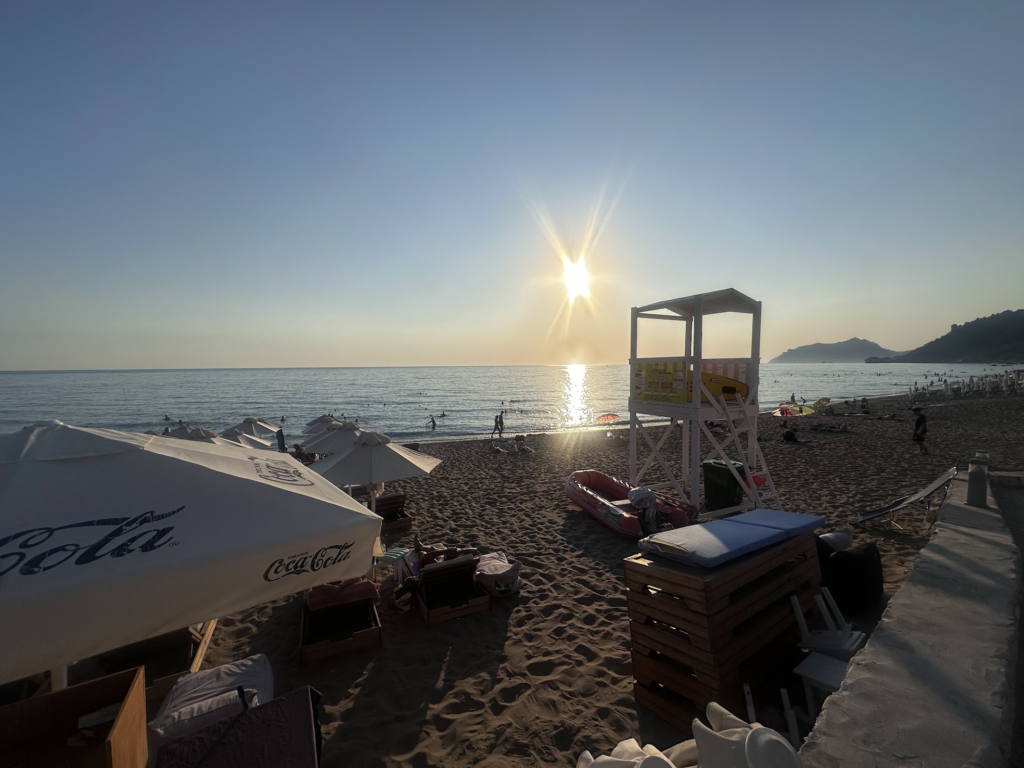
Agios Gordios on the west coast is one of Corfu’s genuinely sandy beaches, which makes it stand out on an island where pebble and shingle dominate. The beach is long, backed by dramatic cliffs, and sheltered enough to be swimmable for most of the season. The combination of sand, scenery, and reliable conditions makes it one of the most satisfying beach bases on the island.
The village has a relaxed atmosphere and a mix of accommodation options. Some visitors arrive as part of the backpacker circuit centered on the Pink Palace complex at the south end of the beach, but the area also has conventional hotels and smaller guesthouses that attract couples and families seeking a straightforward beach holiday without the party atmosphere.
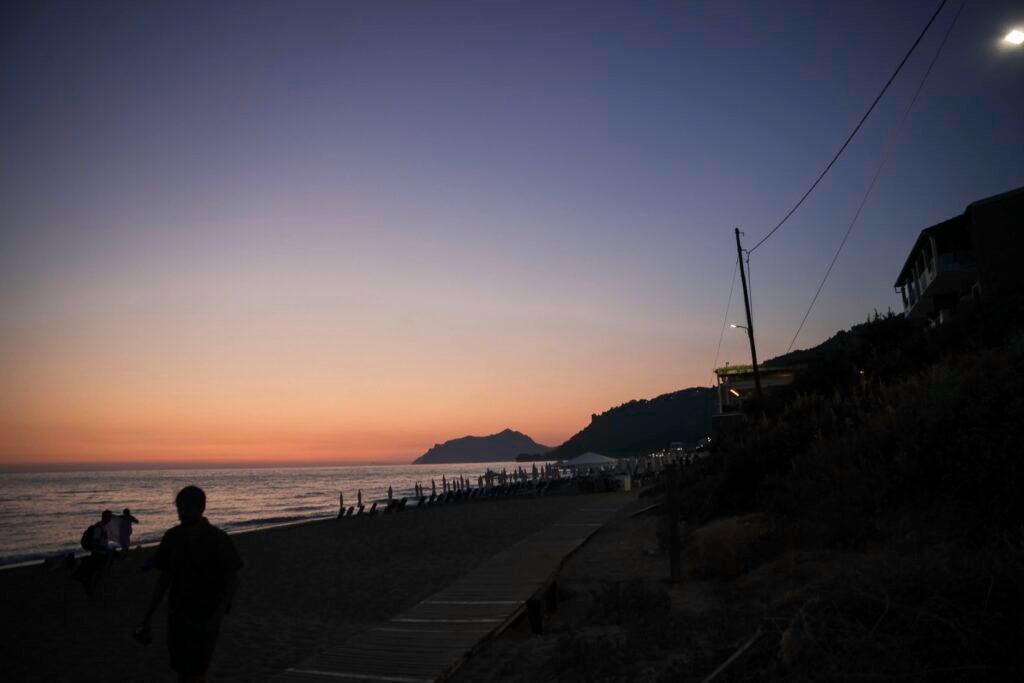
One quality that sets Agios Gordios apart is how loyal its regular visitors tend to be. Some of the best accommodation here operates almost entirely on repeat bookings, with guests returning year after year for decades. This is worth factoring into planning: the most popular spots often fill up months in advance, and some are not prominently listed on the major comparison sites.
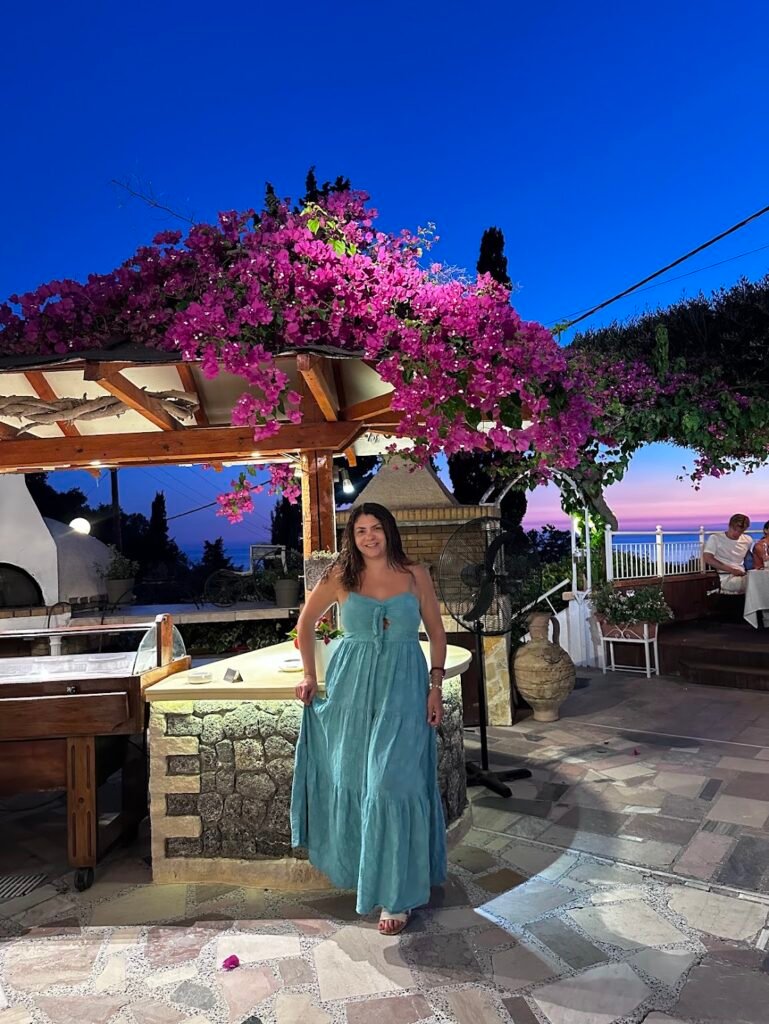
I stayed at a budget B&B, which I don’t recommend; however, it is linked to a famous hotel with a great pool, and the guests book a year in advance. They said I could not share the name of the place, lol. But if you follow me on Instagram, you can DM me, and I’ll tell you.
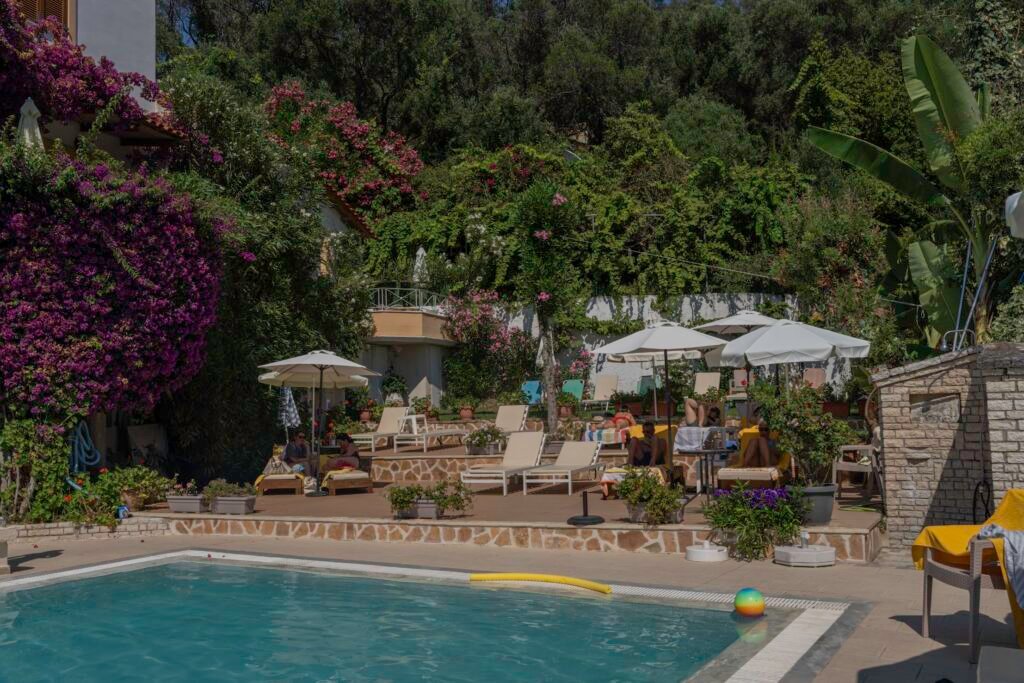
We had a great time at this pool. They have a lovely staff and a beautiful sunset. You can come back for dinner, but make sure you book in advance.
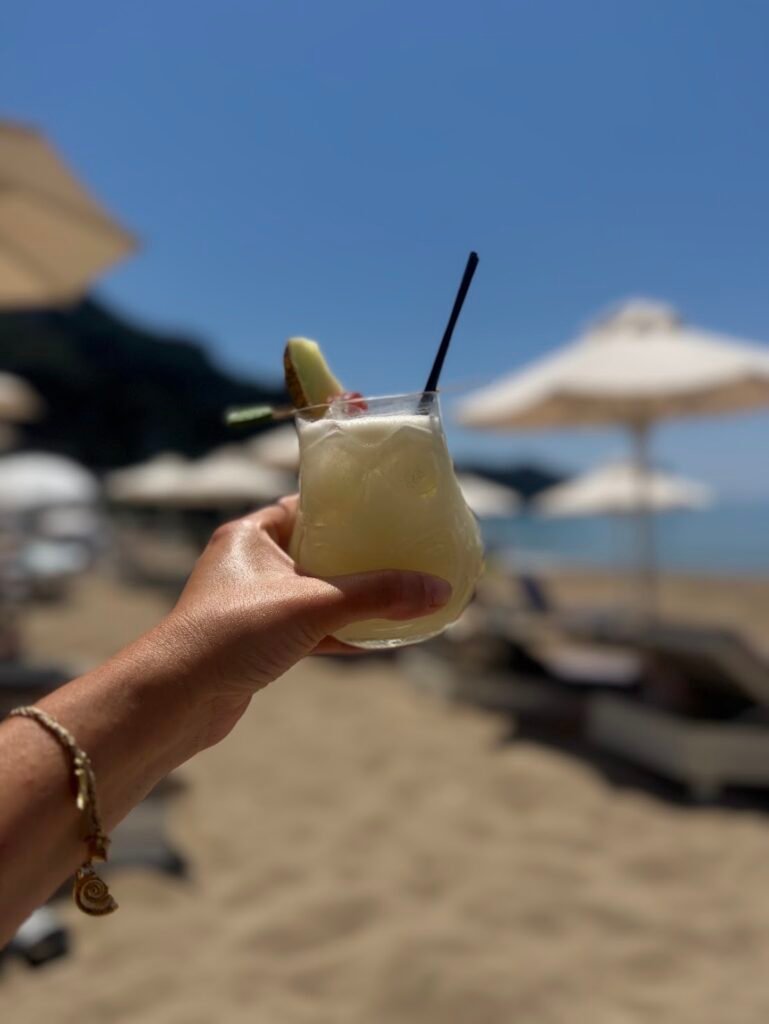
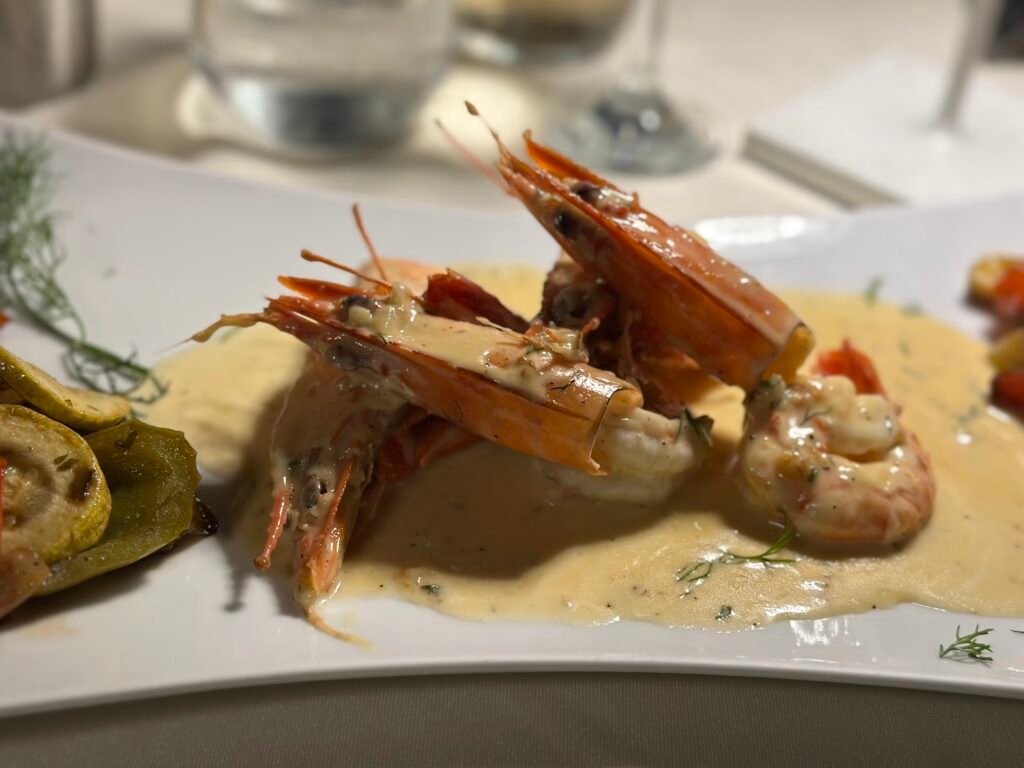
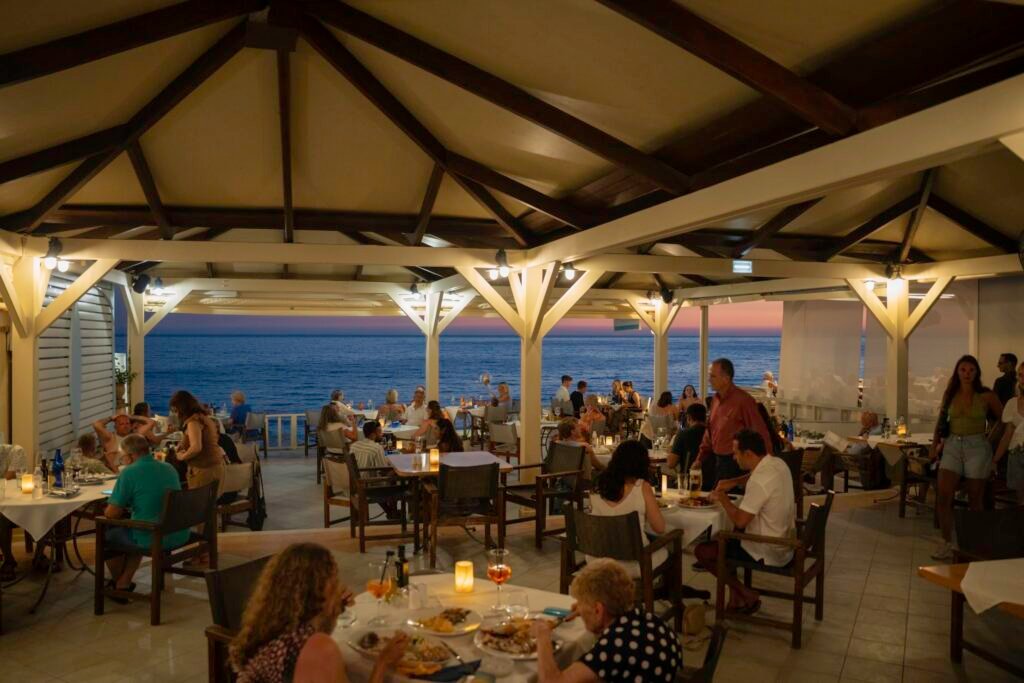
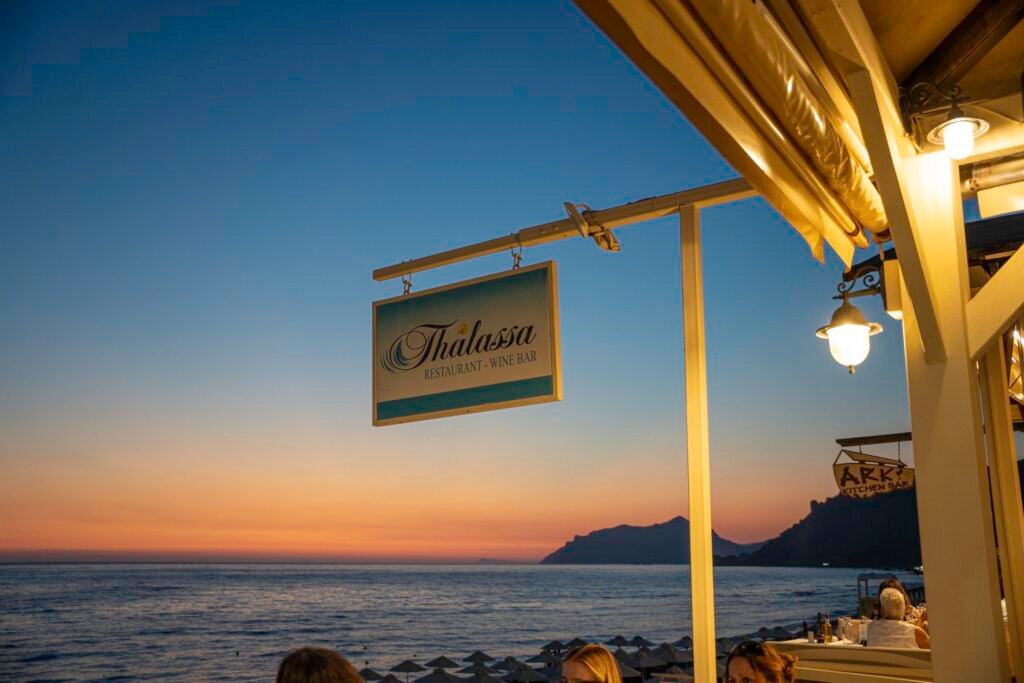
It is walking distance to the beach, which is filled with lidos that you can use if you order food, etc. They also have wonderful restaurants like this one.
A car is helpful here. The road down from the main highway winds through olive groves, and while a bus service runs to Corfu Town, it is infrequent. If exploring more of the island alongside beach time is a priority, a rental car adds a lot of options.
Planning Tip: If you want to stay in Agios Gordios at a quieter, well-positioned spot, book early and consider looking beyond the major booking platforms. Some of the most loyal-following accommodations here are not heavily advertised and fill on word-of-mouth or direct repeat bookings well before summer begins.
Acharavi
Acharavi is in the north of the island, facing the Ionian Sea with a long beach that stretches west toward Sidari. The beach is a mix of sand and pebbles, and the area has a calm and family-oriented character. It is not the destination for nightlife or dramatic scenery, but it works well for families who want a reliable beach base with proper amenities and a lower-pressure environment than the main east coast resorts.
The north coast is generally quieter than the east coast resorts closer to Corfu Town. Acharavi and the adjacent village of Roda together form one of the better bases for families planning longer stays, with supermarkets, restaurants, and services that make a week or two comfortable without constant day trips elsewhere. The beach is accessible directly from most accommodations in the area.
A car adds flexibility from Acharavi. Corfu Town is about 40 kilometers to the south, and Kassiopi is reachable to the east. For families happy to settle into one part of the island for most of their trip, the distance from the capital matters less. The north coast has enough to keep most visitors occupied for a full week without needing to travel far.
Benitses
Benitses is a small village on the east coast, about 12 kilometers south of Corfu Town. In the 1980s, it was one of the main party destinations on the island, but the years since have shifted it toward something quieter and more traditional. What remains is a working village with a small harbor, a pebble beach, a handful of tavernas and cafes, and a regular bus connection to Corfu Town.
For couples without a car who want somewhere quieter than the main East Coast resorts, Benitses is an underrated choice. It is close enough to Corfu Town for a straightforward evening out without the crowds and prices that come with staying in the capital itself. The beach is modest, but the village has an authenticity that is harder to find in purpose-built resort areas further north along the coast.
Corfu Town vs. a Beach Village
This is the most common decision travelers face when planning a Corfu trip, and the answer depends almost entirely on what a successful holiday looks like to you.
Corfu Town gives you history, restaurants, transport, and nightlife within walking distance. You can get on a bus and reach most other areas of the island without renting a car. If your trip includes bad weather days, Corfu Town has enough to fill them: museum visits, walking the Old Town, eating well, exploring the two fortresses. The airport is less than 10 minutes away. The downside is that beach access from the town itself is limited, and if a good beach is the benchmark for a successful day, you will need to travel to one rather than stepping out of your accommodation directly onto it.
A beach village gives you the water close at hand. Waking up and walking to the beach in five minutes produces a different kind of holiday than planning a journey to one. Many of the most scenic beaches on Corfu, particularly on the west coast, are not easy to access unless you base yourself nearby. The limitation is that you are more geographically fixed. If the weather turns or you want a full day exploring the island, you need a car, or you are dependent on infrequent buses.
For a first trip of a week or less, Corfu Town, with planned beach day trips, is generally the safer and more flexible choice. For longer stays or trips where daily beach access is the primary goal, basing yourself in a beach village makes more sense.
Which Side of Corfu Should You Stay On?
Corfu has four distinct coastal characters, and understanding them helps narrow down where to stay faster than almost any other single piece of information.
East Corfu
The east coast is the sheltered side of the island. The water is calmer, transport links to Corfu Town are stronger, and most of the resort development is concentrated here. Dassia, Ipsos, Kassiopi in the northeast, and Benitses all sit on the east side. If public transportation matters to you, if you want easy access to Corfu Town, or if calm water for swimming is a priority, the east coast is the practical choice. The beaches are mostly pebble, and the scenery while pleasant is less dramatic than the west. This is also where you will find the most consistent family-friendly resort infrastructure.
West Corfu
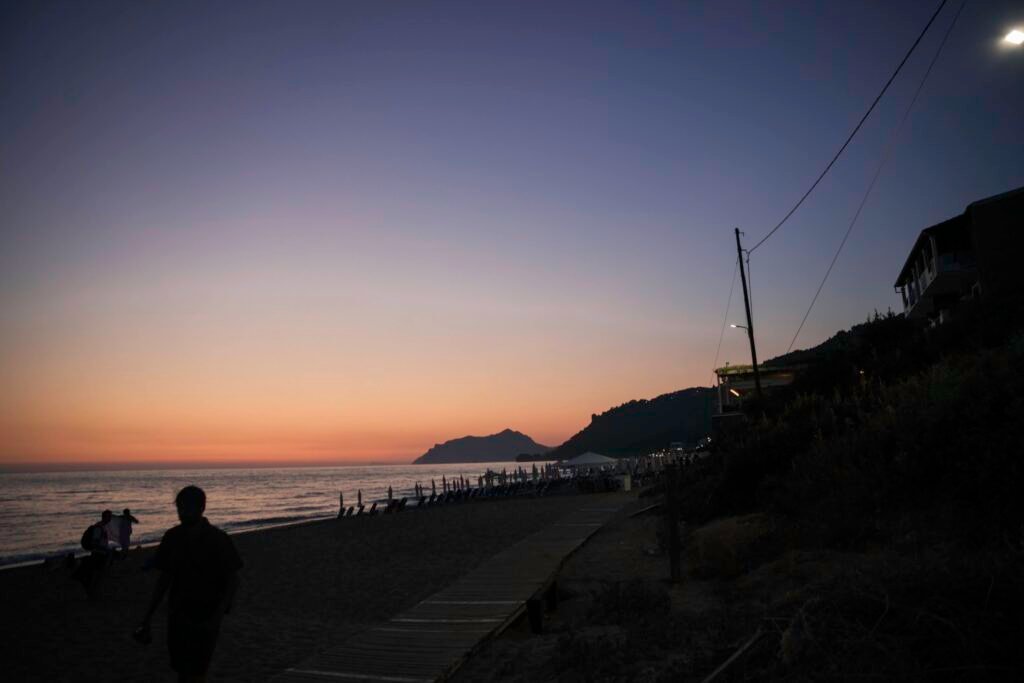
The west coast faces the open Ionian Sea. Sunsets here are considerably more dramatic than on the sheltered east side, and beaches like Paleokastritsa and Agios Gordios are among the most visually striking on the island. The water tends to have more character, the sand quality is better at certain beaches, and the overall scenery is more dramatic. The tradeoff is greater exposure to wind and conditions that change more than on the East Coast. The West Coast also requires a car for almost everything. Buses to West Coast destinations are infrequent, and many of the best spots are difficult to reach without a vehicle.
North Corfu
The north coast is generally calmer and more family-oriented than the east coast resorts closer to the capital. Acharavi, Roda, and Sidari are the main resort clusters here. Kassiopi is in the northeast with a more social character. The north is further from the airport and from Corfu Town, which adds travel time for arrivals, departures, and day trips south. Sidari has the Canal d’Amour, a series of rock formations with a channel running through them that is one of the more distinctive natural features on the island. The north works well as a base for families who plan to settle into one area rather than using a single base for island-wide exploration.
South Corfu
The south of the island is less developed and noticeably quieter than the north and east. Prices tend to be lower. Beaches in the deep south, including Issos and the wild coastline around Lake Korision, are uncrowded and have a different character from the resort beaches further north. Getting to the south requires a car, but for visitors who want to escape the main tourist circuit, the south offers a version of Corfu that feels considerably less like a package holiday. The villages of Lefkimmi and Kavos represent opposite ends of the southern spectrum: Lefkimmi is a working town with almost no tourism infrastructure, while Kavos caters almost exclusively to a young party crowd.
Planning Tip: If this is your first trip to Corfu and you are undecided on which side to choose, the northeast corridor from Dassia to Kassiopi offers the best balance of beach access, transportation options, and ability to reach other parts of the island on day trips. It is not the most dramatic part of Corfu, but it is the most practical first base.
Frequently Asked Questions: Where to Stay in Corfu
Is Corfu Town a good base for exploring the island?
Yes. Corfu Town has the best bus connections on the island and is the most practical point from which to reach multiple areas without a car. It works well as a base for day trips to Paleokastritsa, Acharavi, Kassiopi, and beaches in both directions along the coast.
Do you need a car in Corfu?
It depends on where you stay. If you are based in Corfu Town or along the main east coast corridor from Benitses through Dassia and Ipsos, buses cover most practical needs. If you want to explore the west coast or the south, or reach areas like Agios Gordios and Paleokastritsa with any flexibility, a car is a significant advantage. Many visitors rent a car for two or three days during a longer stay rather than keeping one for the entire trip.
Which area of Corfu is best for families?
Acharavi and Roda in the north are the most consistently recommended options for families. The beach is long and shallow in places, the area is calm, and the services are adequate for a longer stay. Dassia on the east coast is also a good option for families who want calmer water and easier access to Corfu Town.
Is Paleokastritsa worth staying in or just visiting on a day trip?
Both work depending on your priorities. Paleokastritsa is one of the most visited day trip destinations on Corfu, precisely because the water quality is exceptional and the scenery is hard to match elsewhere on the island. Staying there makes sense if a West Coast beach is your primary goal and you are comfortable with the limited transport options and busier high-season conditions.
What is the best area in Corfu for a couple’s trip?
Kassiopi and Paleokastritsa both work well for couples. Kassiopi has a harbor atmosphere and some of the better restaurants on the island. Paleokastritsa delivers on scenery and swimming. Benitses is a quieter and more affordable option for couples who prefer a low-key village feel over a resort environment.
Where should you avoid staying in Corfu?
Kavos in the far south is worth avoiding if you are not specifically seeking an intense party environment. It has very little to offer outside of its nightlife circuit, and the surrounding beaches are not the island’s best. Similarly, some older resort strips along the east coast between Corfu Town and Dassia have dated infrastructure and limited appeal. Checking recent reviews for any specific accommodation before committing is always worthwhile.
How far is Corfu Town from the airport?
Ioannis Kapodistrias International Airport is approximately 3 kilometers from the center of Corfu Town. The drive takes around 5 to 10 minutes, depending on traffic. Taxis are available at the airport, and the proximity to the capital is one of the practical reasons many first-time visitors choose to base themselves in Corfu Town.