Marsala is one of the most underrated bases in western Sicily. Most visitors know the name — the fortified wine produced here has been famous since the 18th century — but fewer people know the town itself: a compact, walkable Baroque center, one of the best fish markets in western Sicily, excellent restaurants focused on the local tuna and couscous tradition, and some of the most distinctive landscapes in Sicily immediately outside the city. Staying in Marsala puts you at the center of western Sicily with the salt pans, the Egadi Islands ferry, Trapani, Erice, and Selinunte all within easy reach.
This guide covers the best areas to stay in Marsala, what each neighborhood offers, and how to choose the right base for your trip.
The Old Town (Centro Storico): Best for Atmosphere & Walkability
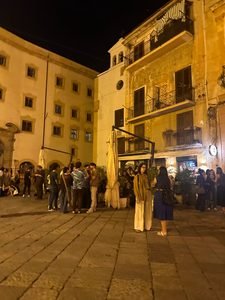
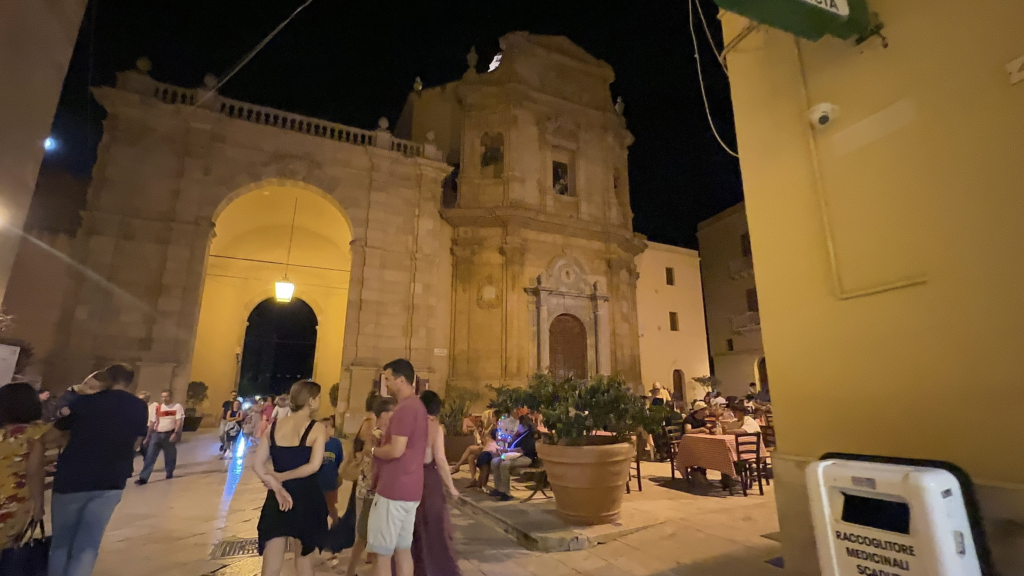
Marsala’s historic center is a well-preserved Baroque grid of wide streets and stone buildings enclosed by a partial ring of Spanish-era walls. The main axis is Via XI Maggio, the pedestrianized main street that runs from the town gate (Porta Nuova) to the Piazza della Repubblica at the heart of the old town. Along this street and in the grid of lanes around it, you will find the best of Marsala: the Cathedral of San Tommaso di Canterbury with its Flemish tapestries, the Museo Archeologico Baglio Anselmi (home to the only surviving Carthaginian warship hull, raised from the sea off the Egadi Islands), and the best wine shops and restaurants in the city.
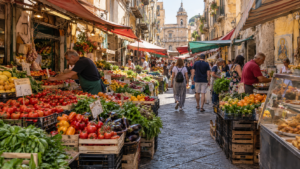
Staying in the old town means being able to walk to everything in the historic center — dinner, the fish market in the morning, the wine shops, and the best aperitivo bars along the pedestrian street in the evening. The old town is also where you will find the most characterful accommodation: boutique hotels in converted Baroque palaces, B&Bs in buildings with original terracotta floors and stone staircases, and apartment rentals in the lanes around the main piazza.
Parking in the centro storico is limited and the streets inside the walls are narrow. If you are arriving by car (which is the practical way to explore the wider area), book accommodation that explicitly mentions a parking arrangement, or plan to use the public parking areas just outside the old town walls, which are free or low-cost and a short walk from most hotels.
Near the Port & Waterfront: Best for Wine Tourism & Views
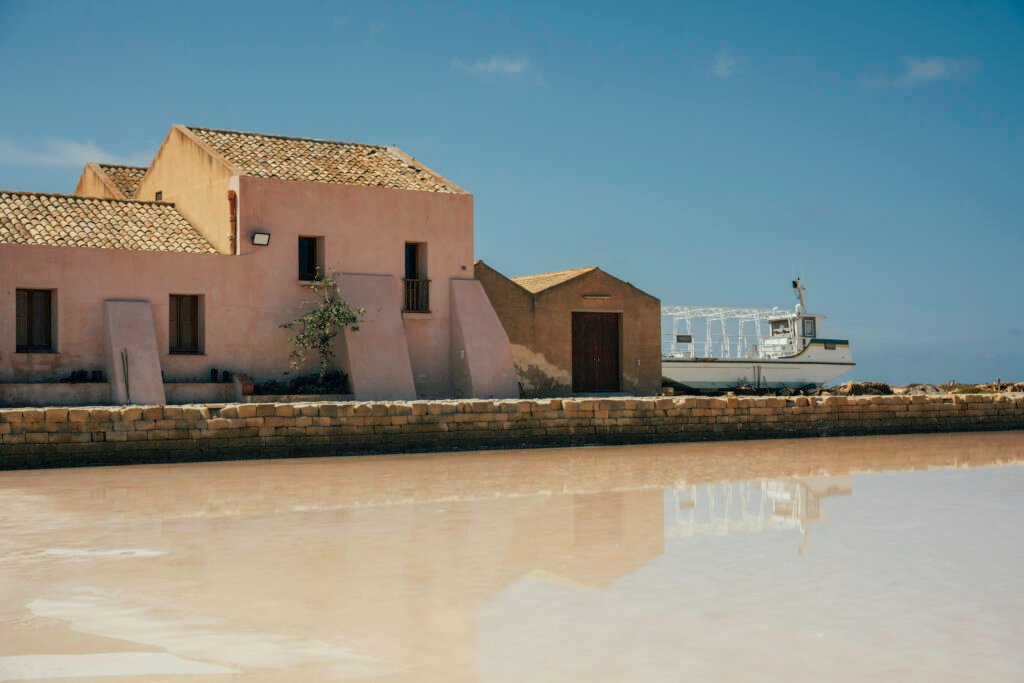
Marsala’s port area — the Lungomare Mediterraneo and the zone around the historic Cantine Florio and other major wine producers — sits just outside the old town walls on the western seafront. This is where the great Marsala wine houses built their warehouses in the 19th century, and several of them still operate as working wineries with tasting rooms and tours open to visitors.
Staying near the port makes sense if wine tourism is a priority — you can walk between the major cantine (Florio, Pellegrino, Donnafugata’s Marsala operation, and others) without needing a car. The port area also has views west over the sea toward the Stagnone lagoon, the salt pans, and the island of Mozia (Mothia), a Phoenician city that is one of the most interesting archaeological sites in western Sicily.
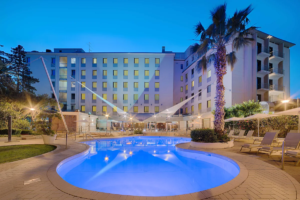
Accommodation in the port zone tends toward larger hotels and resort-style properties — less atmospheric than the old town boutiques but generally offering more facilities (pools, larger rooms, sea views). If the priority is wine, sunsets, and sea views rather than the full historic center immersion, the waterfront area works well.
The Salt Pans & Stagnone Lagoon Area: Best for Nature & Sunsets
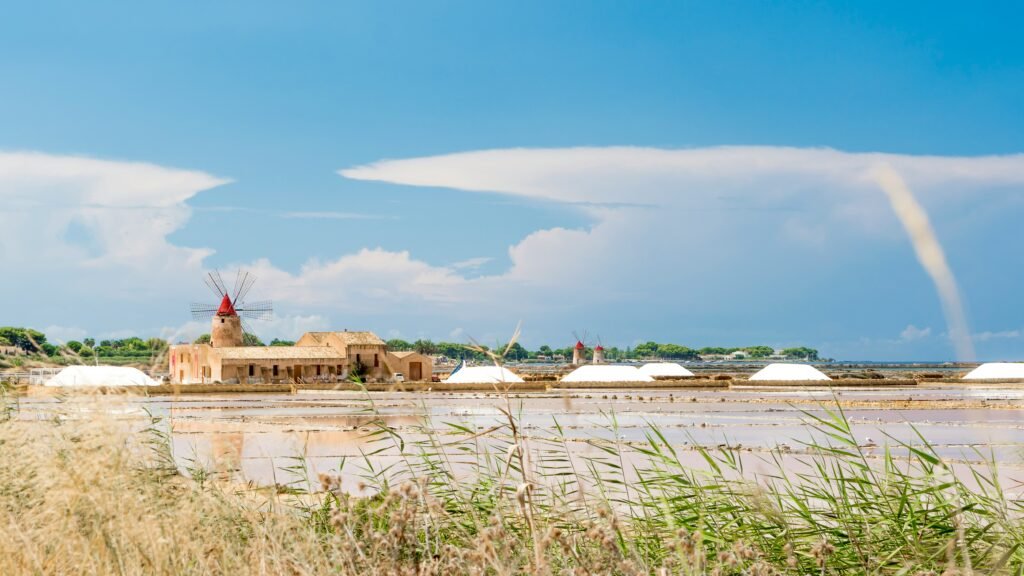
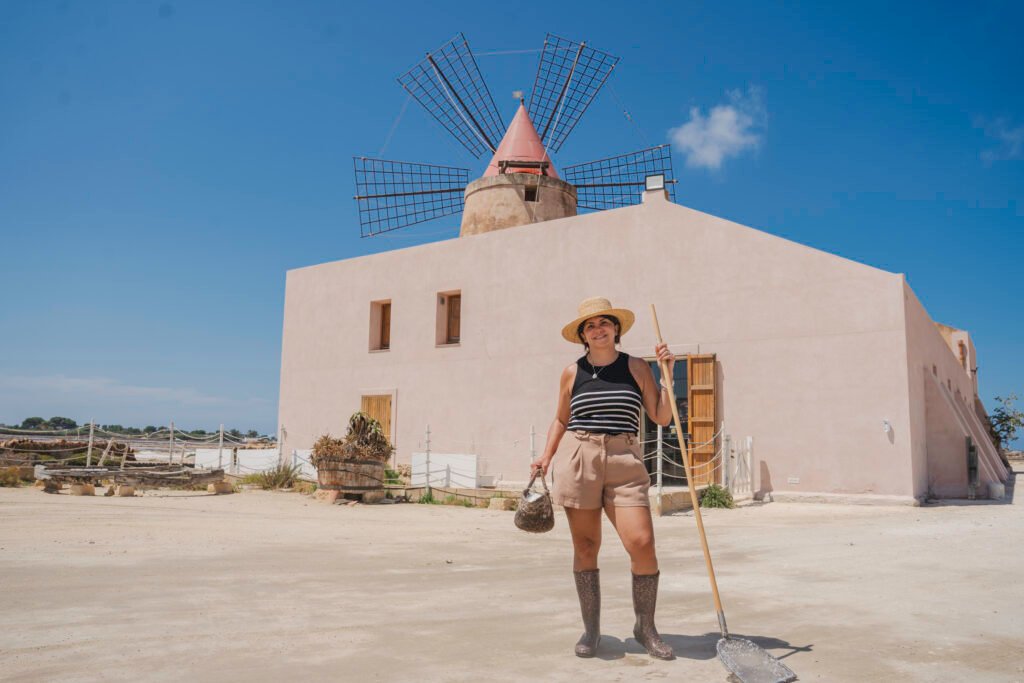
The coastal strip between Marsala and Trapani — a 20km stretch of salt pans, windmills, and the shallow Stagnone lagoon — has a growing number of agriturismo and countryside accommodation options that put you directly in one of the most distinctive landscapes in Sicily. This is the right choice for travelers who want to wake up to the salt pans, have immediate access to kitesurfing and windsurfing in the lagoon (the Stagnone is a world-class kitesurfing location due to its shallow, sheltered water), or base themselves in a rural property with their own outdoor space.
The island of Mozia (Mothia) — a Phoenician city that survived in extraordinary completeness before being excavated in the 19th and 20th centuries — is reachable by a 5-minute boat from the lagoon shore. The onsite museum houses the famous Young Man of Mozia, a 5th century BC marble statue considered one of the finest examples of Greek and Phoenician art in existence. Staying near the Stagnone makes the Mozia visit effortless.
The limitation of this area is that everything else — the old town, restaurants, and ferry port—requires a car. If you are staying here, a rental car is essential rather than optional.
Where to Stay in Marsala: Quick Comparison
| Area | Best for | Typical accommodation | Parking |
|---|---|---|---|
| Old Town (Centro Storico) | Atmosphere, restaurants, walking everything | Boutique hotels, B&Bs, apartments | Difficult in center — use edge-of-walls lots |
| Port & Waterfront | Wine tourism, sea views, cantine walking distance | Mid-size hotels, some resort properties | Generally available |
| Salt Pans / Stagnone | Nature, kitesurfing, Mozia access, sunsets | Agriturismo, countryside B&Bs, rentals | Always available |
What to Do in and Around Marsala
Wine tasting: Marsala wine — a fortified wine produced in the area since the late 18th century, when British merchant John Woodhouse discovered it could survive long sea voyages — is the obvious starting point. Cantina Florio (the grande dame of Marsala production, founded in 1833) and Cantina Pellegrino both offer excellent tours and tastings. The Donnafugata Marsala cellar is smaller but the wines are outstanding. Most tours require advance booking in high season.
Mozia (Mothia): The Phoenician island site in the Stagnone lagoon is one of the most under-visited important archaeological sites in Sicily. The small boat crossing (5 minutes, runs frequently when visitors arrive at the shore), the excavated city ruins, including a Tophet (sacred precinct); and the museum housing the Young Man of Mozia make this a full morning well spent.
Salt pans at sunset: The drive or walk along the coastal road between Marsala and Trapani in the late afternoon is one of the best free experiences in western Sicily. The salt harvest runs July–September; the pans are deep pink in late summer from the halophyte algae, and the windmills silhouetted against the sunset are extraordinarily photogenic.
Selinunte: The Greek archaeological park at Selinunte, about 40km southeast of Marsala, is one of the largest ancient Greek sites in the world — vast temple ruins on a headland above the sea, with an acropolis and a further cluster of temples in the eastern zone. It is a genuinely impressive site and easily combined with a Marsala base for a half-day excursion.
How Long to Stay in Marsala
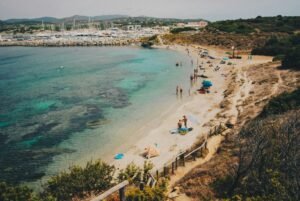
Two nights gives you time to explore the old town properly, do one winery visit and the Mozia island, see the salt pans at sunset, and eat well. Three nights allows a day trip to Trapani and Erice (under 30 minutes by car), a beach day at one of the Marsala coastline beaches (Lido Signorino and the beaches south of town are sandy and good for swimming), and a fuller exploration of the Stagnone area. Marsala also works well as a 4–5 night base for exploring all of western Sicily: Trapani and Erice one day, Segesta and the Zingaro coast another, Selinunte and Agrigento in a longer day southward.
Getting to Marsala
By car: Marsala is 30km south of Trapani (30 minutes on the SP21) and about 130km from Palermo (1h 45min on the A29 to Mazara del Vallo exit, then north). A car is the most practical way to reach and explore the Marsala area.
By train: Trains run from Palermo to Marsala (via Trapani) in about 2–2.5 hours with a change at Trapani. Direct trains from Trapani to Marsala take about 30 minutes. The station is at the edge of the modern city, a 10–15 minute walk from the old town center.
By bus: Regular buses connect Marsala with Trapani and Palermo. Schedules are better than the train on the Palermo–Marsala route; the journey takes about 1h 45min from Palermo with some services.
Best Time to Visit Marsala
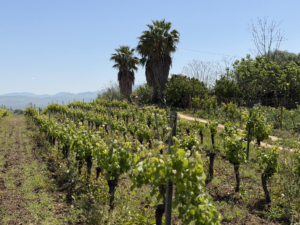
May, June, and September are the best months. The salt harvest is underway by July (the pans are most photogenic with a full harvest), the sea is warm for swimming, and the crowds are manageable. September is particularly good because the wine harvest (vendemmia) begins in the vineyards surrounding Marsala — many of Sicily’s most important DOC wines are produced in this area and September is when the landscape transforms, the wineries are at their most active, and the air smells of fermentation. The Cous Cous Fest in San Vito Lo Capo (40km north, third week of September) is easily combined with a Marsala base.
For broader guides to the area, see our articles on Erice and Trapani, Favignana, and Sicily in September. For planning your full western Sicily circuit, see our 7-day Sicily itinerary.