
Is Rome safe? Yes — Rome is generally a safe city for tourists. I’ve visited Rome more than 20 times over the years, as a solo traveler, with my husband, with friends, with my mom, and with my teenagers. I’ve arrived late at night, caught early morning trains, and wandered the city long after dinner. Not once have I felt unsafe. That said, like any major European capital, Rome has its share of petty theft, pickpockets, and tourist scams — and a few things are worth knowing before you arrive.
My Experience After 20+ Visits to Rome
My relationship with Rome has evolved over the years. The first time I visited, I was focused on checking landmarks off a list. Now, Rome feels familiar — almost like visiting an old friend. I’ve stayed in different neighborhoods, taken countless train rides, and walked miles through the city at every hour of the day.
🔑 Key Takeaways
- Yes, Rome is generally a safe city for tourists.
- I’ve visited Rome more than 20 times and have always felt safe, including walking around at night.
- The biggest issue visitors face is pickpocketing, not violent crime.
- The area around Termini Station is the only neighborhood where I personally would not choose to stay.
- My favorite neighborhood in Rome is Monti — a great mix of charm, safety, restaurants, and walkability.
- Solo travelers, couples, and families can comfortably visit Rome with basic precautions.
What I love most about Rome is that the city stays alive well into the evening. Families are out for their passeggiata, couples linger over long dinners, and locals fill the piazzas long after sunset. Walking through Rome at night often feels magical rather than intimidating — it’s one of the few major cities in the world where strolling at midnight past a floodlit fountain feels completely normal.
Even when I’ve had early trains departing before sunrise, I’ve walked to Termini Station without issues. Rome often feels safer than many large cities in the United States. That’s my honest assessment after 20 visits — not a tourist brochure answer, but what I’ve actually experienced.
Are Pickpockets Really a Problem in Rome?
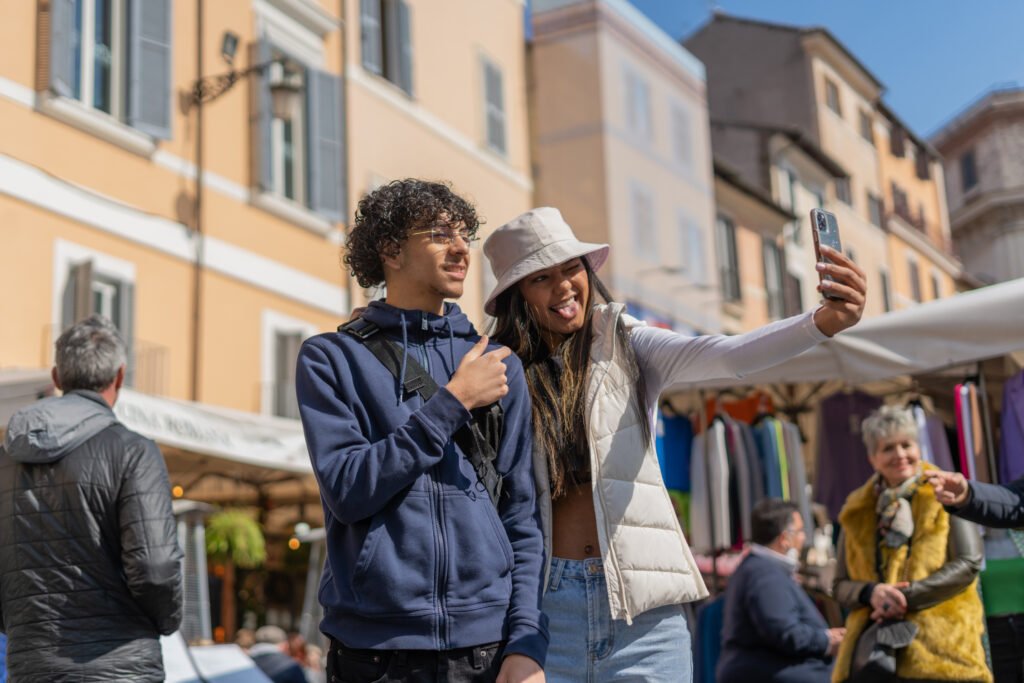
If you’re going to have a problem in Rome, pickpocketing is almost certainly what it will be. This is not unique to Rome — it’s the same in Barcelona, Paris, and most other major European tourist cities — but Rome’s combination of dense crowds at major attractions and an efficient public transit system creates consistent opportunities for theft.
The highest-risk situations are: the metro (particularly Line A, which serves the Vatican, Spanish Steps, and Trevi Fountain), the buses serving major tourist routes (especially the 40 and 64 from Termini to the Vatican), the area around the Colosseum, and any crowded piazza where street performers or other distractions draw attention away from bags and pockets. Pickpockets in Rome are skilled and work quickly — the moment of distraction is usually the moment the theft happens.
The practical response is simple: use a crossbody bag that zips closed and keep it in front of you in crowds. Keep your phone in a front pocket or in your bag, not in a back pocket. Don’t hang a camera bag loosely from one shoulder in a crowd. If someone bumps into you unexpectedly or creates any kind of scene near you, check your belongings immediately. These precautions reduce your risk dramatically without requiring any anxiety about the city itself.
Common Scams in Rome to Watch Out For
Beyond pickpockets, Rome has a few recurring scams that are worth knowing so they don’t catch you off guard.
The friendship bracelet: Someone approaches you near a major monument, ties a bracelet on your wrist before you can refuse, and then demands payment. The answer is to keep walking and not extend your arm. Being firm and continuing to walk is all that’s needed.
The rose: A vendor hands a rose to you or your companion as a “gift,” then demands money when you accept it. Same approach — don’t take it.
Overpriced tourist cafes near major sites: Not technically a scam, but sitting down at a cafe table directly next to the Trevi Fountain or Piazza Navona often means paying €8–12 for a coffee that costs €1.50 two streets away. Walk one or two blocks from any major attraction before sitting down to eat or drink.
Taxi overcharging: Always use licensed white taxis with a meter, or use a rideshare app (FREE NOW works well in Rome). Agree on a price before getting in if there is any ambiguity, and know that the official fixed rate from Fiumicino airport to central Rome is €50 (daytime), so anything significantly above that is overcharging.
“Gladiators” at the Colosseum: Men dressed as Roman soldiers near the Colosseum will offer to take a photo with you. The photo is followed by a demand for payment — typically more than you’d expect. Pose with them only if you are fully prepared to pay.
Check out Is Sicily Safe and Is Palermo Safe.
| Neighborhood | Safety | Nightlife | Families | First Visit? |
|---|---|---|---|---|
| Monti | ⭐⭐⭐⭐⭐ | ⭐⭐⭐⭐ | ⭐⭐⭐⭐ | ✅ |
| Prati | ⭐⭐⭐⭐⭐ | ⭐⭐⭐ | ⭐⭐⭐⭐⭐ | ✅ |
| Trastevere | ⭐⭐⭐⭐ | ⭐⭐⭐⭐⭐ | ⭐⭐⭐ | ✅ |
| Pantheon | ⭐⭐⭐⭐⭐ | ⭐⭐⭐⭐ | ⭐⭐⭐⭐ | ✅ |
| Termini | ⭐⭐⭐ | ⭐⭐ | ⭐⭐ | Only for transport |
Is Rome Safe at Night?
Yes — Rome at night is one of the city’s great pleasures. The historic center, Trastevere, Monti, Prati, and the areas around Campo de’ Fiori and Piazza Navona are busy with people well into the early hours. The streets are lit, there are restaurants and bars open late, and the general atmosphere is festive rather than threatening.
I’ve walked home from dinner in Trastevere at midnight, strolled past the Pantheon at 11pm, and wandered through the streets of Monti after a late meal countless times. Rome genuinely comes alive in the evenings, which means the streets stay populated and naturally safe through most of the night in the central neighborhoods.
The areas where extra awareness is sensible at night are: the immediate surroundings of Termini Station, some of the quieter outer neighborhoods that are not in the historic center, and the unlit sections of parks. In the well-touristed historic center and the popular residential neighborhoods, walking at night is not a concern for most travelers.
Is Rome Safe for Solo Female Travelers?
Rome is one of the more welcoming major European cities for solo female travelers. The combination of a lively street culture, populated public spaces late into the evening, and a generally non-threatening atmosphere makes it a comfortable destination for women traveling alone.
I’ve traveled to Rome solo on multiple occasions and have never felt threatened or followed. Catcalling and unwanted attention can happen — this is still Italy — but it’s generally low-level and does not escalate. The standard precautions that apply to solo female travel in any major city apply in Rome: stick to well-lit and populated streets at night, trust your instincts if a situation feels off, and have your accommodation address handy.
Staying in a central, well-reviewed neighborhood (Monti, Trastevere, Prati, or around the Pantheon) rather than near Termini makes a meaningful difference to the solo female travel experience—both in terms of safety and overall quality.
Is Rome Safe for Families?
Yes. Rome is one of my favorite European cities for families. I’ve visited with my teenagers and always found the city welcoming, especially in the historic center, where you’ll see local families enjoying the piazzas well into the evening.
One thing that surprises many first-time visitors isn’t crime—it’s the traffic. Romans are confident drivers, and while pedestrian crossings are common, cars don’t always stop immediately. Make eye contact with drivers before crossing, use marked crosswalks whenever possible, and keep young children close, especially near busy intersections.
If you’re traveling with a stroller, be prepared for Rome’s beautiful but sometimes challenging cobblestone streets. Historic neighborhoods like Monti, Trastevere, and the area around the Pantheon have uneven pavement that can make pushing a stroller a workout. Many older buildings also don’t have elevators, so double-check your hotel if accessibility is important.
Busy piazzas such as Piazza Navona, the Trevi Fountain, and the Spanish Steps are wonderful places to soak up Rome’s atmosphere, but they can become extremely crowded during the day. I always recommend agreeing on a meeting spot with older kids in case you get separated and keeping younger children within arm’s reach in busy areas.
One reason I enjoy Rome with family is how kid-friendly the dining culture is. Children are genuinely welcome in restaurants, dinners often stretch late into the evening, and it’s completely normal to see local families out enjoying gelato after dark. The relaxed atmosphere makes traveling with kids much less stressful than in many other major cities.
Which Areas of Rome Should Tourists Avoid?
The only area where I personally would not book a hotel is directly around Termini Station. To be clear — Termini is not a no-go zone. Thousands of travelers pass through every day without problems, and it’s one of the most convenient locations in Rome for transportation. But compared to the other neighborhoods in the city, it tends to feel grittier, especially late at night. You’ll find more aggressive panhandlers, more petty crime, and fewer of the charming Roman experiences that most visitors are hoping for.
That doesn’t mean you shouldn’t use the station—I use it every visit. I just prefer to stay elsewhere and take public transit or a taxi to Termini when I need to. If you end up with accommodation near Termini because of price or availability, you’ll be fine with normal city awareness—just know that it’s the one area where the “Rome always felt magical at night” experience doesn’t quite apply.
Some outer neighborhoods that are less commonly recommended for tourists—Tor Bella Monaca, Corviale, and parts of Tor Pignattara—have rougher reputations locally, but these are far from the tourist areas, and most visitors will never find themselves there accidentally.
💬 Feuza Tip
I never put my phone in my back pocket in Rome. It sounds obvious, but I see tourists doing it every single trip.
Emergency Numbers and Helpful Contacts in Rome
While I hope you never need any of these, it’s helpful to save them in your phone before your trip.
Service Contact European Emergency Number (Police, Ambulance & Fire) 112 Tourist Police (Police assistance for visitors) Contact through 112 or visit the nearest tourist police office in central Rome. Medical Emergency (Ambulance) 112 U.S. Embassy in Rome Via Vittorio Veneto 121. Phone: +39 06 46741. Emergency assistance is available for U.S. citizens. Canadian Embassy in Rome Via Zara 30, Rome. Phone: +39 06 85444 291. Major Hospital Policlinico Umberto I (Rome’s largest public hospital with a 24-hour emergency department). Pro tip: Save your embassy’s phone number before your trip. If your passport is lost or stolen, contacting your embassy is one of the first steps you’ll need to take. It’s also a good idea to keep a digital copy of your passport stored securely on your phone or in cloud storage.
The Best (and Safest) Neighborhoods to Stay in Rome
My favorite neighborhood in Rome is Monti, and it’s where I recommend most first-time visitors stay. Located between the Colosseum and Termini, Monti somehow manages to feel both central and genuinely local at the same time. The streets are lined with independent boutiques, wine bars, family-run restaurants, and beautiful little piazzas where locals gather in the evenings. I can walk to major attractions while still feeling like I’m experiencing a real Roman neighborhood. It strikes the perfect balance between convenience, atmosphere, and comfort.
Trastevere is another excellent choice — across the Tiber from the historic center, with beautiful medieval streets, a famously lively restaurant and bar scene, and a neighborhood feel that holds up even in high summer. It’s more of a walk to some of the major sights on the east side of the river, but it compensates with atmosphere. Prati, just north of the Vatican, is quieter, very safe, with good restaurants and easy walking distance to Castel Sant’Angelo and the Vatican Museums. Good for families and travelers who prefer a less crowded base. Around the Pantheon / Campo de’ Fiori puts you in the absolute heart of the historic center — maximum walkability to everything, premium prices, and busy with tourists, but genuinely beautiful and very safe.

A Funny Lesson We Learned the Hard Way
One night, my husband and I got a little carried away enjoying wine and dinner in Trastevere. Before we knew it, the buses had stopped running. We tried calling an Uber, but at the time none were available, and despite wandering around for what felt like forever, we couldn’t find a taxi either.
So…we walked.
Three miles.
Let’s just say I wasn’t exactly thrilled with my husband by the time we got back to our hotel. 😂
But here’s what stood out to me: even after midnight, I never felt unsafe. We passed couples heading home, groups of friends chatting outside restaurants, families finishing late dinners, and people enjoying gelato. The streets were still alive. While I’d definitely recommend checking the last bus time (or having a backup transportation plan), that unexpected walk actually reinforced how comfortable I feel walking around central Rome at night.
Feuza Tip: If you’re planning a late dinner in Trastevere, don’t assume buses will still be running when you leave. Check the last departure time before your meal, or budget for a taxi home. You’ll enjoy that extra glass of wine a lot more knowing you have a plan.
Practical Safety Tips for Rome
Use a crossbody bag. This single change makes a bigger difference than anything else. Keep it zipped and in front of you in any crowd.
Be extra alert on the metro. Line A (the tourist line) is where most pickpocketing happens in Rome. The moment of boarding and exiting, when crowds compress, is the moment to hold your bag.
Don’t accept things handed to you by strangers near monuments. Bracelets, roses, maps — if you accept it, you may be expected to pay for it.
Take licensed taxis or rideshare apps. Rome’s official taxis are white and metered. FREE NOW is reliable and shows the price upfront. Avoid unlicensed drivers who approach you at the airport or train station.
Book major attraction tickets in advance. The Colosseum, Vatican Museums, and Borghese Gallery all require timed entry tickets — and the Colosseum in particular has a persistent scam involving people offering to sell you “skip the line” tickets outside. Buy directly from the official sites only.
Keep a copy of your passport separate from the original. A photo on your phone is sufficient for most purposes, and means a lost passport doesn’t leave you without any identification.
Frequently Asked Questions About Safety in Rome
Is Rome safe for American tourists?
Yes. Rome is one of the most-visited cities in the world by American tourists and is generally very safe. The main risks — pickpocketing and tourist scams — are manageable with basic precautions. Violent crime targeting tourists is rare.
Is Rome safe to walk around at night?
Yes, in the main tourist and residential neighborhoods. Rome has a strong evening culture — restaurants, piazzas, and bars stay busy late, which means streets in the historic center, Trastevere, Monti, and Prati are populated and safe well into the night. The area immediately around Termini Station warrants more awareness after dark.
What is the safest neighborhood in Rome for tourists?
Monti, Trastevere, Prati, and the area around the Pantheon are all excellent choices. Monti is my personal favorite for its combination of central location, local atmosphere, and safety. All four neighborhoods are well-suited for solo travelers, couples, and families.
Is Rome safe for solo female travelers?
Yes. Rome is one of the more comfortable European cities for solo female travelers, with populated streets, an active evening culture, and a generally non-threatening atmosphere. Standard city precautions apply, and staying in a central neighborhood rather than near Termini makes a meaningful difference.
Is the area around Termini Station safe?
It’s safe enough to walk through and use for transportation, but it’s the grittiest area of central Rome, particularly at night. I use Termini every visit but prefer to stay in a different neighborhood. Most travelers who stay near Termini don’t have problems — it just doesn’t offer the best introduction to Rome.
What are the most common scams in Rome?
The friendship bracelet (someone ties it on your wrist and demands payment), the rose “gift,” overcharging at tourist-facing cafes near major monuments, unlicensed taxi drivers at the airport, and “gladiator” costumed characters near the Colosseum who charge for photos. All are avoidable by not engaging with strangers who initiate contact near major sights.