
You do not need a car in Madrid. The metro is fast, the buses run everywhere, the city center is genuinely walkable, and taxis and ride apps are cheap enough that you will never feel stuck. Save the car rental for day trips outside the city.
I have been to Madrid three times now, and I have never once rented a car inside the city. My main modes of transport have been my own two feet and the bus, with the occasional metro ride thrown in when I needed to cover real distance fast. Madrid is one of those cities where the transportation infrastructure is so good that you almost feel silly overthinking it.
Here is a breakdown of every option, what each one actually costs, and when to use which.
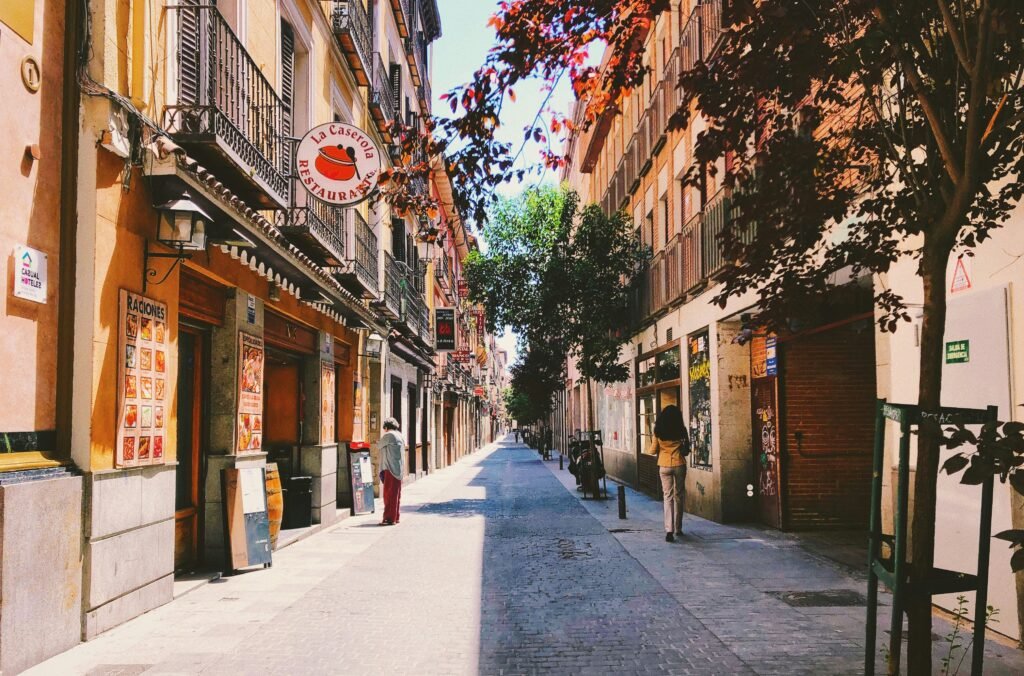
Walking Is Genuinely Your Best Option in the Center
If you are staying anywhere near the historic center, you can walk to most of what you want to see. Sol to Malasaña is about a 15-minute walk. Sol to La Latina is 10 minutes. Sol to the Prado is about 20 to 25 minutes along Paseo del Prado. Retiro Park is within walking distance of the museum district. Chueca is a short walk from Gran Via. The neighborhoods that come up most in Madrid trip planning are all close enough to each other that a good pair of shoes will take you further than a metro card on most days.
I cannot overstate how much of my Madrid time has just been walking. The streets in Malasaña, Chueca, and La Latina are the kind you actually want to be on at ground level. Taking the metro between them feels like cheating yourself out of the best part of the city. Walk first, then use transport for longer distances.
Check out Where to Stay in Madrid and Unique Things to See in Madrid
The Metro Is Fast and Covers the Whole City
Madrid’s metro has 12 lines and covers essentially every neighborhood a visitor would want to reach. It is clean, well-signed in English and Spanish, runs frequently during the day, and stays open until 1:30 am. For longer trips across the city or getting to neighborhoods outside the center, the metro is the obvious choice.
A single journey within zone A costs around 1.50 to 2 EUR depending on how many stops you ride. If you are going to use public transport more than twice a day, get a reloadable travel card (Tarjeta Multi) from any metro station. You load trips onto it and tap in each time. It works on both the metro and the buses, which makes it the most convenient option if you are mixing both.
If you are staying longer or moving around a lot, the Abono Turístico (tourist travel pass) covers unlimited metro, bus, and Cercanías train rides within the city for a flat daily rate. A one-day pass runs around 8.40 EUR and a seven-day pass around 35.40 EUR. For a five-day trip where you plan to use public transit heavily, the math usually works in your favor.
One important note: Line 8, the pink line that runs to the airport terminals T1, T2, and T3, has a 3 EUR airport supplement on top of the regular fare. It isn’t included in standard multi-trip cards, so factor it in when you calculate what you owe at the ticket machine.

The Bus System Is Underrated and I Use It All the Time
Madrid’s EMT buses are the red city buses and they go places the metro misses, especially within the center where metro stations can be spaced further apart than you want. They use the same Tarjeta Multi card as the metro, so you are not managing separate tickets. The routes are logical once you spend a day or two getting a feel for them, and the stops are well-marked.
This is genuinely what I use most in Madrid. You see more of the city from street level, the stops are usually right where you need them, and the frequency is solid during the day. Google Maps handles Madrid bus routes well, so you can just plug in your destination and it will tell you which bus to take.
After the metro closes at 1:30 am, the night buses take over. These are the Búhos lines (the name means “owls,” which is on-brand for a city that stays up until 4 am). They run from around 11:30 pm through to 6 am and connect the center to the outer neighborhoods. Not the fastest option when you are heading home at 3 am, but they work.
Taxis Are Safe, Regulated, and Affordable
Madrid taxis are white with a red diagonal stripe and are metered by the city. They are not something you need to worry about in the way you might in some other European capitals. The drivers use the meter, the cars are in good shape, and prices within the city center are reasonable for a trip that would be inconvenient on foot or by bus late at night.
The one fare you should know: there is a regulated flat rate of 30 EUR for any trip between the city and Madrid Barajas airport (in either direction). This has been in place since 2012 and covers any point within the city to any terminal. No negotiating, no surprises. Just confirm the flat rate with the driver before you leave the curb.
You can hail a taxi on the street when the green light is on, or find them at taxi stands near major transit hubs and hotels.
Uber, Cabify, and FreeNow All Work in Madrid
Yes, Uber works in Madrid. It operates with licensed VTC (private hire vehicle) drivers rather than the personal-driver model it uses in some markets, so the experience is essentially the same as Cabify or Bolt. You book through the app, a driver in a non-taxi private vehicle picks you up, and you pay through the app. Prices are comparable to taxis for most in-city trips, though surge pricing applies during busy periods in a way metered taxis do not.
Cabify is probably the most popular VTC app among locals and a solid alternative to Uber. FreeNow is slightly different: it primarily books licensed taxis through the app rather than private vehicles, so you are getting a regular Madrid taxi dispatched to you digitally instead of flagging one on the street. If you prefer taxis but hate the hassle of hailing one, FreeNow is worth downloading.
Bolt also operates in Madrid and is usually the cheapest VTC option. Worth having on your phone as a backup when surge pricing on the others gets annoying.
Do Not Rent a Car Inside Madrid
Renting a car for your time in the city is one of the most unnecessary things you can do in Madrid, and I say that with complete sincerity. Traffic in the center is dense, parking is expensive and hard to find, and the Madrid Central zone in the historic center requires a DGT-issued environmental sticker to drive through. If you arrive with a rental car and have not sorted the sticker situation, you can be fined without even realizing it. The whole thing is a headache that public transport, taxis, and your own legs solve completely.
The only reason to rent a car is if you are heading out of the city for a day trip to somewhere the trains do not easily reach. Toledo, Segovia, and Ávila all have good train connections from Madrid and do not require a car. El Escorial is the same. If you are going somewhere more rural in Castile or venturing into the countryside around Madrid, a car for that specific day makes sense. Pick it up from an out-of-center location, use it for the day trip, return it. Done.

Getting Between the Airport and the City
Madrid Barajas Airport (MAD) has four terminals and two easy ways to get into the city: the metro and the Cercanías commuter train.
Metro Line 8 (pink) connects terminals T1, T2, and T3 to the city. You change at Nuevos Ministerios to reach Sol, Gran Via, or other central stops. The journey takes about 30 to 40 minutes, depending on your final destination. Remember the 3 EUR airport supplement on top of your regular fare.
Terminal T4 is separate and served by Cercanías line C1, which connects to Atocha station in around 25 minutes. If you land at T4 (common for Iberia long-haul and many international flights), this is your quickest route in.
Taxis from the airport to anywhere in Madrid city are the flat 30 EUR rate mentioned above. If you have heavy luggage, arrive late, or travel with multiple people, the taxi math often makes more sense than figuring out the metro with bags. Uber and Cabify also pick up from the airport and are often competitive with the taxi flat rate.
Frequently Asked Questions About Getting Around Madrid
No. The city center is walkable, the metro and buses cover everything else, and taxis and ride apps are affordable for late-night trips. The only reason to rent a car is for day trips to places that are not well-served by train, and even then you rent it for the day and return it.
Does Uber work in Madrid?
Yes, Uber operates in Madrid with licensed VTC drivers. Cabify and Bolt also operate and are popular alternatives. FreeNow dispatches licensed taxis through an app if you prefer the metered taxi experience without flagging one on the street.
A single journey within zone A costs roughly 1.50 to 2 EUR. A reloadable Tarjeta Multi card works on both metro and buses. Tourist passes (Abono Turístico) start at around 8.40 EUR for one day and 35.40 EUR for seven days with unlimited travel. Line 8 to the airport has an additional 3 EUR supplement.
How much is a taxi from Madrid airport to the city center?
The flat regulated rate is 30 EUR from any point in Madrid city to any airport terminal, in either direction. Confirm the flat rate with your driver before you leave. Uber and Cabify are often similar in price and sometimes slightly cheaper.
Are Madrid taxis safe?
Yes. Madrid taxis are city-regulated, metered, and generally reliable. The white taxis with the red diagonal stripe are the official licensed cabs. You do not need to negotiate fares within the city except for the airport flat rate, which you should confirm upfront.
Walk as much as you can in the center, take the bus for mid-range trips within the city, and use the metro when you need to cover real distance quickly. Get a Tarjeta Multi card loaded with a few trips, and you’ll be covered for most of your time there.
Madrid rewards the people who slow down and move through it at street level. The best things I have found in this city have been while walking between places, not while sitting on a metro. Use the transportation when you need it, and your feet the rest of the time.