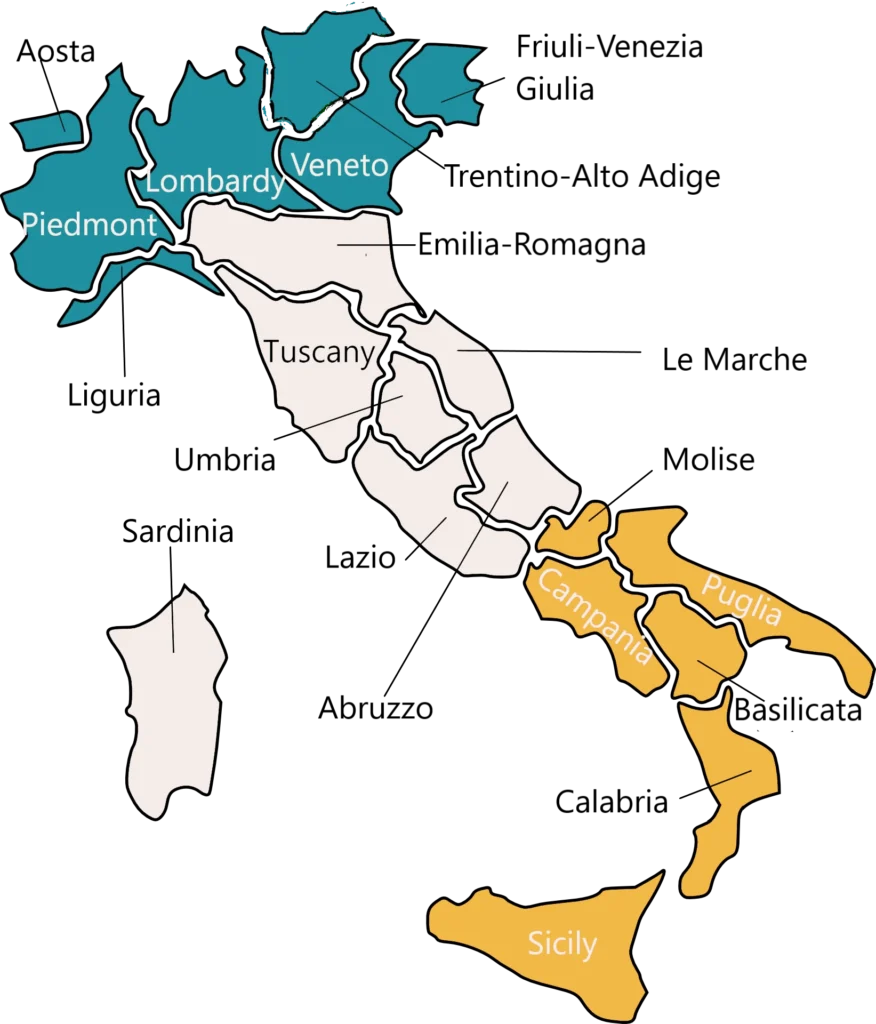
Most first-time visitors to Sicily arrive through Catania rather than Palermo, and for good reason: the airport is larger and better connected, and the gateway to the eastern half of the island where the major draws are concentrated. Taormina is an hour by car, Syracuse is less than an hour, and the trails of Mount Etna start less than an hour’s drive from the terminal. Understanding how the airport works, what to expect on arrival, and how to plan around the occasional volcanic disruption makes a significant difference to how your trip begins.
Catania Airport Overview
Catania-Fontanarossa Airport (IATA: CTA) sits about 5 kilometers south of the city center, named after the Fontanarossa neighborhood it occupies. It is Southern Italy’s busiest airport by passenger volume, handling 12.35 million passengers in 2024 and consistently ranking among Italy’s top four airports nationally alongside Rome Fiumicino, Milan Malpensa, and Bergamo.
The airport has two terminals. Terminal A is the main building, open 24 hours, serving the vast majority of carriers and covering over 40,000 square meters. Terminal C is a smaller satellite building of around 3,800 square meters, used exclusively by easyJet for domestic and Schengen-area flights. For most international travelers, including anyone arriving from the US, Terminal A is the relevant one. The layout is standard: arrivals and baggage claim on the ground floor, departures and check-in on the first floor, with car rental desks, taxis, and the Alibus stop immediately outside arrivals.

Flights from the United States
For most of Catania’s history, flying from the US meant connecting through a European hub and then taking a short-haul flight to Sicily. That changed in May 2025, when Delta Air Lines launched the first-ever nonstop service between the US and Catania, operating daily between New York JFK and CTA. The flight takes approximately 10 hours 30 minutes westbound and around 9 hours 30 minutes on the return. This made Catania one of the few regional Italian airports with a direct transatlantic connection.
For travelers departing from US cities other than New York, connecting itineraries remain the standard approach. The most common routing options are through Rome Fiumicino (FCO) with Alitalia or ITA Airways, Amsterdam Schiphol (AMS) with KLM, London Heathrow or Gatwick with British Airways, or Frankfurt (FRA) with Lufthansa. Two- to three-hour connections in the European hub are advisable, since Catania is not a major hub, and re-accommodation options if you miss a connection are limited compared to larger Italian airports.
I always check Expedia bundle flight deals to see if anything is available that may be more affordable or even if to find direct flights.
Planning Tip: If flying from New York, the Delta nonstop to CTA is generally faster and simpler than connecting through Rome. If flying from the West Coast or Midwest, connecting through a major European hub typically adds only one stop. For flexibility, booking an itinerary that arrives into Catania the evening before any time-sensitive plans (such as a tour departure or a ferry to the Aeolian Islands) is sensible, since Etna disruptions can occasionally delay arrival by several hours.
Etna Disruptions and How to Stay Informed
Mount Etna is Europe’s most active volcano, and it sits less than 30 kilometers from Catania Airport. When the volcano erupts with significant ash emission, the ash cloud drifts toward the airport and can force temporary suspensions of arrivals, departures, or both. This is not a rare or hypothetical scenario: Catania Airport has experienced multiple Etna-related closures in recent years, ranging from a few hours to a full day, and the pattern shows that active eruptive phases can trigger several disruptions within a short period.
The disruptions tend to follow a specific pattern. An eruption generates an ash column. Wind direction and altitude determine whether the ash reaches the airport’s flight paths. When it does, the aviation alert code rises to red and arrivals are suspended first, followed by departures if conditions worsen. Ashfall on the runway can also affect ground operations, including baggage handling and aircraft parking. Closures are typically measured in hours rather than days, and operations resume once ash levels drop and the runway is cleared.
I frequently share on my Instagram about Catania Airport closures, so follow me there.
How to Monitor for Disruptions at Catania Airport
The most useful sources for staying informed are straightforward. The INGV (Istituto Nazionale di Geofisica e Vulcanologia, Italy’s national geophysics institute) monitors Etna continuously and publishes real-time bulletins at ingv.it. The aviation alert color code is the most practical indicator: green and yellow mean normal operations are likely; red means disruption is possible or already happening.
The airport’s own website (aeroportodicatania.it) posts operational notices during Etna events, though updates can lag behind the situation. The most reliable real-time source for your specific flight is the airline’s app, which will issue push notifications about delays or cancellations before the airport’s website is updated. Signing up for flight status alerts through your airline at booking is the single most useful step you can take.
Flight tracking apps such as Flightradar24 or FlightAware show real-time movements around the airport and are useful for seeing whether flights are arriving and departing normally before you leave your accommodation for the terminal.
Planning Tip: If Etna has been active in the week before your travel, check the airport’s status the morning of your flight rather than assuming the previous day’s closure has no bearing on your flight. Active eruptive phases can produce multiple disruptions over several days. Travel insurance that covers volcanic disruption specifically is worth having for a Sicily trip, and flexible fare tickets are preferable to non-refundable basic economy on the Catania leg of any connection.
Getting to Catania City Center From The Airport
The airport is about 5 kilometers from Catania’s historic center. Three practical options cover most travelers’ needs: the Alibus AMT bus, a taxi, or a private transfer. Car rental is also available at the ground floor of Terminal A for anyone planning to drive directly from the airport.

Alibus AMT Bus
The Alibus is the airport shuttle bus operated by AMT Catania. It costs €4 for a single journey and runs every 20 to 25 minutes during the day. The journey to Catania Centrale train station takes approximately 20 to 28 minutes depending on traffic. The ticket is also valid for 90 minutes on other AMT city buses, making it practical to continue by public transit if your accommodation is not in the immediate center. Tickets can be purchased at the AMT desk inside the terminal or at the ticket machine near the bus stop outside arrivals. The stop is clearly signed immediately outside the terminal exit.
The Alibus is the right option for solo travelers or couples traveling light who are heading to central Catania or connecting to the train. It is less practical with multiple large bags or if you are heading somewhere other than the city center.
Taxi
Licensed taxis from the rank outside arrivals charge fixed rates to central Catania destinations. The daytime fare runs approximately €27 to €30, rising to around €36 at night and on public holidays. The journey takes 10 to 15 minutes in normal traffic. There is an additional charge per bag, typically €1 each. Always use the official taxi rank rather than drivers who approach you inside the terminal: unauthorized drivers exist and charge significantly above the licensed rate.
Taxis are worth the price difference over the bus for families, anyone with significant luggage, late-night arrivals when the bus frequency drops, or anyone going to an address that is not near Catania Centrale.
Private Transfer
Pre-booked private transfers are available through several operators and most Catania hotels can arrange airport pickup. These cost more than a taxi but offer a fixed price confirmed in advance, a driver waiting with your name, and can be booked for any hour. This is the most practical option for late-night arrivals on long-haul flights when stress levels are high and navigating a new city is the last thing you want to improvise.
Car Rental
Major car rental companies, including Hertz, Avis, Europcar, and Sixt, have desks on the ground floor of Terminal A. Picking up a car at the airport makes sense if you plan to drive immediately to a destination outside the city, such as Taormina, Syracuse, or the Etna area. Driving in central Catania is not recommended for first-time visitors because of heavy traffic and limited parking.
When renting a car in Sicily, I always use the website Discover Cars to find the best rates. Check out Sicily without a car.
WiFi at Catania Airport
Free WiFi is available throughout both terminals at Catania Airport. The network is accessible without a password in most areas of the terminal. Coverage is consistent across the departures level, the gate areas, and the arrivals hall. Signal quality is generally adequate for messaging, email, and basic browsing, though bandwidth can slow during peak hours when the terminal is busy. For data-heavy tasks like large file uploads or video calls, a personal mobile data connection is more reliable.
Luggage Storage at Catania Airport
Official on-site luggage storage directly operated by the airport is limited and not consistently available. The most reliable options are third-party luggage storage services that operate near the terminal, accessible via apps such as Bounce, Stasher, and Qeepl, which partner with local businesses to offer bag storage from around €4 to €6 per day for small bags and up to €10 for larger items. These services are worth checking in advance rather than assuming storage will be available when you arrive.
If you need to store bags for a few hours between checking out of accommodation and your flight, many hotels in central Catania will hold luggage for guests and former guests without charge. This is often the more practical solution than returning to the airport early.

Food and Dining
Catania Airport has more dining options in the public area before security than after it, which is the opposite of what many travelers expect. The arrivals and departure check-in areas have a broader selection of cafes, bars, and sit-down restaurants than the gate areas beyond security. If you have time before going through security, eating or buying provisions in the public section is the better experience.
The airport is in Sicily, but the food options inside lean toward standard Italian airport fare: coffee and pastries at the bar, sandwiches and panini, pizza by the slice, and a few sit-down restaurants serving pasta and main courses. The coffee is genuinely good, as it is at virtually any bar in Sicily. Prices are elevated as expected in any airport, though the gap between airport and city prices is less extreme here than at major hub airports.
After security, the selection narrows significantly to a few coffee bars, a sandwich counter, and a small duty-free shopping area with packaged food and alcohol. If you are arriving early for a long-haul departure, eating before security rather than after is the better approach for both choice and cost.
Catania vs. Palermo Airport
Sicily has two main international airports, and travelers who have some flexibility in routing sometimes face a genuine choice between them. The differences are significant enough to matter.