3 Days in Palermo: Three days gives you enough time to explore Palermo’s historic markets, Arab-Norman churches, and street food scene without rushing. Day one covers the layered historic center, day two takes in the Cappuccini Catacombs and Palermo’s neighborhoods, and day three is a full beach day at Mondello (May through September) or a morning trip to Monreale in the cooler months. Palermo rewards slow travel, so this itinerary keeps each day focused on two or three things rather than a checklist of ten.
Palermo is one of those cities that takes a little longer than expected to reveal itself. The streets are chaotic, the markets are loud, and the churches appear around corners with little warning. It is not a city you rush through. Three days let you settle into the rhythm of it: morning coffee at a bar, a slow wander through a market, a long lunch, an afternoon church or two, and evenings that stretch into street food and wine. The itinerary below follows that pace.
Before You Visit Palermo
Palermo’s historic center is largely walkable. Most of what you will want to see on days one and two is within comfortable walking distance, so you don’t need to rent a car or figure out the city center bus system. The main exception is Mondello Beach on day three, which is a short bus ride (about 20 to 25 minutes from Piazza Sturzo near Teatro Politeama on bus 806).
The Cappuccini Catacombs now require advance booking online. Do this before your trip to avoid showing up to a sold-out entry. The Cappella Palatina inside Palazzo dei Normanni also benefits from booking ahead, especially in peak season.
Street food is not optional in Palermo. The city has one of the best street food traditions in Italy, and eating at the markets is part of the experience, not just a budget option. Arrive at Ballarò or Vucciria slightly hungry and plan to eat as you walk.
Planning Tip: Palermo is at its best in May, June, September, and October. July and August are very hot (often above 35°C / 95°F) and the city gets busy. That said, summer is also when Mondello beach is at its best, so it depends on your priorities. November through March is quieter and mild by northern European or North American standards, though some beach-facing businesses close.
Day 1: The Historic Center
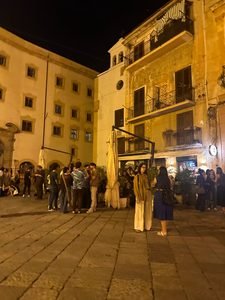
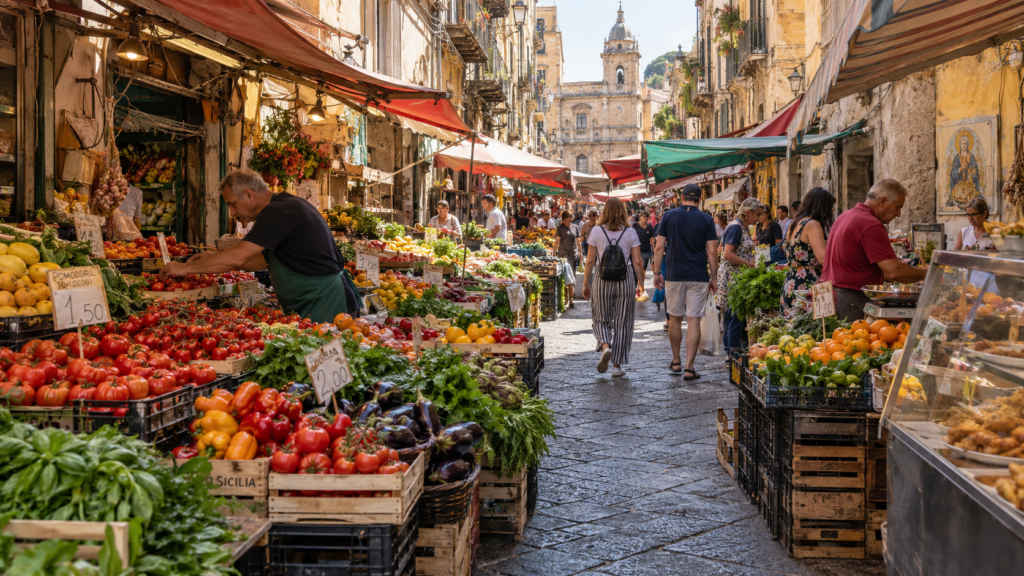
Start the morning at Mercato di Ballarò, Palermo’s oldest and largest street market. It runs along several streets in the Albergheria neighborhood and is liveliest from around 8 a.m. until midday. This is the place to have breakfast: an arancina (fried rice ball) from one of the stalls, a granita if it is warm, or just an espresso standing at one of the bars on the edge of the market. Walk slowly. There is no agenda for this part of the morning beyond getting a feel for the city.
From Ballarò, make your way toward the Quattro Canti, the elaborate baroque crossroads at the intersection of Via Maqueda and Corso Vittorio Emanuele. A short walk from there brings you to Piazza Pretoria, which centers on a large 16th-century fountain surrounded by statues. The Palermitans nicknamed it the Fountain of Shame when it was installed, and you can see why. The square is pleasant and worth a few minutes.
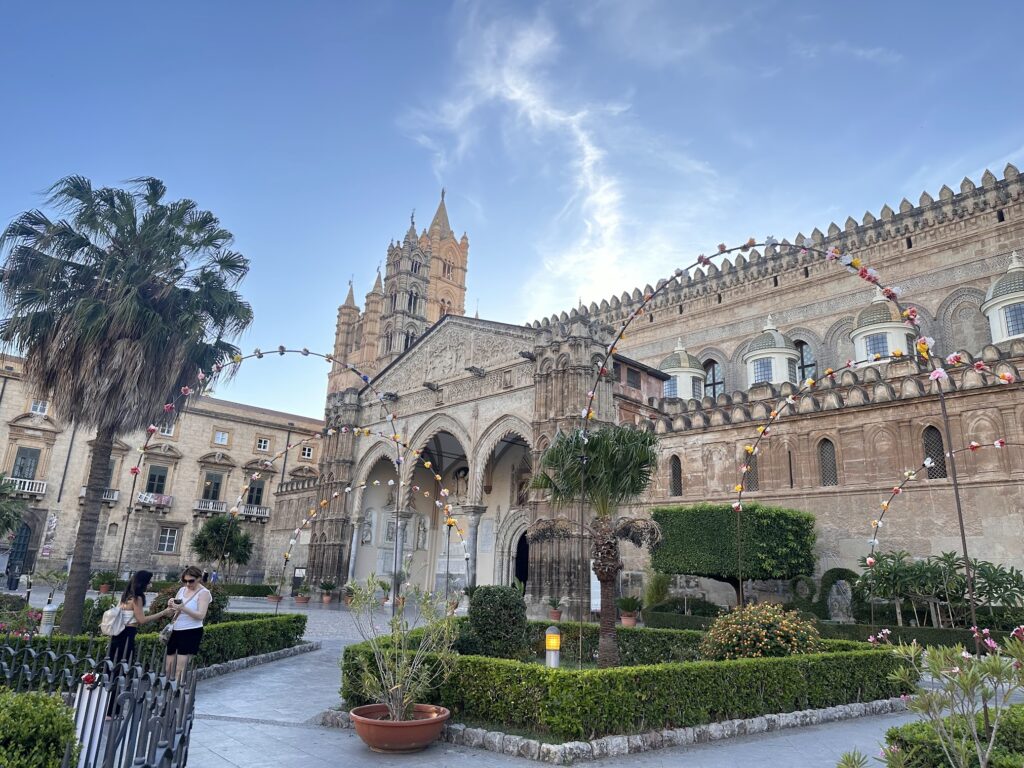
In the afternoon, head to Palermo Cathedral. The exterior is the real draw: a layered mix of Norman, Gothic, and Baroque architecture accumulated over eight centuries. You can visit the interior for free, and it is worth stepping inside to see the royal tombs, but the building itself is the main event from the outside.
Nearby, if you have not visited before, the Palazzo dei Normanni houses the Cappella Palatina, one of the finest examples of Arab-Norman art in the world. The mosaics are extraordinary. If you choose one paid attraction on day one, this is it.
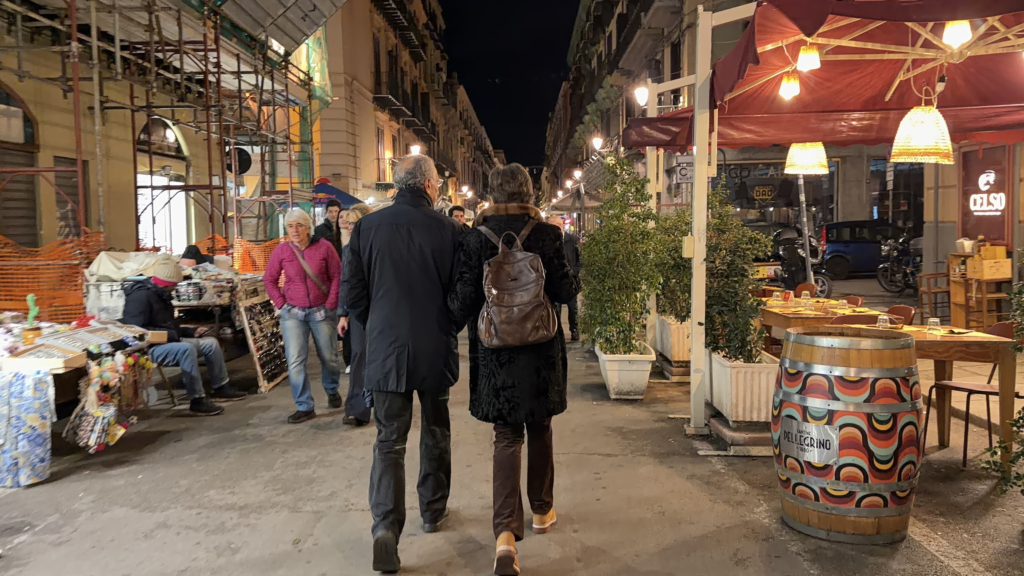
For the evening, the area around Piazza Bellini and Via dei Candelai has a good concentration of bars and restaurants. Dinner in Palermo rarely starts before 8 p.m., so there is no need to rush. If you want something lighter, the street food vendors around Ballarò and Piazza Carmine stay busy into the evening.
WHERE TO EAT IN PALERMO
Palermo rewards eating outside the main tourist drag. The closer you are to the markets, the better the food tends to be and the lower the prices.
For traditional Sicilian cooking, Ferro di Cavallo near the Ballarò market is about as honest as it gets. Plastic tablecloths, handwritten menus, locals at every table. It is inexpensive, and the pasta is excellent. Osteria dei Vespri near Piazza Marina is the opposite end of the spectrum: a beautifully restored space in a palazzo with serious Sicilian cooking and a strong wine list. Worth it for a special dinner.
Piccolo Napoli, near the port, is one of the city’s most consistent seafood restaurants. It has been around for decades and is reliably good for grilled fish and pasta al nero di seppia. Book ahead or arrive early because it fills up quickly.
For something lighter, Bisso Bistrot in Piazza San Francesco has good salads, sandwiches, and a pleasant outdoor terrace. It works well as a lunch stop between sights.
Street food is the real reason to eat in Palermo. Do not leave without trying arancine (the Palermo version has a rounded top rather than the Catania cone, a distinction locals take seriously), panelle and crocche from any friggitoria in or around Ballarò, and sfincione from the market vendors. Ke Palle near Via Bara all’Olivella does excellent arancine if you want a more sit-down version.
Street Food to Try on Day 1: Arancine (rice balls, filled with meat or cheese), panelle (chickpea fritters served in a sesame roll), and sfincione (thick Sicilian pizza with tomato, onion, and breadcrumbs). You will find all three at Ballarò in the morning and at street stalls throughout the center in the evening.
Day 2: Catacombs and Neighborhoods
Save the morning for the Catacombe dei Cappuccini. The catacombs hold around 8,000 mummified bodies arranged along the corridors and niches of a network of underground chambers. It sounds morbid, and it is, but it is also one of the most fascinating and genuinely unusual things you can visit in Italy. The Capuchin friars began using the site in the late 16th century, and burials continued until 1920. The most famous resident is Rosalia Lombardo, a two-year-old girl who died in 1920 and whose body is extraordinarily well preserved. Allow at least 90 minutes. The catacombs are in the Piazza Cappuccini area, a short taxi ride or walk from the center.
After the catacombs, make your way back toward the waterfront area and the La Kalsa neighborhood. La Kalsa was the most damaged part of the city during World War II bombing and was left largely in ruins for decades. Much of it has been restored now, and it has become one of Palermo’s more interesting neighborhoods to walk through, with galleries, piazzas, and a quieter atmosphere than the busy market streets. Piazza della Kalsa and the nearby Giardino Garibaldi (a small garden with enormous ficus trees whose aerial roots form natural arches) are worth stopping at.
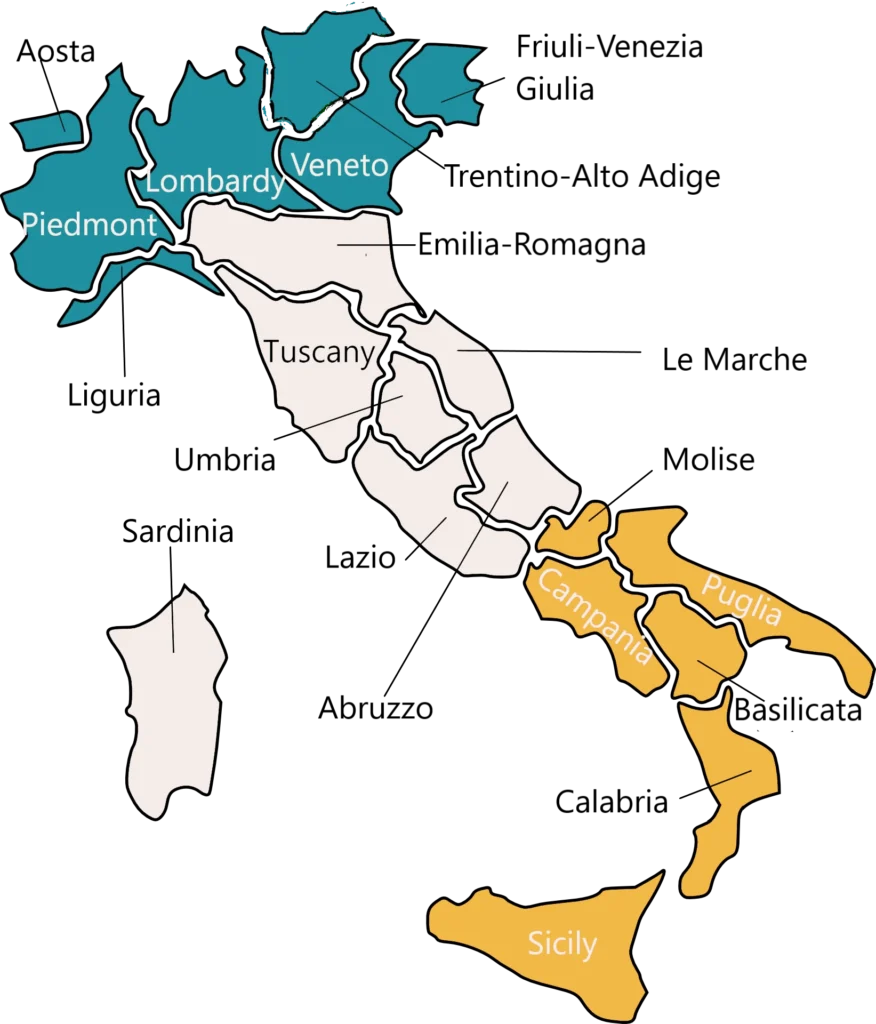
In the late afternoon, consider walking up to Mercato della Vucciria. Unlike Ballarò, which is a morning market, Vucciria transforms into a street bar scene at night. By early evening, the food stalls give way to people standing in the piazza and surrounding alleys with drinks. It is informal, lively, and very local. Get there around 6 or 7 p.m. for a drink before dinner, or stay and eat street food there.
Check out Palermo with Kids & Where to Stay in Palermo.
Bars in Palermo
Vucciria by Night
The article already covers Vucciria as an evening destination. To be specific about what to expect: the scene centers on Piazza Garraffello and the surrounding streets. From around 9pm onward, the area fills with people drinking on the steps, grabbing plastic cups of wine and beer from the bars lining the square, and the music gets louder as the night goes on. It is free, very local, and one of the most distinctive nightlife experiences in Sicily. The 9 pm to midnight window has the best energy.
Cocktail bars
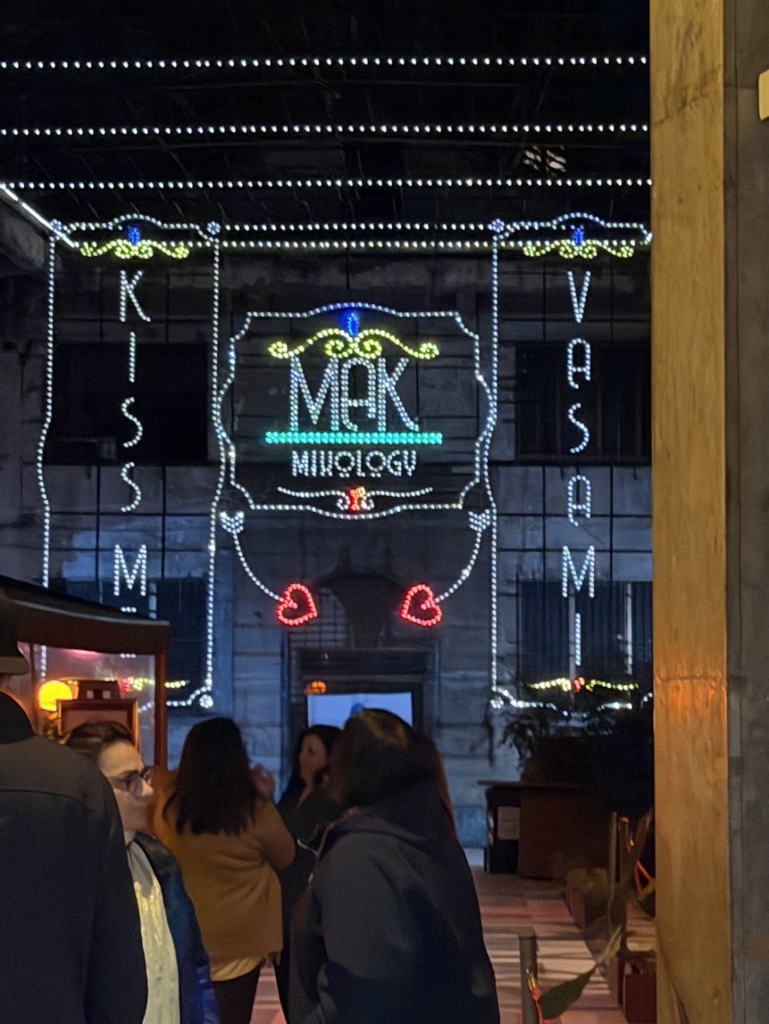
Bocum Mixology on Via Bara all’Olivella is consistently one of the best cocktail bars in the city. The bartenders know what they are doing, and the space is relaxed without being pretentious. Good for an aperitivo or a proper drink before or after dinner.
Enoteca Picone on Viale Strasburgo is the wine bar to know. An enormous by-the-glass selection, knowledgeable staff, and good food to go with it. It sits slightly further from the historic center but is worth the trip for wine drinkers.
Rooftop bars
The rooftop terrace at Hotel Porta Felice offers one of the best views of the city toward the sea and the mountains. It is open to non-guests for drinks and is worth at least one evening for the view alone. The terrace at Palazzo Conte Federico also occasionally hosts events and has views over the historic center.
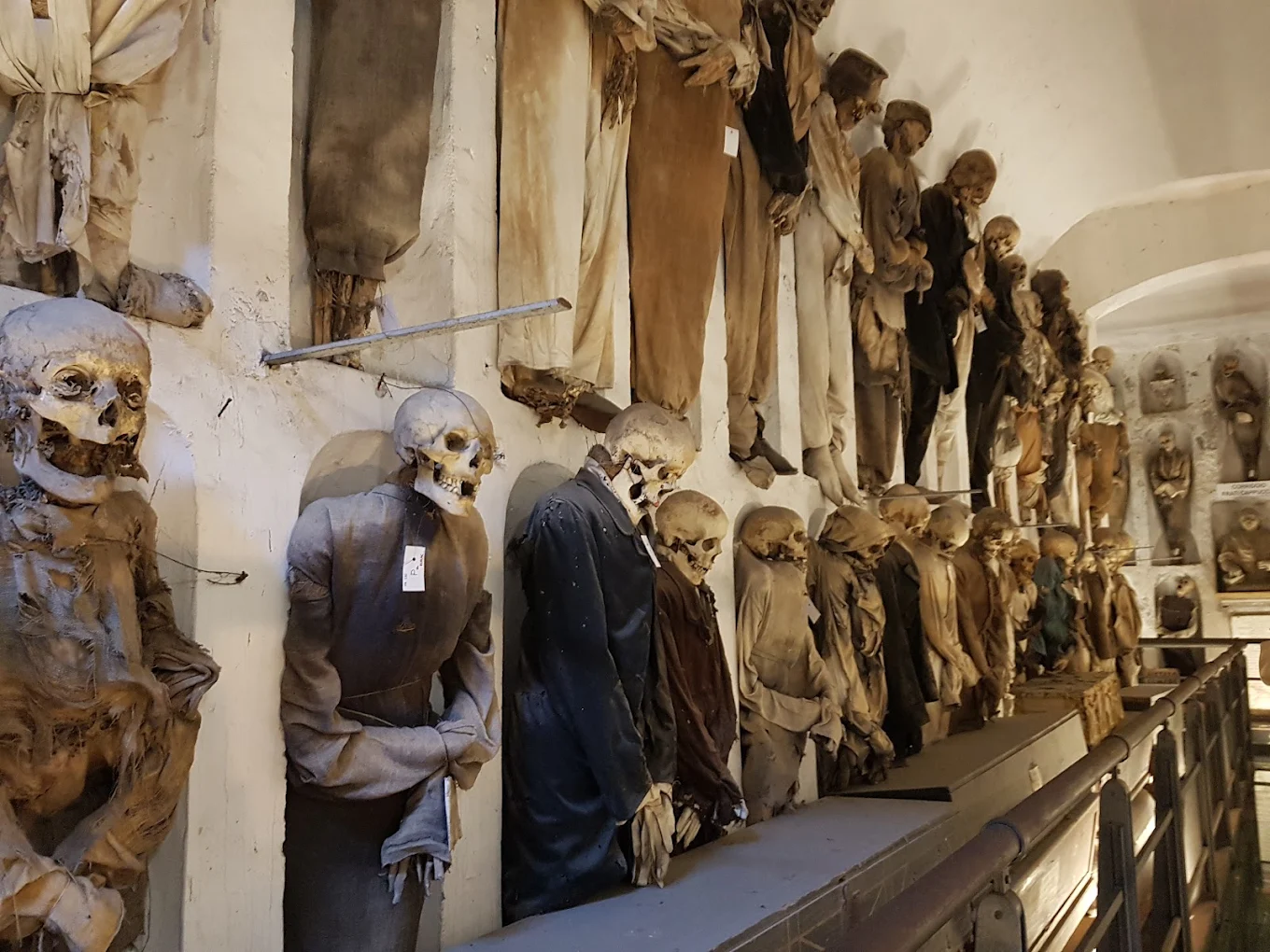
Planning Tip: The Cappuccini Catacombs now require advance booking. Check the official website before your trip and book your time slot online. Entry is around €3 to €5 for most visitors. Photography inside is generally restricted or not permitted in certain sections.
Day 2: If you want to eat before the Vucciria scene gets going, the trattorie along Via Roma near the market are solid and affordable. Avoid the restaurants directly on Piazza Caracciolo facing the harbor. They target tourists, and the quality does not match the prices.
Day 3: Mondello Beach (May to September)
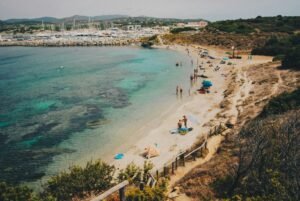
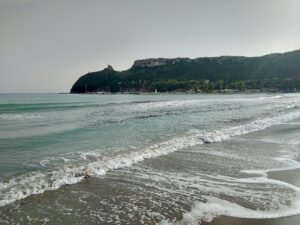
If you are visiting between May and September, spend day three at Mondello. The beach sits in a natural bay framed by Monte Pellegrino on one side and Monte Gallo on the other, about 11 kilometers north of the city center. The sand is white and fine, the water is clear, and the setting is picturesque and easy to appreciate. It is a genuinely lovely beach, and locals have been coming here since the Belle Époque.
Take bus 806 from Piazza Sturzo, near Teatro Politeama; it runs directly to Mondello and takes about 20 to 25 minutes. The bus is cheap and straightforward, so you don’t need a car. Arrive by mid-morning to find a good spot. In July and August, the beach fills up, especially on weekends, so earlier is better.
We visited in June, and it was lovely.
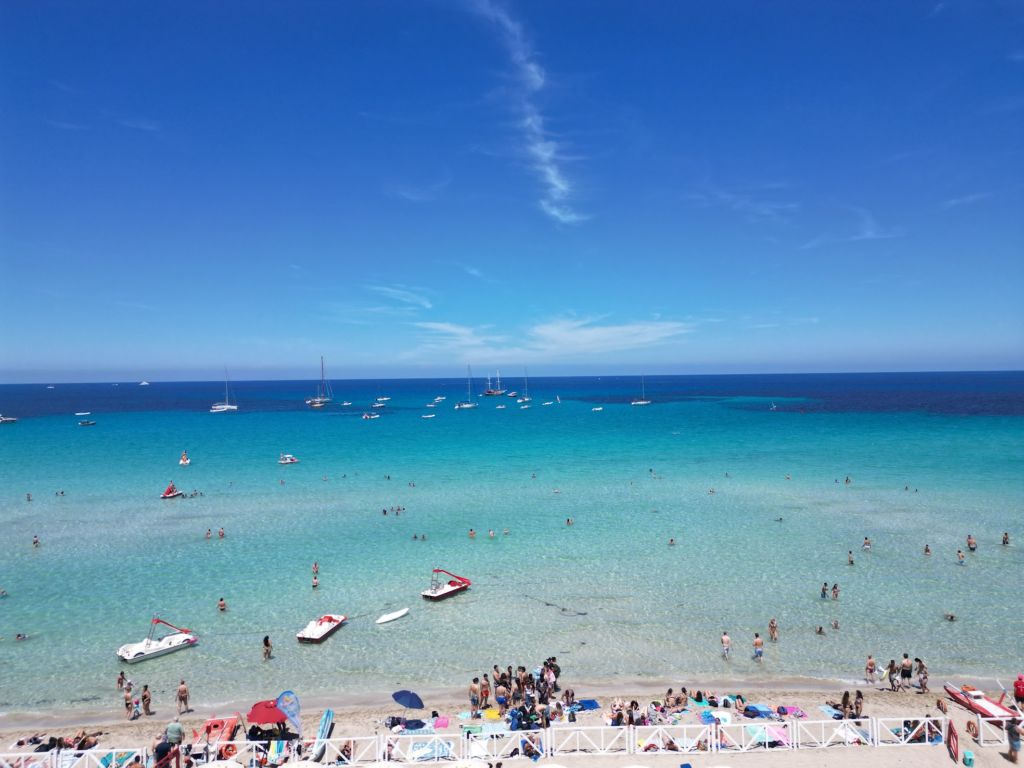
You have two options at the beach: rent a sunbed and umbrella from one of the lidos (paid beach clubs along the main stretch), or use the free public beach area toward the northern end. The lidos charge around €15 to €25 for two sunbeds and an umbrella, depending on the day and season, and include access to showers and changing rooms. The free beach is perfectly fine; just bring your own towel and umbrella if you want shade.
Lunch at Mondello means seafood. The waterfront has a stretch of restaurants serving fresh fish, fried seafood, and pasta with local ingredients. Prices are higher than in the city center, as expected for a seafront tourist area, but the food quality at the better spots is good. Alternatively, buy a bag of fried food from one of the kiosks and eat it on the beach.
Head back to the city in the late afternoon. The bus back runs regularly and drops you near the center, leaving time for a final aperitivo and dinner before leaving Palermo.
Day 3 (Mondello): For lunch at Mondello, the seafood restaurants along the lungomare are fine but pricey. A cheaper and often better option is one of the beach bars that serve simple plates of fried fish and seafood. Less formal, closer to the water, and usually half the price of a sit-down restaurant.
Planning Tip: Mondello gets very busy on summer weekends. If you are visiting on a Saturday or Sunday in July or August, consider going early (before 10 a.m.) to claim a good spot on the public beach, or book a lido sunbed in advance. Weekday visits in June or September are the most relaxed.
Day 3 Alternative: Monreale (October to April)
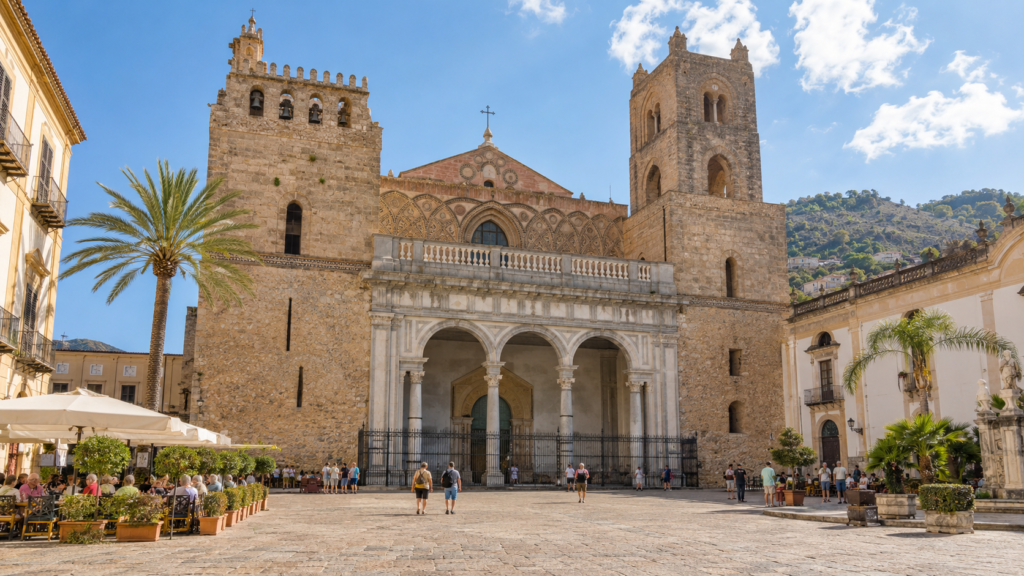
If you are visiting outside beach season, use the morning of day three to visit Monreale. The town sits in the hills about 8 kilometers southwest of Palermo and is home to one of the world’s greatest Norman cathedrals. The interior is covered in 6,000 square meters of Byzantine-style gold mosaics depicting scenes from the Old and New Testaments, completed between 1174 and 1189. It is genuinely one of the most impressive interiors in Italy, and most visitors who make the trip agree it is worth the half-day.
Bus 389 from Piazza Indipendenza takes around 30 to 40 minutes and drops you near the cathedral. Monreale itself is a small town, and the cathedral is the main reason to go, so a morning is the right amount of time. You can be back in Palermo by early afternoon with time for a final lunch and a last walk through whichever part of the city you did not get to earlier in the trip.
Best AREAS TO KNOW IN PALERMO
Palermo has a reputation that is partly deserved and partly exaggerated. The city is safe for tourists in all the areas this itinerary covers. A few things worth knowing before you go.
The market areas, Ballarò and Vucciria, are busy and crowded, which also makes them prime pickpocket territory. Keep your phone in a front pocket, leave valuables at your accommodation, and use a crossbody bag rather than a backpack when you are in the thick of the market.
Ballarò at night is a different proposition from Ballarò during the day. The daytime market energy fades after dark and the streets around the Albergheria neighborhood are not somewhere to wander aimlessly at midnight.
The Zen neighborhood on the northwestern outskirts and Brancaccio to the southeast have no tourist reason to visit. You will not end up in either on this itinerary, but if you are navigating by GPS it is worth knowing that routing can occasionally take you through areas that are not near any sights.
La Kalsa, covered in Day 2, went through a long period of post-war neglect and is only partially restored. The neighborhood is interesting precisely because of that unfinished quality, but some streets are darker and quieter than others. Stick to the main routes around Piazza della Kalsa and Piazza Magione in the evening and it is perfectly fine.
As a general rule, trust your read of a street. Palermo is a Mediterranean city with people outside at most hours. If a street feels empty and dark in a way that does not feel right, take a different route.
Frequently Asked Questions: 3 Days in Palermo
Yes, three days is a comfortable amount of time for Palermo if you keep the pace relaxed. You can cover the main historic sights, visit the Cappuccini Catacombs, spend a day at Mondello or in Monreale, and still have time to wander the markets and eat well. Palermo is not a city that rewards trying to see everything; it rewards slowing down and spending real time in a few places.
Yes, especially if you are visiting between May and September. The beach is one of the nicer ones accessible from a major Italian city, and the 20-minute bus ride from the center makes it easy to fit into a day without renting a car. The setting (a sheltered bay with white sand and Monte Pellegrino in the background) is genuinely beautiful. In the heat of summer, having a full beach day in the middle of a city trip is a good call.
Bus 806 runs from Piazza Sturzo, near Teatro Politeama, directly to Mondello. The journey takes about 20 to 25 minutes, and the bus runs regularly throughout the day. You can buy a ticket at most tabacchi (tobacco shops) or from ticket machines near the stop. A taxi is also an option if you prefer, and it takes a similar amount of time.
Palermo is generally safe for tourists. Petty theft (pickpocketing, bag snatching) is the main concern, particularly in crowded market areas like Ballarò and Vucciria. Basic precautions, such as keeping your phone in a front pocket and avoiding an easy-to-grab bag, reduce the risk significantly. The city center is lively and busy day and night, and solo travelers and families visit without issue. Check out Is Palermo Safe.
Palermo has one of the strongest street food cultures in Italy. The essentials are: arancine (fried rice balls filled with meat ragu or cheese), panelle (chickpea fritters served in a sesame roll), sfincione (thick Sicilian pizza topped with tomato, onion, anchovies, and breadcrumbs), and pani ca meusa (a soft roll filled with boiled and fried veal spleen and lungs, which sounds alarming and tastes much better than it sounds). For something sweet, granita with brioche in the morning, or cannoli filled to order.
Do you need a car in Palermo?
No. The historic center is walkable, and the main day-trip destinations covered in this itinerary (Mondello and Monreale) are both reachable by public bus. Driving in central Palermo is not recommended: traffic is heavy, parking is difficult, and most of what you want to see is in a pedestrian-friendly area anyway. Taxis are readily available if you need to cover more ground.
Bottom Line: Three days in Palermo is best spent doing fewer things more fully rather than trying to see every church and museum on the list. The city rewards time spent at the markets, eating well, and wandering without a fixed plan. If you are there in summer, Mondello makes an excellent full day out that breaks up the city pace. If you are there in the cooler months, Monreale is worth the morning trip. Either way, leave room in the itinerary to get a little lost.