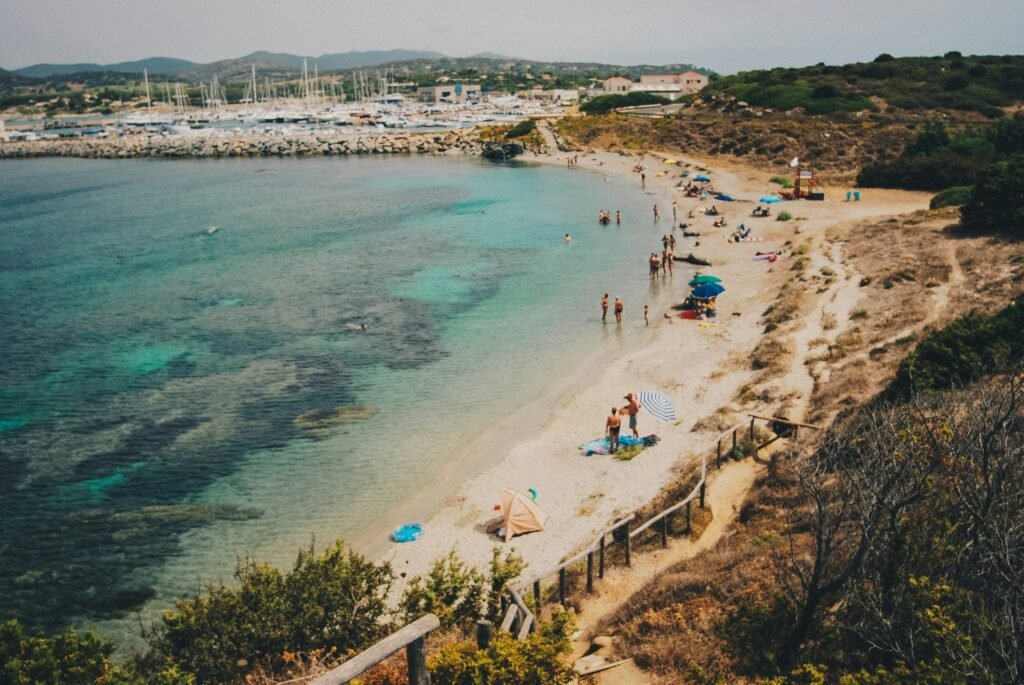
What are the best beaches near Cagliari? The best beaches near Cagliari include Poetto (the long city beach reachable without a car); the stunning south coast around Chia with its dunes and turquoise lagoons; the east coast beaches around Villasimius, including Porto Giunco and Campus; and the ancient Nora beach near Pula. All except Poetto require a rental car, but they are among the finest beaches in the Mediterranean and absolutely worth the drive.
Key Takeaways
- Cagliari has beaches in three distinct directions: the city beach (Poetto), the south coast (Chia area), and the east coast (Villasimius area).
- Poetto is the only beach accessible without a car. All other top beaches require driving 40 to 60 minutes from the city center.
- Chia and Villasimius consistently rank among the most beautiful beaches in Italy. Both areas are worth a full-day trip.
- Some beaches have access restrictions or shuttle systems in peak season. Tuerredda near Chia uses a shuttle bus in summer.
- September is an excellent time to visit: warm water, far fewer crowds, and all beaches open.
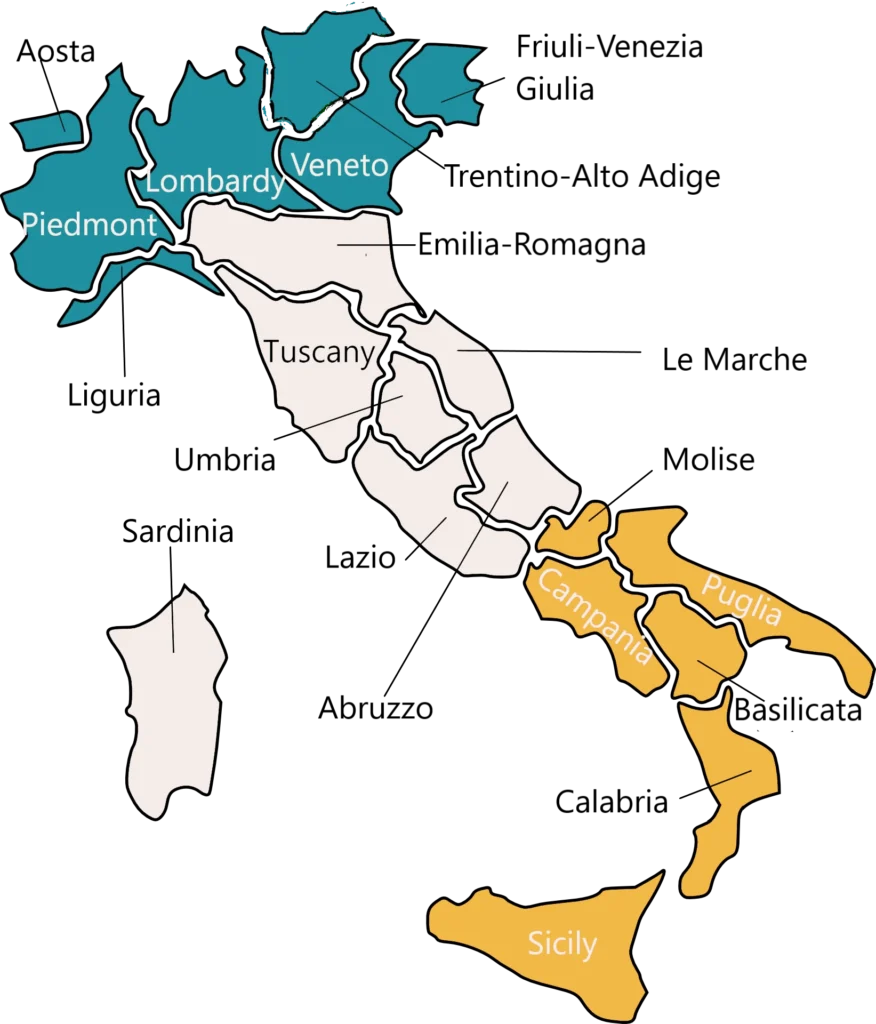
Cagliari is not the first city that comes to mind when people think of Sardinian beaches. Most Sardinians head straight for the north, to San Teodoro or the Costa Smeralda. That is a mistake. The beaches around Cagliari, particularly on the south and east coasts, are just as beautiful as anything in the north, and in many cases less crowded. If you are flying into Cagliari Airport or staying in the city, you have access to some of the best coastal scenery on the island without a long transfer.
This guide covers every significant beach area within day trip range of Cagliari, from the long urban stretch of Poetto to the wild dunes of Chia and the turquoise lagoons of Villasimius.
Getting Around: Do You Need a Car?
For Poetto Beach, no car is needed. It is served by city buses from the center of Cagliari and is easy to reach on a day trip without driving. For every other beach on this list, a rental car is essential. The south coast and east coast destinations sit 40 to 60 minutes from the city, and public transportation does not reliably reach them.
Cagliari Airport has multiple rental car companies, and it is worth booking before you travel rather than at the desk. If you are based in the city and renting for day trips only, pick up the car in the morning and return it by evening. Parking at beach destinations is generally available, though it fills early in peak season. Arriving before 9 AM at popular spots like Tuerredda or Porto Giunco makes a significant difference.
Planning Tip: If you are flying into Cagliari and planning to explore multiple beach areas, consider dividing your trip: one or two days on the south coast (Chia) and one or two days on the east coast (Villasimius). Trying to reach both on the same day is possible but leaves little time to actually enjoy either.
Poetto Beach
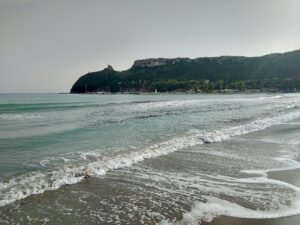
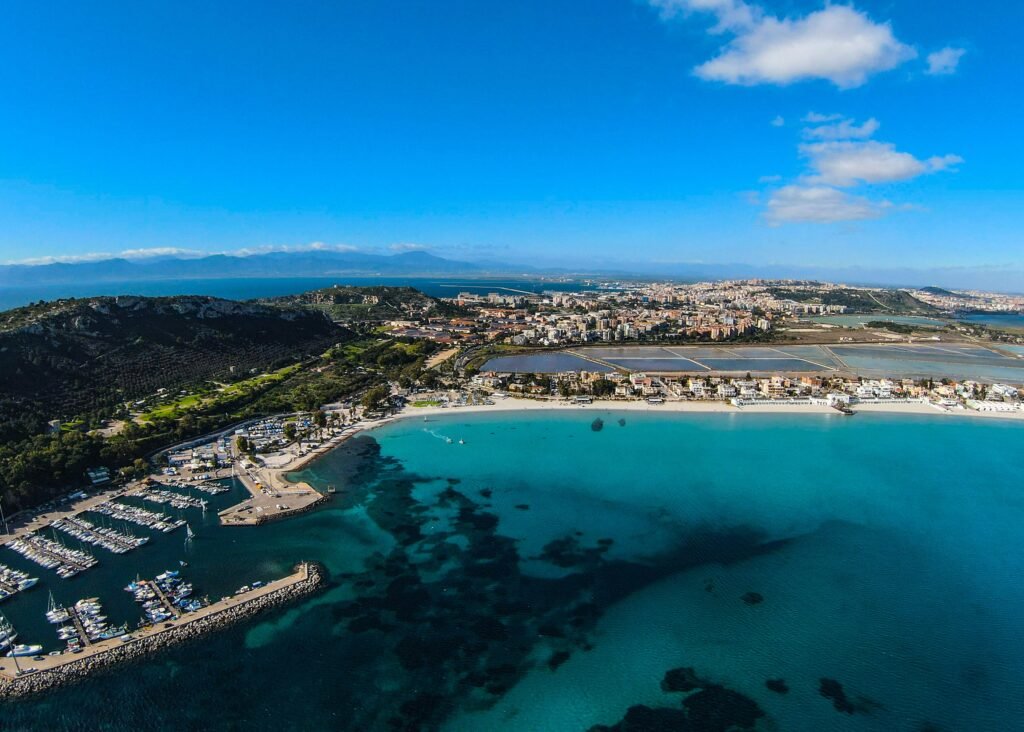
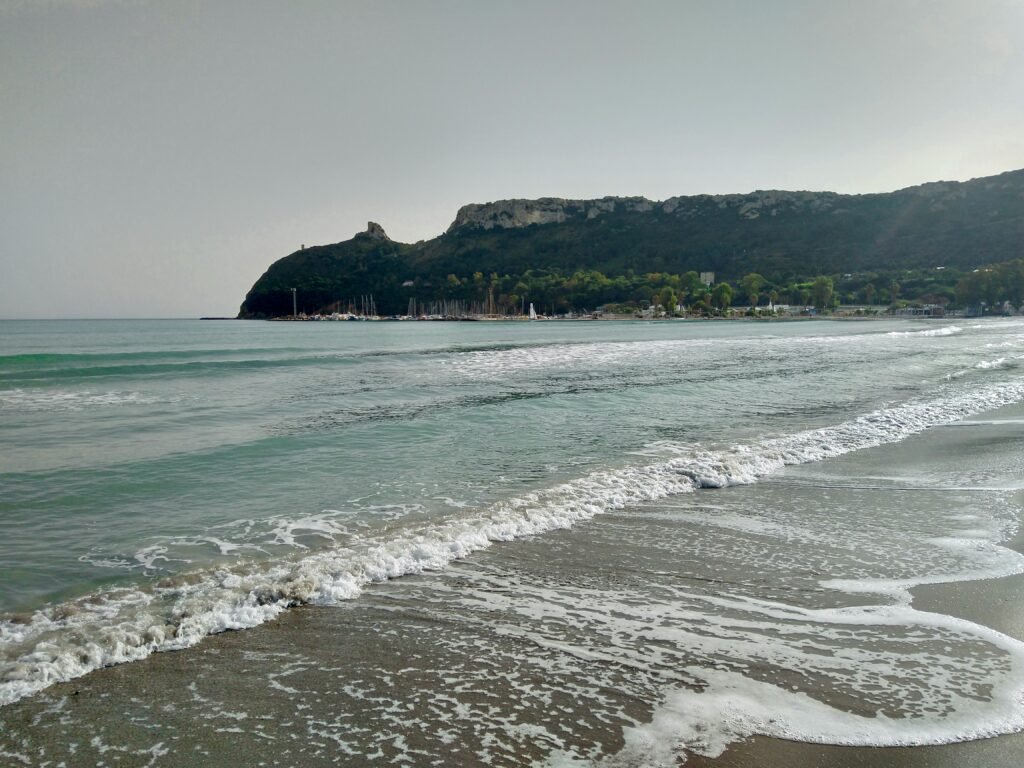
Poetto is Cagliari’s own beach and one of the longest urban beaches in Italy, stretching roughly 8 kilometers along the eastern edge of the city. It is not the wild Sardinian scenery you see in postcards, but it is a genuinely pleasant beach with good infrastructure and easy access, and it has its own character.
The beach is divided into two types of sections. The eastern end near Capo Sant’Elia has free access areas (spiaggia libera) where you lay out your own towel and pay nothing. Moving west toward the city, you enter the stabilimenti section, which is a long string of private beach clubs where you rent a sun bed and umbrella by the day. The clubs include showers, bars, and restaurants, which makes Poetto a comfortable all-day option even without much planning.
Behind the beach on the western side is the Stagno di Molentargius, a saltwater lagoon and nature reserve that is one of the best places in Sardinia to see flamingos. A colony of several thousand flamingos lives there year-round, and they are often visible from the road between the beach and the city. The combination of beach, lagoon, and flamingos makes Poetto an unexpectedly rewarding stop even if you have more dramatic beaches on your itinerary.
The water at Poetto is clean but the beach itself can get crowded in July and August, particularly on weekends when local Cagliari residents fill it. In September it is considerably more relaxed. The sand is fine and the water is shallow for a good distance from shore.
How to Get to Poetto
From central Cagliari, take bus line PF or the CTM city buses that run to Poetto. The journey takes about 20 to 30 minutes depending on where you board. By car, Poetto is about 10 minutes from the city center. Parking is available along the waterfront road, though it fills on hot summer days.
Chia and the South Coast
The south coast of Sardinia around Chia is consistently ranked among the most beautiful coastal areas in Italy, and the praise is deserved. The landscape here is different from the granite bays of the north: softer, with rolling dunes covered in juniper and myrtle, freshwater and saltwater lagoons, and beaches with a Caribbean-like quality to the water color. Flamingos are a common sight at the lagoons.
Chia is about 50 kilometers southwest of Cagliari, roughly a 50-minute drive on the SS195 coastal road. The drive itself passes through some beautiful scenery and is worth taking slowly if you have time.
Spiaggia di Chia
The main beach at Chia is a broad arc of white sand between two headlands, backed by dunes and bordered on one side by a lagoon where flamingos regularly feed. The water is shallow and an extraordinary shade of turquoise and green. It is one of the most photographed beaches in Sardinia for good reason.
Beach clubs operate along part of the beach, but there are also free access areas. In September, the crowd thins significantly, and the experience improves considerably. The dune system behind the beach is protected, so there are designated paths and some areas are fenced off to preserve the vegetation.
Su Giudeu
Su Giudeu sits just south of the main Chia beach, separated from it by the Torre di Chia headland. It is smaller, quieter, and consistently has cleaner water because it faces a slightly different direction. The surrounding landscape is more rugged, with rocky outcrops and wilder vegetation. Su Giudeu does not have beach clubs or services, which means you need to bring everything you need but also means the atmosphere is more natural and less commercial.
Parking is available near the beach but the lot is small. In peak summer it fills early. In September it is rarely a problem.
Cala Cipolla
Cala Cipolla is a small cove a short walk from the main Chia area. The beach is rocky at the edges with a sandy center and the water is exceptionally clear, making it a good snorkeling spot. There are no services here. It requires a short walk down from the road, which keeps it from getting as crowded as Spiaggia di Chia. The combination of rocks, dunes, and turquoise water makes it a good choice for people who want scenery without a beach club setup.
Tuerredda
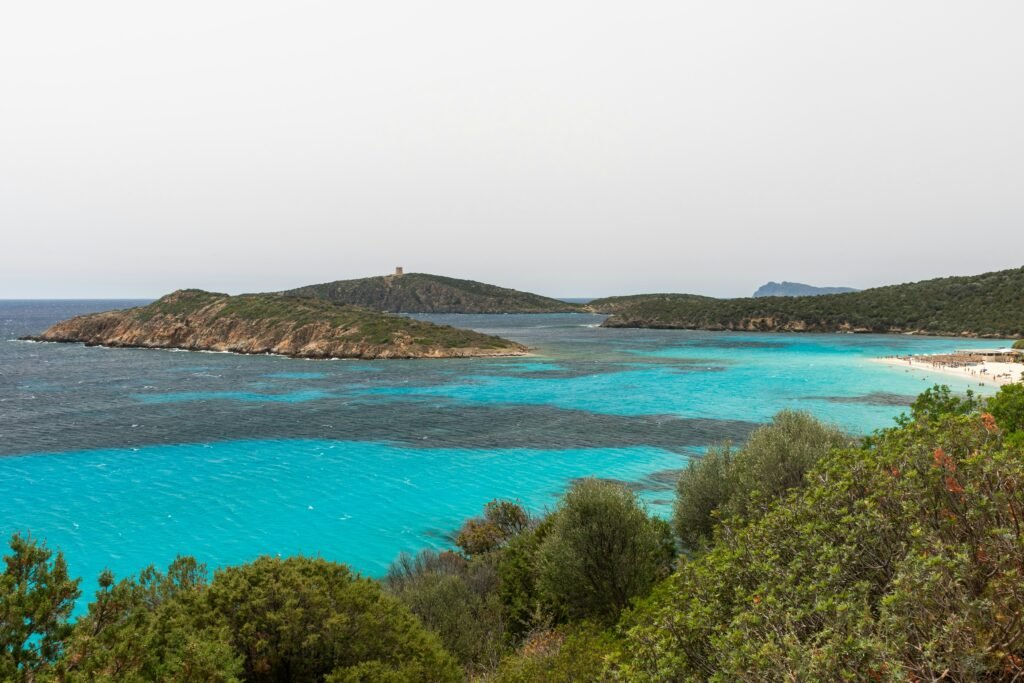
Tuerredda is frequently cited as one of the most beautiful beaches in all of Italy. It is a small, sheltered bay with water that ranges from pale jade to deep turquoise, surrounded by maquis-covered hills. The sand is white and fine, the water is calm, and on a clear day the color combination is genuinely extraordinary.
Because of its beauty and relatively small size, Tuerredda fills up quickly in summer. In peak season (June through August), vehicle access to the beach is restricted and a shuttle bus runs from a designated parking area about 3 kilometers away. The shuttle operates regularly and the system works reasonably well, though the walk to and from the shuttle stop adds time. In September, access restrictions are often lifted and you can drive closer to the beach, but it is still worth arriving early.
Tuerredda is about 65 kilometers from Cagliari, making it the furthest of the south coast beaches, but it is the one most worth planning your day around.
Planning Tip: If you are doing the south coast, a logical day covers Tuerredda in the morning (arrive early for parking), then Spiaggia di Chia in the afternoon when the light is better for photography and the Tuerredda crowd has peaked. Su Giudeu works as an add-on at either end of the day since it is small and easy to stop at without a long commitment.
Villasimius and the East Coast
Villasimius sits on the southeastern tip of Sardinia, about 50 kilometers east of Cagliari on the SS125. The town itself is a relaxed, low-key resort that serves as a base for some of the best beaches in the south of the island. The water around Capo Carbonara, the headland just south of Villasimius, is part of a marine protected area, which means it is among the clearest and most bio-diverse coastal water in Sardinia.
The beaches around Villasimius are different in character from Chia: fewer dunes, more granite rock formations, and deeper bays. The water is spectacularly clear due to the marine reserve protection, and the combination of white sand, rock, and turquoise-to-deep-blue water is different from anything you will find in the north of the island.
Porto Giunco and Notteri Lagoon
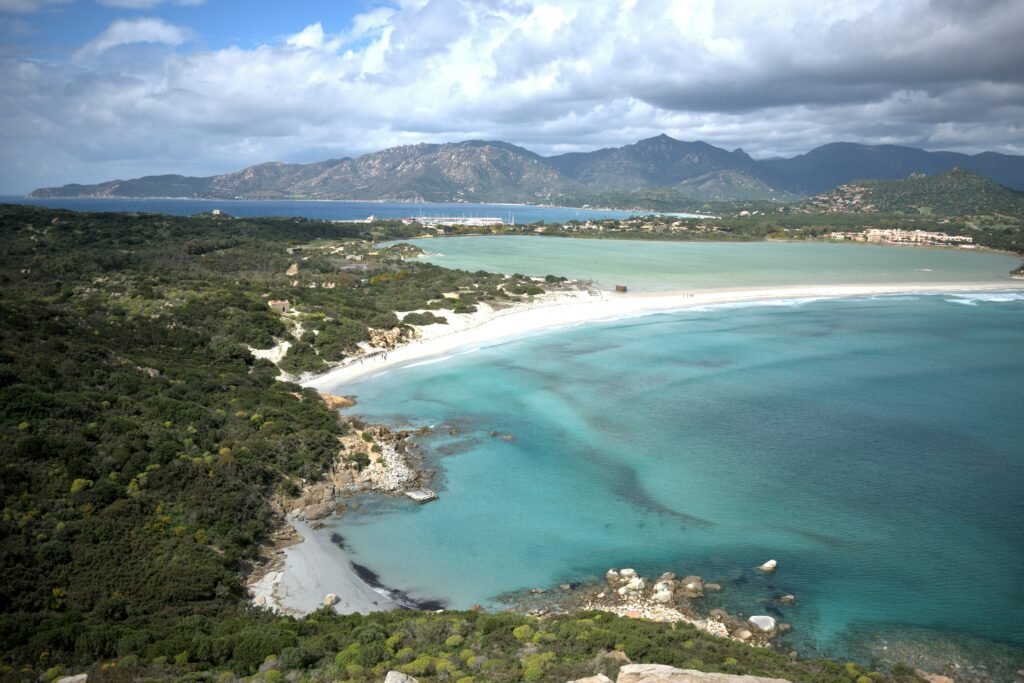
Porto Giunco is arguably the most dramatic beach near Villasimius and one of the most spectacular in Sardinia. The beach is a long peninsula of white sand that separates the sea from the Stagno Notteri, a saltwater lagoon where flamingos and other wading birds congregate. Looking one way you see turquoise Mediterranean water; looking the other you see pink flamingos on a still lagoon. It is genuinely unlike anything else.
The water on the sea side of the beach is calm and clear, with snorkeling possible along the rocky ends of the peninsula. The beach is wide enough to absorb a decent number of visitors without feeling crowded, though peak summer weekends are a different matter. In September, this beach shows at its best.
Campus Beach
Campus is a long stretch of white sand on the north side of Villasimius, backed by dunes and low coastal scrub. The water is shallow and very clear, and the beach is wide enough that it never feels overcrowded even in summer. This is one of the better beaches in the area for families because of the calm, shallow water and the amount of space available.
Beach clubs operate along part of Campus, and there are free sections as well. Services including bars and restaurants are available in season. Parking is nearby but fills on summer weekends.
Spiaggia di Simius
Simius is the main beach closest to Villasimius town, about 2 kilometers from the center. It has a gentle curve of sand, very clear water, and is served by beach clubs along most of its length. It is the most convenient beach in the area for visitors staying in town. The water here is consistently among the clearest on the coast, benefiting from the proximity of the marine reserve. Not the most dramatic setting, but very reliable.
Cala Pira
Cala Pira is a smaller, more secluded beach on the coast between Cagliari and Villasimius, set in a bay with granite rock formations on either side. The water is crystal clear and good for snorkeling. There are no services at the beach itself, and the access road is narrow, which limits how many people arrive by car. This makes it a notably quieter option than the main Villasimius beaches even in summer. In September it can feel almost private on weekday mornings.
Capo Carbonara and Snorkeling
The waters around Capo Carbonara, the protected marine area at the southeastern tip of Sardinia, are considered some of the best for snorkeling and diving in the south of the island. The visibility regularly exceeds 20 meters, and the seabed has a variety of marine life including Posidonia seagrass meadows, rocky reef, and the occasional sunfish in deeper water. Dive centers and snorkeling boat tours operate from Villasimius town throughout the summer and into September.
Nora and the Pula Area
The Pula area, about 30 kilometers southwest of Cagliari, offers a different kind of beach day: you can combine swimming with a visit to Nora, one of the best-preserved ancient Phoenician and Roman archaeological sites in Sardinia. The ruins sit directly on the coast, and the Nora beach itself is immediately adjacent.
Nora Beach
The beach at Nora is a curved bay of fine sand with calm, clear water. It is not as spectacular in terms of scenery as Chia or Porto Giunco, but the combination of beach and ancient ruins is genuinely special. Parts of the ancient city of Nora extend under the water and are visible while snorkeling. The mosaic floors and columns visible above and below water make for a surreal swimming experience.
The archaeological site requires a paid entry ticket (around €10 per person), but the beach area is accessible separately. If you have even a passing interest in history, combining a morning at the ruins with an afternoon on the beach makes for an excellent day trip from Cagliari.
Santa Margherita di Pula
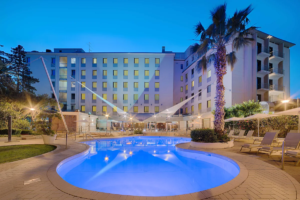
Santa Margherita di Pula is a long, straight beach south of Pula that has developed into a resort strip with large hotels set among pine forests directly behind the sand. The beach itself is wide and pleasant with calm water. It is a good family option, and the pine shade behind the beach is genuinely useful on hot days. The area is more resort-oriented than the wilder spots further south, but the water quality is good and the beach is well-maintained.
Beach Access and Reservation Tips
Unlike the most heavily controlled beaches in the north of Sardinia, the beaches around Cagliari generally do not require advance reservations with daily caps and entry fees, with a few exceptions. However, access systems and shuttle buses do apply to some beaches in peak season.
Tuerredda Shuttle System
In July and August, access to Tuerredda beach by private vehicle is restricted. A shuttle bus runs from a large parking area on the main road approximately 3 kilometers from the beach. The shuttle is inexpensive and runs regularly. In September, vehicle access restrictions are typically lifted, but check locally when you arrive as the policy can change year to year depending on visitor numbers.
Parking Strategy
For every beach on the south and east coasts, arriving before 9 AM gives you the best chance of easy parking. Most beach parking fills between 9:30 and 11:00 AM on sunny days in summer. The closest parking to Tuerredda, Porto Giunco, and the smaller coves like Su Giudeu fills especially fast. If you arrive late and cannot park, the next best option is to find a legal spot on the road and walk down, even if it takes 15 to 20 minutes.
Free vs. Paid Beach Areas
Most Sardinian beaches have a mix of free sections (spiaggia libera) and stabilimenti (private beach clubs where you pay for a sun bed and umbrella). At popular beaches like Campus and Simius near Villasimius, or the main Chia beach, the stabilimenti take up a portion of the beach but free sections always exist. Wild and undeveloped beaches like Su Giudeu, Cala Pira, and Porto Giunco are entirely free access with no services.
Best Time to Visit Cagliari Beaches
| Period | Conditions | Crowds | Verdict |
|---|---|---|---|
| June | Warm, 22 to 24°C sea | Building up | Good shoulder season option |
| July / August | Hot, 25 to 27°C sea | Peak crowds, parking hard | Beautiful but stressful |
| September | Warm, 24 to 26°C sea | Significantly fewer people | Best overall month |
| October | Mild, 22 to 23°C sea | Very quiet | Good for hiking and ruins; some services close |
September stands out as the sweet spot for Cagliari beaches. The sea temperature in September averages 24 to 26°C, which is actually warmer than June because the ocean takes time to heat up through summer. The Italian school year starts in mid-September, which removes a large portion of the domestic tourist base almost overnight. Beaches that were packed in August become comfortable, parking becomes manageable, and the whole experience is more enjoyable.
October is quieter still, and the sea remains warm enough to swim in the first half of the month, but some beach services and smaller restaurants start closing for the season. For pure beach-going, late September is the ideal trade-off.
Also check out Sardinia in September and Airports in Sardinia.
Frequently Asked Questions: Beaches Near Cagliari
How far are the best beaches from Cagliari?
Poetto beach is within the city, roughly 10 minutes by car or 20 to 30 minutes by bus. The south coast beaches around Chia are about 50 to 65 kilometers away, taking 50 to 70 minutes by car. Villasimius and the east coast beaches are about 50 kilometers away, taking around 50 minutes. The Pula/Nora area is approximately 30 kilometers, or 35 to 40 minutes.
Can I visit Cagliari beaches without a car?
Poetto is accessible by city bus and is the main option without a car. Some seasonal bus services run to Chia and Villasimius from Cagliari, but they are infrequent, have limited return times, and make the day trip significantly less flexible. For anything beyond Poetto, a rental car is the practical choice.
Which beach near Cagliari is best for families?
Near Cagliari, the best family beaches are Campus beach near Villasimius (shallow water, wide sand, plenty of space), Spiaggia di Chia (calm turquoise water and good facilities nearby), and Poetto (city beach with easy access and services). Porto Giunco near Villasimius is also excellent for families with children, because the flamingo lagoon on one side of the beach adds a memorable wildlife element to the day.
Which beach near Cagliari is best for snorkeling?
The waters around Capo Carbonara near Villasimius are the best for snorkeling in the south, with exceptional visibility and good marine life thanks to the protected area. Cala Cipolla near Chia is also a good snorkeling spot with clearer water than the main beaches. The submerged ruins at Nora are worth snorkeling over if you are near Pula.
Is Tuerredda the most beautiful beach near Cagliari?
Tuerredda is consistently cited as one of the most beautiful beaches in Italy and it deserves the reputation. Porto Giunco near Villasimius runs it very close in a different way: less postcard-perfect turquoise, but the combination of the white sand peninsula, the flamingo lagoon, and the clear water is arguably more dramatic. Both are worth visiting if you have the time.
Are there flamingos near Cagliari beaches?
Yes. The Stagno di Molentargius behind Poetto beach has one of the largest flamingo colonies in the Mediterranean, with several thousand birds year-round. The lagoon at Porto Giunco near Villasimius also hosts flamingos, particularly in autumn when migrating birds arrive. The lagoons around Chia also attract flamingos seasonally.
Which is better, Chia or Villasimius?
They are different rather than one being better. Chia has dunes, softer landscapes, and the dramatic Tuerredda bay. Villasimius has clearer water (thanks to the marine reserve), more dramatic granite rock settings, and the unique Porto Giunco lagoon. If you have one day, choose based on what you prioritize: wilder dune scenery points toward Chia, clearest possible water and snorkeling points toward Villasimius. If you have two days, do one of each.
Our Recommendation: If you are flying into Cagliari and have four or five days to explore, spend the first day at Poetto to orient yourself, then dedicate a full day to the south coast with Tuerredda as the centerpiece and a full day to Villasimius with Porto Giunco and Campus. Add Nora for a half-day if history interests you. That covers the best of the Cagliari beach region without rushing any of it.